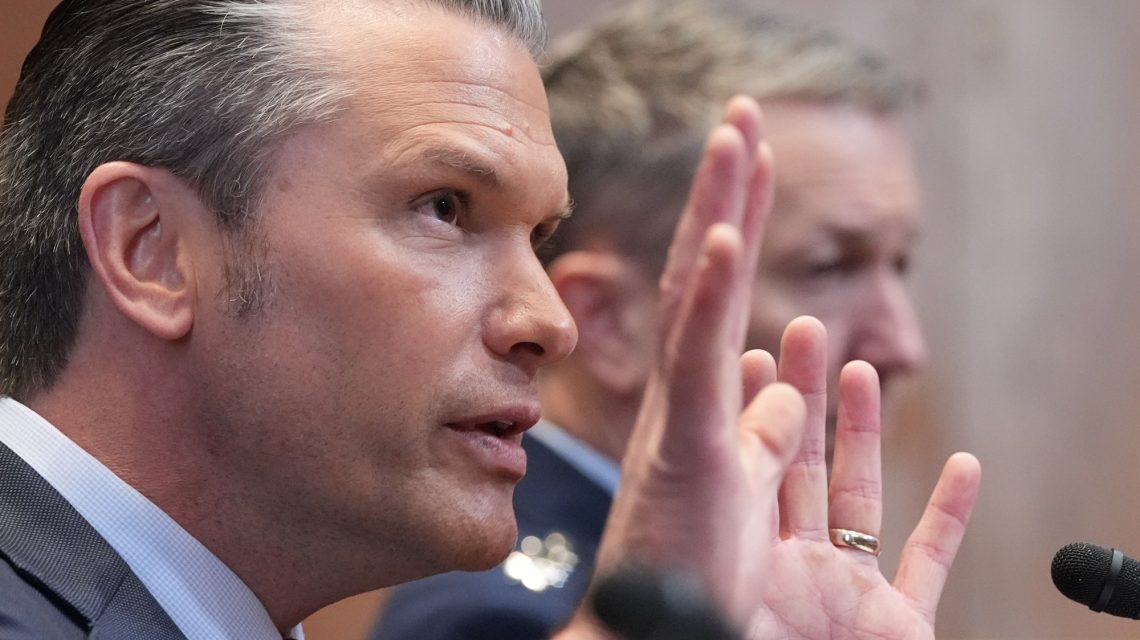
Recently, Secretary of Defense Pete Hegseth testified before a Senate Appropriations subcommittee, emphasizing the dangers Congress would pose by not approving the full $1.5 trillion defense budget. Hegseth argued for increased defense spending by emphasizing potential threats America faces with worst-case scenario projections.
However, this approach, critics argue, weakens America’s strategic positioning by not aligning spending with its actual goals. The House passed the fiscal 2027 National Defense Authorization Act during the same week, but such defense budgeting is seen as disproportionate by some analysts.
Key arguments against the defense budget include persisting with programs that may not align with current security needs. For example, the B-1B bomber lacks stealth, unlike the more cost-effective B-52. Similarly, the Minuteman III nuclear missile is criticized for its vulnerability in crises due to its first-strike potential.
Despite these concerns, additional weapons systems are still pursued. The Pentagon plans to revive battleships and develop a national missile defense system, which experts estimate may not be necessary and could potentially encourage adversaries to invest in more advanced offensive capabilities.
The fiscal implications of increasing the defense budget without considering the interest from federal borrowing present long-term economic burdens. By increasing defense spending without immediate tax hikes or social service cuts, the burden shifts to future generations, amplifying debt from past military engagements like the Global War on Terror and the Iraq War.
Some experts believe that President Trump’s extensive defense budget could undermine economic strength and wellbeing. Critics point out that defense spending does not necessarily equate to economic gains, highlighting that the funds could serve higher priority areas if conserved.
Ultimately, they argue that reducing the defense budget and reconsidering overseas commitments would enhance U.S. security and economic strength. This balance ensures resources for essential infrastructure, necessary in times of conflict. The focus, they suggest, should shift from unwanted programs to initiatives that bolster national interests.
Benjamin D. Giltner, a defense and foreign policy analyst, shares these views, emphasizing that prudent financial stewardship ensures both security and economic resilience.
 Usha Vance Discusses Vice President JD Vance’s Political Future
  U.S. Supreme Court Faces Public Perception Challenges
  The Impact of Data Centers on Local Politics
  Alaska Senate Race Faces Twists with Two ‘Dan Sullivans’
  Trump’s Remarks on Recent Events and Political Developments
  Texas Voters Oppose New Data Centers in Their Communities