
The Trump administration has been implementing a strategy initially labeled Operation Epic Fury, which transitioned into a permanent ceasefire on the 38th day. Efforts to use military and diplomatic means to end the conflict with Iran have not succeeded. Consequently, economic measures, particularly sanctions, supported by a naval blockade on the Strait of Hormuz, are now being employed.
Recently, President Trump announced plans for what he calls an “Economic D-Day” on his Truth Social account. He pledged to engage in economic warfare and isolation against Iran on an unprecedented level. Treasury Secretary Scott Bessent indicated that the U.S. expects both allies and rivals to join this intensified campaign. He described the effort as a significant coordinated economic isolation effort in history, urging others to decide whether they are with or against the U.S.
Iranian Foreign Minister Abbas Araghchi dismissed these threats as diversions that will not succeed. Similarly, China expressed skepticism, stating that sanctions and pressure will not resolve the conflict. Chinese Foreign Ministry spokesman Lin Jian called for responsible actions to solve the problem through political and diplomatic means. The U.S. struggles to identify relevant parties within the Iranian regime for negotiations, having tried connections with Araghchi and other Iranian leaders, without success.
Questions arise whether Trump’s Economic D-Day represents a repackaged approach to regime change, a goal often mentioned by Trump and Israeli Prime Minister Benjamin Netanyahu. They aimed to set conditions encouraging the Iranian population to reclaim governance. After decimating Iran’s conventional military, the regime’s central forces and paramilitaries remained intact. Efforts for negotiation replaced military strategies as a ceasefire and memorandum of understanding were attempted but eventually failed.
The Iranian regime persists, safeguarded by its security apparatus, despite tit-for-tat military exchanges. Trump’s administration, recalling historical lessons, hesitates at the idea of instigating regime change without a clear strategy for aftereffects, as observed in Iraq and Afghanistan. Instead, they aim to incentivize regime change from within Iran itself by encouraging an uprising.
In January 2026, widespread protests erupted in Iran, driven by severe economic conditions and a collapsing currency. Demonstrations spread across the nation, with security forces cracking down harshly, resulting in a high civilian toll. As of Monday, Operation Economic Outcast has been declared with the Iranian rial plummeting further against the dollar. Present conditions mirror those of past economic unrest, potentially igniting public dissent.
Successfully setting such conditions requires a cohesive strategy, combining various national powers. Whether the current administration has absorbed these lessons remains a topic of debate among analysts.
Col. (Ret.) Jonathan Sweet and Mark Toth, with backgrounds in military intelligence and national security, discuss these developments and cofound the INTREP360 Intelligence Report. *
© 2026 Nexstar Media Inc. All rights reserved. This material may not be published, broadcast, rewritten, or redistributed.
 The Trump Administration’s Challenge to Germany’s Drug Price Controls
  Support for Dialogue Between Trump and Kim Jong Un
 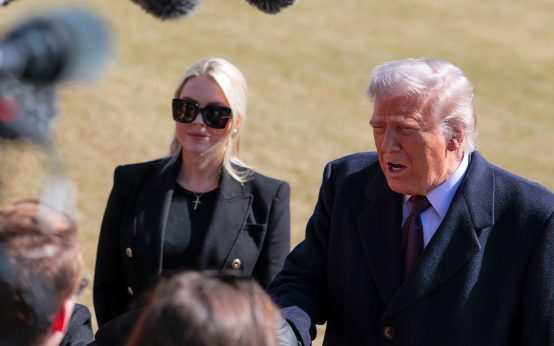 Trump’s Search for New White House Press Secretary
 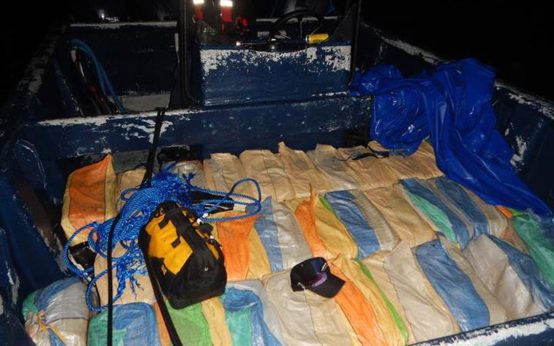 U.S. Coast Guard Intercepts Cocaine Smuggling Operation Off Puerto Rico
 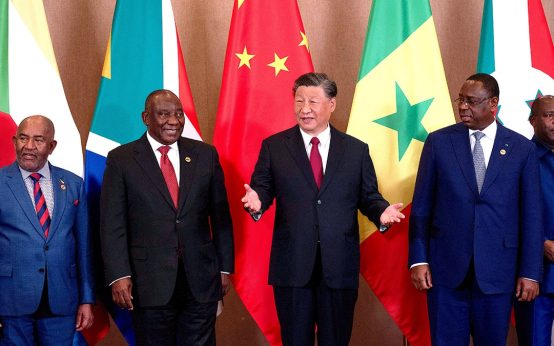 U.S. and China Trade Dynamics Impacting African Economies
 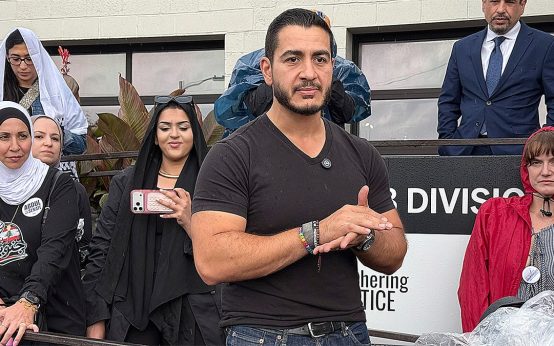 Michigan Candidate Abdul El-Sayed Reflects on American Society and Community