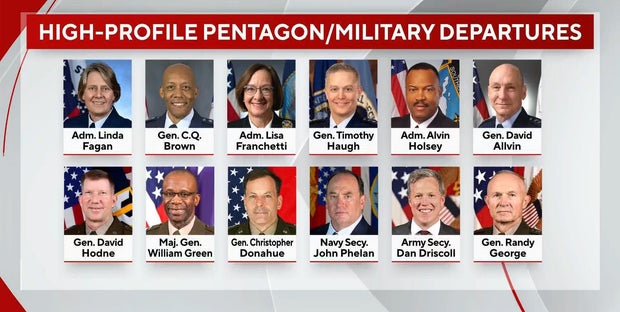
The departure of numerous generals, admirals, and civilian defense leaders has marked the tenure of Pete Hegseth as defense secretary since the start of the second Trump administration. Over 20 notable figures have either been dismissed or have left their roles. Among these departures are some of the most decorated leaders in the military, including those from the Army, Navy, and Air Force, as well as key unit heads.
Reasons Behind the Departures
Hegseth’s previous public criticisms of military officers, focusing on diversity initiatives and perceived lack of support for frontline services, have been noted. He once stated on a podcast that any general involved in ‘woke’ diversity, equity, and inclusion (DEI) initiatives should be replaced. The administration has faced criticism for disproportionately removing Black and female officers, with reports indicating these demographics face reduced promotion opportunities.
Key Military Figures Departed
General Charles Q. Brown: The former Air Force Chief and Chairman of the Joint Chiefs of Staff was dismissed 16 months into his term. Hegseth mentioned the need for the president to choose his adviser, replacing Brown with General Dan Caine.
Admiral Lisa Franchetti: The first woman on the Joint Chiefs of Staff, relieved of duty without explanation alongside Brown’s termination. Previously headed significant naval commands.
Notable Military Leaders Affected
- General James Slife: Air Force Vice Chief of Staff, known for special operations, dismissed with little public rationale.
- General Randy George: Army Chief of Staff, asked to retire early. Served in major conflicts and was a senior military assistant.
- Admiral Alvin Holsey: Retired after leading operations in Southern Command.
- General Christopher Donahue: Known for his role in Afghanistan withdrawal, forced to retire as head of U.S. Army Europe and Africa.
- General Timothy Haugh: Head of U.S. Cyber Command, removed in April 2025.
Legal and Civilian Leadership Changes
Hegseth’s tenure involved significant turnover among military legal advisors, labeling attorneys within the system as impediments. Such changes included the dismissal of the Judge Advocate Generals of the Army and Air Force. Civilian roles also saw changes, as former Navy Secretary John Phelan and Army Secretary Dan Driscoll left under various pressures.
Top aides, including Joe Kasper, faced structural changes or were removed amid internal probes into leaks.
Implications and Reactions
The administration’s actions have prompted varied responses, with public explanations often scant. Former spokesperson John Ullyot described his experience during this period as grueling. This narrative is disputed by the Pentagon, which critiques his performance negatively.
The strategic and operational shift within the Defense Department reflects a marked focus on leadership alignment with administration goals, emphasizing loyalty and perceived operational priorities while eschewing DEI initiatives. The effects on military personnel morale and broader strategic considerations remain a topic of ongoing debate within defense circles.
 Lessons from a Storied Press Secretary
  Tlaib’s Bill Aims to Halt Federal Funding for Mass Surveillance
  California’s New Hate Speech Instruction Faces Pushback
  Macron Faces Criticism Amid Violent Protests in France
  Addressing Recidivism and Reforming the U.S. Prison System
  Democracy Dies in Darkness