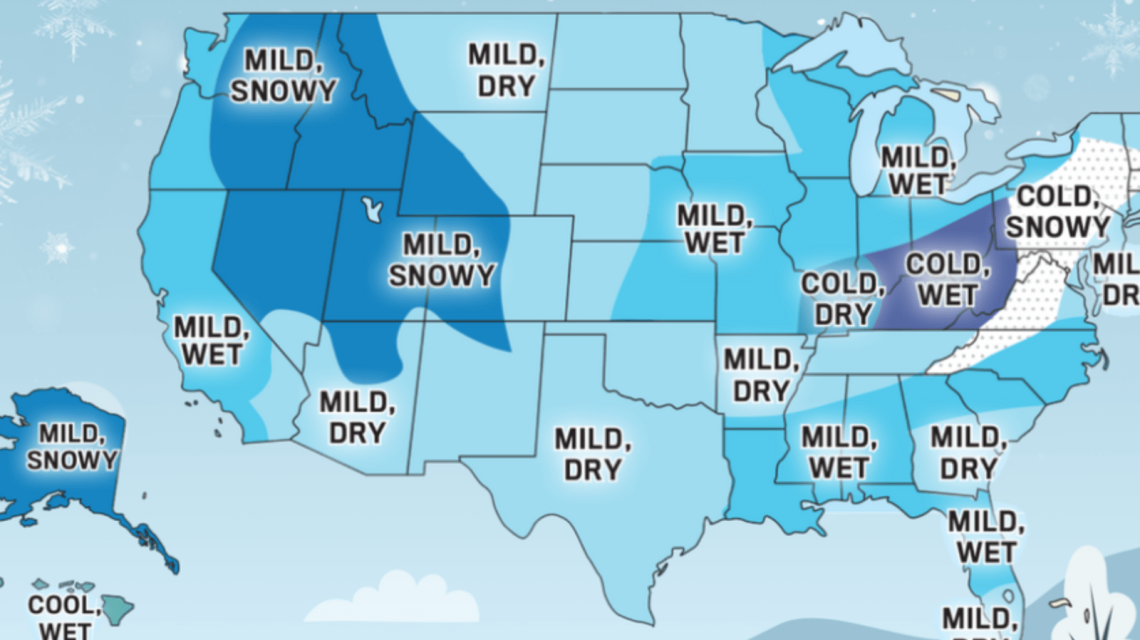
Winter weather can range from heavy rain and ice to snow and frigid temperatures. The Old Farmer’s Almanac and the Farmers’ Almanac present different forecasts for which regions might face the harshest conditions in the coming winter.
Almanac Predictions for Winter 2026-27
The Old Farmer’s Almanac anticipates a mostly mild winter for 2026-27, with moments of intense cold and increased snowfall. Alternatively, the Farmers’ Almanac expects stretches of mild weather with a focus on an active storm track in the South. It also predicts brief episodes of snow and cold in Northern areas.
Both publications agree in some regions but diverge elsewhere, particularly concerning the areas likely to experience the wettest and snowiest conditions.
Mild Weather Interspersed with Severe Conditions
Both almanacs foresee mild conditions interrupted by severe weather. Carol Connare, Editor-in-Chief of the Old Farmer’s Almanac, stated, “While much of the country is headed for a milder season, some areas will still see plenty of cold and snow.” Central New England, the Appalachians, and parts of the West are expected to encounter above-normal snowfall.
The Farmers’ Almanac similarly predicts “milder stretches interrupted by quick cold snaps,” with Northern regions experiencing snow, winds, and cold temperatures. The northern Plains, Upper Midwest, and Great Lakes might see sudden snow squalls even if temperatures remain near the seasonal average.
The Northeast shows clear alignment, with the Old Farmer’s Almanac expecting colder and snowier conditions in central New England and the Appalachians. The Farmers’ Almanac cautions about “several rounds of heavy, wet snow” inland, especially in January and February. Coastal areas might face rain or mixed precipitation.
Both almanacs agree on significant mountain snow in the West but differ on its concentration. The Old Farmer’s Almanac targets the Intermountain West and Pacific Northwest, whereas the Farmers’ Almanac favors the southern Rockies.
Contesting Views on the South and Northwest
The southern U.S. displays the most contrasting outlooks. The Farmers’ Almanac forecasts a “wet and stormy southern tier,” with a storm track from Southern California to Texas and the Southeast. Cold air could convert moisture into sleet, freezing rain, or heavy snow.
In contrast, the Old Farmer’s Almanac predicts a drier South, with warmer conditions in Texas, Oklahoma, and the Deep South. Florida may have a mild winter, although precipitation levels could differ between its northern and southern regions.
The Pacific Northwest forecasts vary as well. The Old Farmer’s Almanac anticipates wetter weather and above-normal snow, especially in late December, mid-January, and mid-February. The Farmers’ Almanac suggests the region’s weather will be “changeable and somewhat less dependable.”
There is further divergence across the Upper Midwest and Great Lakes. The Old Farmer’s Almanac expects above-normal temperatures with occasional sharp freezes. Meanwhile, the Farmers’ Almanac predicts closer-to-normal temperatures with snow squalls and bitter cold.
Understanding the Almanacs
The Old Farmer’s Almanac, established in 1792, uses a proprietary formula based on solar activity, climatology, and meteorology. In contrast, the Farmers’ Almanac, started in 1818, relies on its own secret forecasting method. Despite similar names, each publication has distinct forecasting approaches and histories.
 Finding the Perfect Towels for Your Bathroom
  Choosing Camouflage Hunting Tape: An Effective Solution for Concealment
  Thrift Shopper Finds Vintage Band T-Shirts and Uncovers Donated Collections
  Guide to Nonstick Pans: When to Replace and Best Alternatives
  Back-to-School Tips for Parents
  Improving Sleep Habits for Children: Advice from Dr. Nilong Vyas