Background on Venezuela’s Political Situation
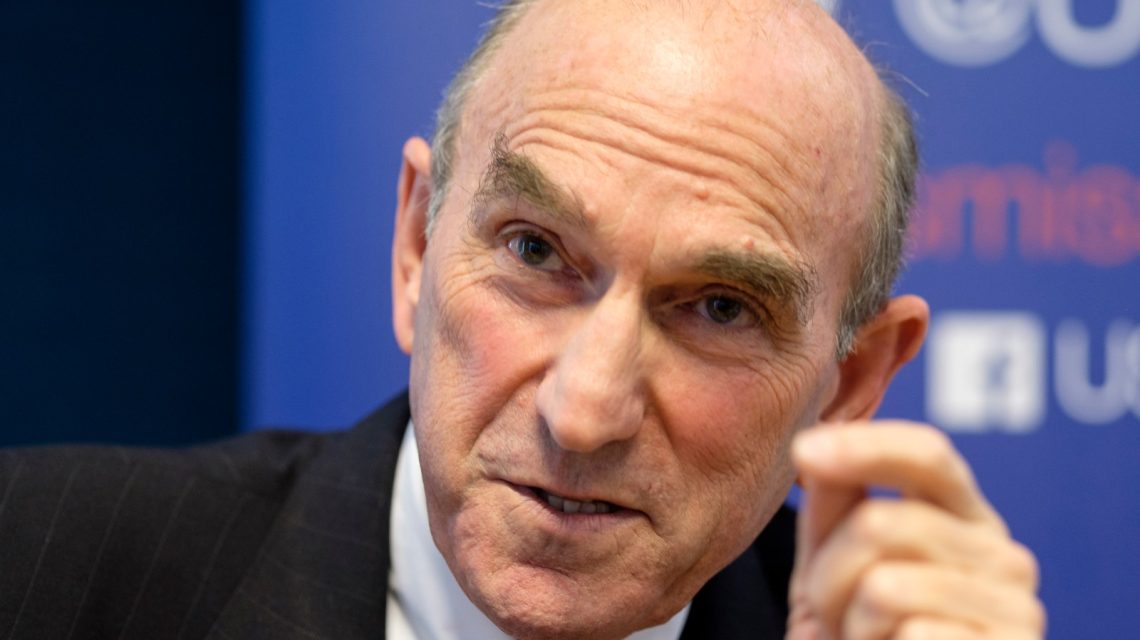
Elliott Abrams played a key role in the Trump administration’s initial Venezuela policy, which supported Juan Guaidó as acting president and sought Nicolás Maduro’s removal. Nine months after Maduro’s departure, Abrams has shifted from an early supporter to a critic of the administration’s strategy. In an op-ed for Washington Post, Abrams described a recent oil agreement with Venezuela’s interim government as a ‘shameful sellout,’ arguing that it benefits Washington’s oil interests while bolstering interim President Delcy Rodríguez’s authority.
Details of the Oil Agreement
The deal grants North American Blue Energy Partners (NABEP), an oil company led by Venezuelan businessman Alejandro Betancourt, 100-year rights to 17 Venezuelan oil fields containing 65 billion barrels, roughly 20% of the nation’s proven reserves. The U.S. State Department will be able to purchase 20% of NABEP’s production at cost, while the U.S. Department of War receives a 35% equity stake in NABEP’s parent firm.
Despite facing political opposition within Venezuela, the agreement has highlighted Betancourt, who gained prominence during the tenures of Hugo Chávez and Maduro. He is wanted in Switzerland and under investigation in Spain for alleged money laundering linked to Venezuela’s state oil company.
Abrams’ Perspective on the Deal
Abrams, who served as Trump’s special representative for Venezuela, shared insights with Newsweek regarding the oil deal’s implications and future political transitions in Venezuela. He criticized the Trump administration for failing to push for free elections, suggesting a lack of commitment to democracy in Venezuela.
Abrams emphasized the contrast between the current approach and the pro-democracy stance of Trump’s first term. He expressed concerns that the new oil arrangement incentivizes Trump’s support for Rodríguez, while deterring actions toward setting an election date.
Analysis of Key Figures and U.S. Political Dynamics
According to Abrams, the Venezuelan government, led by the Rodríguez family, perpetuates power by delaying negotiations and preserving authority. He doubted Washington’s genuine interest in democracy, believing stability and oil access are prioritized.
Abrams discussed the role of Marco Rubio, noting his previous advocacy for democracy in Venezuela but suggesting he may now align with Trump for political survival. Abrams criticized the selection of partners like Rodríguez and Betancourt as detrimental to U.S. interests in Venezuela.
Concerns About Betancourt’s Controversial Role
Betancourt is viewed as emblematic of Chavista-Maduro era corruption, historically profiting from questionable dealings with Chávez and Maduro. Abrams highlighted Betancourt’s controversial background, including legal troubles, as problematic for the U.S.’s partnership.
Impact and Future Challenges
Describing the agreement as unconstitutional, Abrams predicted legal obstacles and commercial failures, doubting sustainable investment due to geopolitical uncertainties. He warned that the deal undermines U.S. credibility in Latin America, jeopardizing soft power based on democratic values.
Abrams cited Maria Corina Machado, a leading opposition figure, as remaining popular despite Trump distancing. He stressed the critical need for an election date to reassure Venezuelans and redirect political frustration toward democratic change.
Potential Military Involvement in Democratic Transition
Abrams acknowledged the necessity of negotiations with the military in democratic transitions, advocating for discussions to ensure future roles for Venezuela’s armed forces. He outlined the importance of U.S. commitment to democracy during political negotiations.
 The Enduring Popularity of Mayors: Insights for National Leaders
  White House Launches MAGA-Themed Arcade Games
  Vice President JD Vance Anticipates 9/11 Anniversary Events with Biden and Other Leaders
  David Warrington’s Impact as White House Counsel
  Ohio Senator Slams Connecticut Policy After Fatal Crash Involving Illegal Immigrant
  Democrats Gain Momentum in Key Senate and Gubernatorial Races for 2026 Midterms