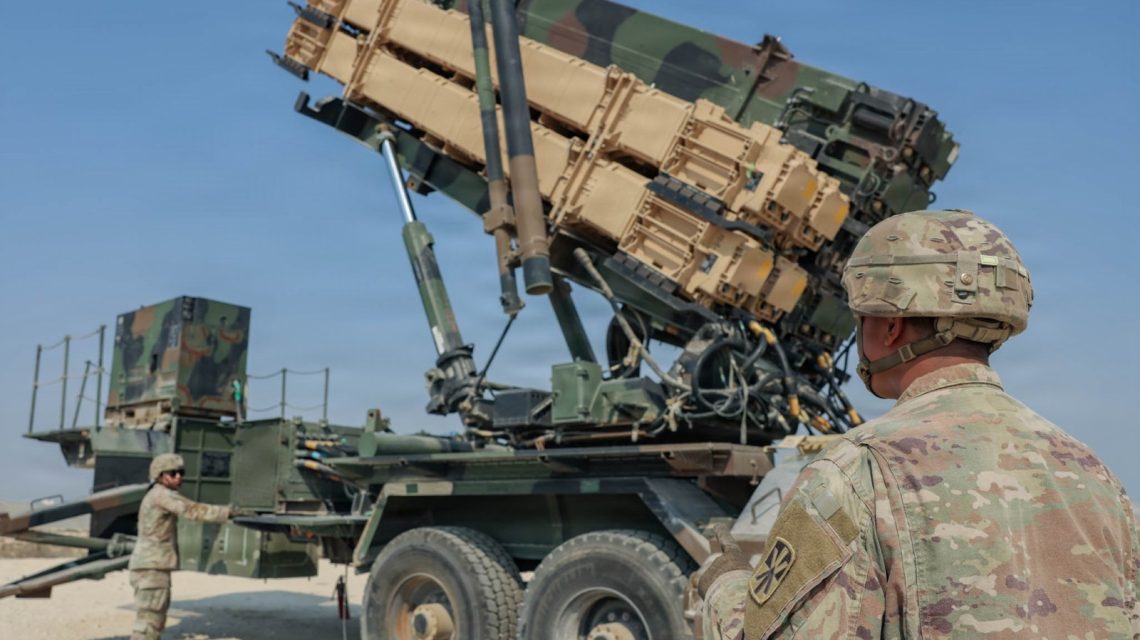
Trump’s Defense of Weapon Production and Criticism of Predecessor
President Donald Trump defended the financial impact of the war on Iran, claiming that U.S. weapons production can be sustained indefinitely. He blamed his predecessor, former President Biden, for allocating a significant portion of munitions to Ukraine during its conflict with Russia.
Trump stated on Truth Social, “We have virtually unlimited amounts of Mid to High Grade Ammunition, far more than we could ever use for this, or any other war, that could improbably take place.” He emphasized that U.S. munitions production has reached unprecedented levels and remains focused on maintaining a domestic arsenal rather than selling to other nations. Nonetheless, sales to allies were expected to resume soon.
Trump criticized the Biden Administration for making substantial munitions offerings to Ukraine at no charge, stating, “Hundreds of billions of dollars was given to Ukraine and NATO, free of charge, that Europe would have paid for, if they were only asked.” He contended that the financial strain from such commitments differs from what Washington has used in Iran.
Complexities of U.S. Commitments
Comparing the expenditure in two wars, analysts highlight the complexity of U.S. commitments to Iran versus Ukraine. The strain on the U.S. defense industrial base is evident, leaving Washington potentially vulnerable.
Christopher Chivvis, former U.S. intelligence official and senior fellow at the Carnegie Endowment for International Peace, underscored these vulnerabilities. The overstretched situation presents opportunities for adversaries such as China and Russia.
Chivvis described Trump’s assertion of “virtually unlimited” capacity as fictional, arguing that the decision to engage in war with Iran further exhausts military resources. He highlighted issues in munitions conservation, necessary for potential threats from nations like China.
Efforts to reach the Department of War for comment were unsuccessful. However, Pentagon Spokesman Sean Parnell emphasized, “America’s military is the most powerful worldwide, equipped to execute operations whenever and wherever the President selects.” The deep arsenal supports operations while ensuring national interests.
Comparing Military Support and Costs
From February 2022, when Russia invaded Ukraine, until the end of Biden’s term in January 2025, the U.S. committed approximately $66 billion in security aid and an additional $130 billion for other forms of assistance. This information comes from the Department of Defense.
Conversely, in the initial high-intensity phase against Iran from February 2026, roughly 1,000 Tomahawk cruise missiles and other types were reportedly fired. Estimates from the Center for Strategic and International Studies indicate significant munitions usage.
Various types of military equipment provided to Ukraine include artillery shells, HIMARS, NASAMS, Patriot systems, tanks, helicopters, and armored vehicles. The scope of equipment transferred to Ukraine contrasts with weapons expenditure against Iran.
Impact of Weapon Usage and Future Readiness
The raw weapon tally used in Iran may pale against what has been supplied to Ukraine. Nevertheless, the expenditure on high-cost, strategically significant precision and air-defense weapons in Iran strains the military.
Significant financial resources accompanied operations in Iran, with costs exceeding $100 billion according to estimates factoring in living costs, fuel price increases, and damage repairs. The Department of War projected future demand for ongoing operations and higher funds.
Mark Montgomery, retired U.S. rear admiral, noted most U.S. weapon transfers to Ukraine don’t overlap with usage in Iran. The rate of Patriot system involvement indicates differing characteristics across these conflicts.
Defense Secretary Pete Hegseth estimated the Iran war cost approximately $37.5 billion, with further funds sought. The total expenditure surpasses previous estimations when considering indirect war expenses.
Human Cost and Military Readiness
The nature of these conflicts fundamentally diverges. The U.S. provides aid in one, while engaging directly in combat against another longstanding adversary.
Since hostilities began in Iran, 18 U.S. service members have died. No publicly recognized fatalities have occurred among U.S. military personnel deployed in Ukraine; however, numerous volunteers have perished.
Jennifer Kavanagh, senior fellow, expressed concerns over prolonged regional demands impacting future military readiness. Despite sufficient munitions to support current activities, community defensive support faces limitations.
Kavanagh highlighted political shifts affecting defense modifications through munitions conversions into precision types. The U.S. can protect forces with limited strikes but can’t fully meet defense needs while aiding Ukraine.
Committing resources impacts future readiness amid evolving global threats. Continued conflicts stretch timelines further, delaying preparation against existential threats. The U.S. faces challenges mounting necessary defense against potential conflicts involving China and Russia.
 U.S. Military Reveals Drone Takedowns at Southern Border
  Adam Telle Named Acting Army Secretary by President Trump
  Concerns Arise Over Safety in Girls’ Sports Amid Legal Battles
  Thursday’s Spotlight: College Football Returns and More
  Army Secretary Dan Driscoll Resigns Amid Pentagon Tensions
  USS Lincoln Crew Returns to Solid Ground After Lengthy Deployment