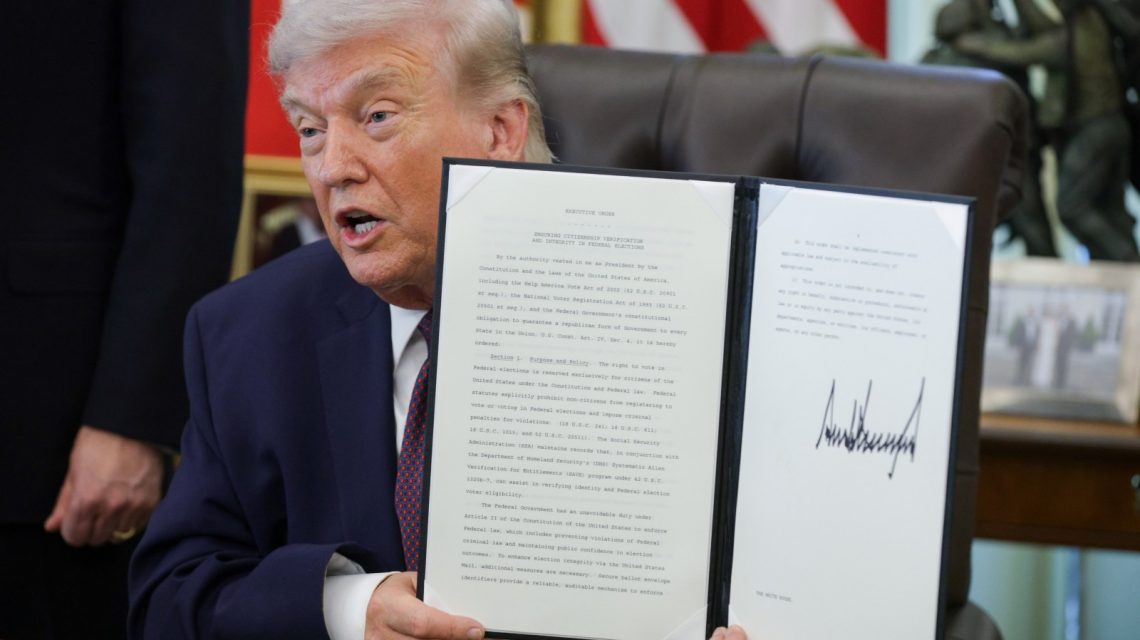
Trump Administration Seeks Supreme Court Intervention on Mail-In Voting
Ahead of the November midterms, the Trump administration has approached the U.S. Supreme Court to seek emergency intervention in its escalating legal battle over mail-in voting. On Sunday, the administration requested the justices to allow contested U.S. Postal Service ballot restrictions to take effect immediately. This action follows a federal judge’s decision on Friday to indefinitely block the plan while litigation continues in lower courts.
This legal dispute has emerged as a significant battle in this year’s election cycle. It focuses on the process by which millions of Americans will cast their ballots, with control of Congress at stake. According to federal data, nearly one-third of U.S. voters used mail-in ballots in the 2024 presidential election. The outcome of this legal conflict is crucial for election administrators, political parties, and voters, especially in battleground and Western states where mail voting is heavily used and could determine congressional majorities.
Newsweek reached out to the White House on Sunday for comments.
Legal Arguments and Timelines
In an emergency application, Solicitor General D. John Sauer requested the high court to remove a block imposed by U.S. District Judge Indira Talwani on Friday. Talwani, an appointee from the Obama era, concluded that challengers—including Democratic-led states and voting rights groups—might succeed in arguing that the Postal Service policy encroaches on powers reserved for states and Congress under the Constitution.
The Trump administration argues that these rules are routine postal regulations intended to enhance election integrity and not an unlawful federal takeover of elections. A key issue in the litigation is whether these changes can be realistically implemented before Election Day. While North Carolina has already started mailing absentee ballots, additional states are scheduled to follow soon.
The administration asserts that each day the injunction is active, confusion deepens as local election officials continue preparing ballots under current systems rather than proposed federal standards. Opponents argue that altering procedures so close to Election Day could disrupt logistics for offices that have been prepping for months. Some election experts have told Newsweek that even a legal win for the administration might be too late to significantly change how many states handle mail voting this year.
Implications for the Upcoming Midterms
The legal conflict over mail-in voting has substantial implications for the upcoming midterms, with Congress control at stake. Republicans are defending their legislative majorities, while Democrats aim to leverage political winds to gain seats in the House and Senate. Winning either chamber would give Democrats control of committee agendas and subpoena power, enhancing oversight and opening avenues for investigations.
The intense partisan atmosphere surrounding the midterms was emphasized by Democratic Representative Jamie Raskin of Maryland, the ranking member of the House Judiciary Committee. During an NBC News’ Meet the Press appearance, Raskin claimed President Donald Trump has “undoubtedly” committed impeachable offenses and continues to defy Congress, highlighting how a shift in congressional control might reshape the last two years of the presidential term.
The administration defends mail ballot restrictions as commonsense measures designed to bolster public trust in elections. Critics counter that these rules create unnecessary barriers to voting and represent an unconstitutional expansion of executive authority into areas traditionally managed by states.
The Supreme Court faces pressure to act swiftly as ballots continue reaching voters nationwide. Their next move will decide not only how mail ballots are managed during the final campaign weeks but whether one of the administration’s main election-security initiatives persists.
Contact Newsweek editor for this story: Anthony Murray.
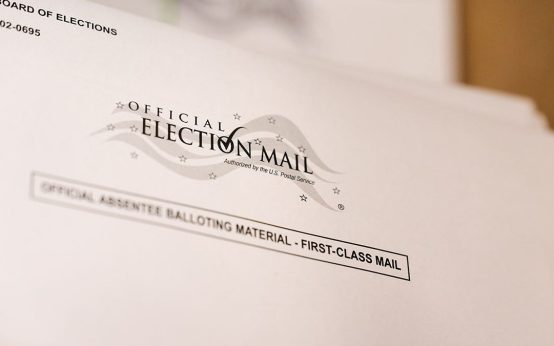 States File Lawsuits Against USPS Over Mail-In Voting
  Congressional Candidate Cait Conley’s Stance on Democratic Socialists and Campaign Strategy
  Gavin Newsom Navigates Political Challenges in South Carolina
  AfD Leads in Saxony-Anhalt Elections, Faces Uncertainty in Forming Government
  Germany’s AfD Achieves Historic Win in Saxony-Anhalt Election
  Reflections on the 25th Anniversary of 9/11