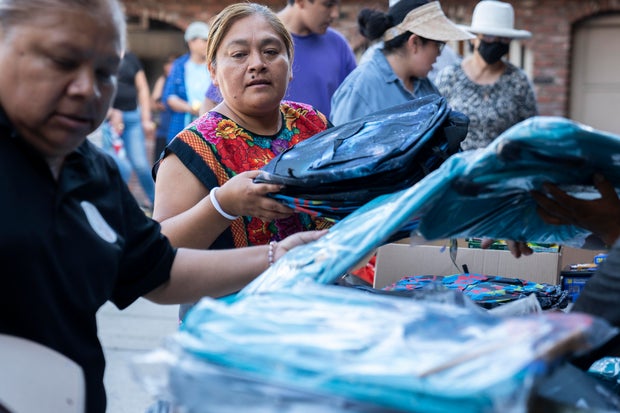
A young girl stood at the doorway of her neighbor’s apartment in Oxnard, California, her eyes filled with hope as she asked Norma Gómez if she could bring her mother back. Gómez, a project manager with the Mixteco Indigena Community Organizing Project, had arrived with food and supplies for the girl and her baby brother, left alone after immigration agents detained their parents.
Gómez, supporting immigrant families affected by Immigration and Customs Enforcement raids, witnessed the emotional turmoil caused by immigration policies. These policies, under President Trump’s administration, posed significant challenges for families, impacting about 205,000 children with detained parents. These separations destabilize families, compelling caregivers to struggle with basic needs and leaving some children to fend for themselves.
Even children with parents not detained face threats to well-being due to policy changes. incidents of bullying over immigration status led to tragic suicides of two children in February 2025. A rollback on immigrants’ access to healthcare, food, and other benefits has forced families to withdraw from essential services.
Most of these children, American citizens, experience fear and emotional distress, often dealing with increased school bullying and anxiety about ICE profiling. Wendy Cervantes from the Center for Law and Social Policy expressed concern over the long-term developmental harm affecting children’s educational and health prospects.
Trump’s intensified immigration enforcement includes detaining parents of 145,000 U.S. citizen children and attempting to rescind temporary protected status for over a million immigrants, affecting those with citizen children. White House spokesperson Lauren Bis defends these policies, emphasizing resource allocation and integrity restoration, though studies suggest mass deportations disadvantage U.S. workers.
Critics argue that harsh policies inflict collective trauma on families. A study indicated that healthcare costs for trauma-related conditions in 2021 reached $292 billion, burdening taxpayer-funded programs. Mental health issues, anxiety, and extreme distress plague children from immigrant families, affecting their daily lives and prompting some to take drastic actions.
Despite adversity, many children adapt, often assuming protective roles for their families. Community support remains crucial, with groups delivering food, providing therapy, and assisting with emergency plans. Arizona State University researchers advocate for humane policies like the Family Case Management Program, which successfully supported families while enforcing immigration laws.
Ultimately, humane immigration policies are essential to mitigate harm and support children’s development and well-being.
 Prescription Weight-Loss Medications Linked to Increased Mental Health Risks
  Health Risks of Southern California’s Extreme Heat and Humidity
  Medicare for All: A Radical Proposal with Historical Roots
  New York Voters Approve Mayor Mamdani’s Performance
  Addressing Mental Health in the Workplace
  Dietary Changes Linked to Improved Survival in Prostate Cancer Patients