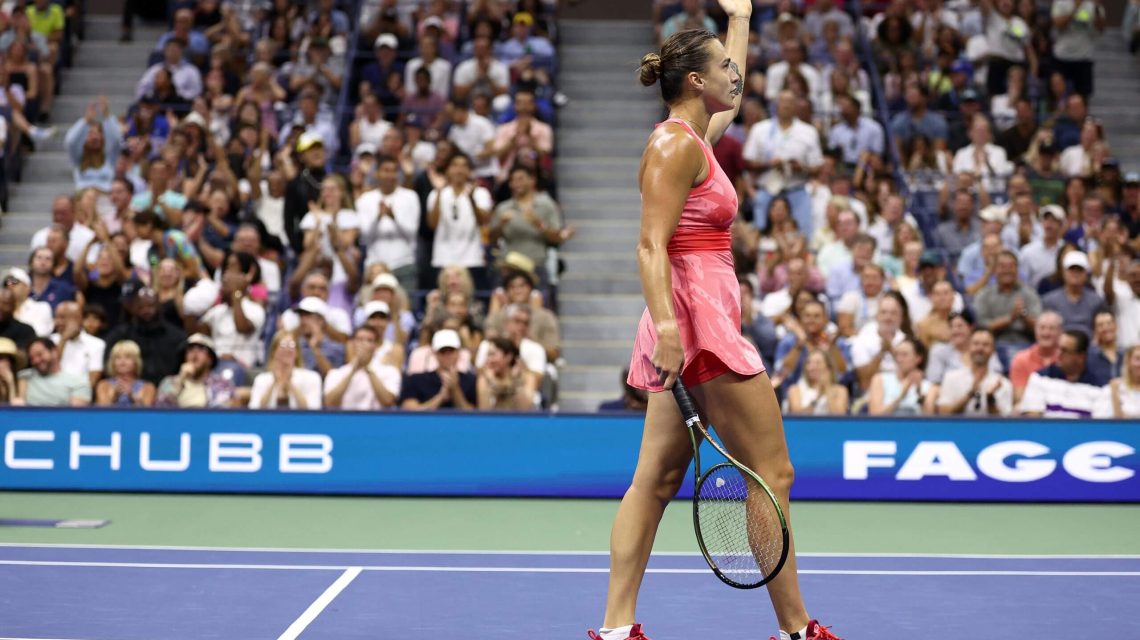
Aryna Sabalenka’s initial visit to New York City as a teenager presented some unanticipated challenges. On her first morning, despite exhaustion from travel, she woke early. Her body clock refused to let her sleep longer. She anticipated a serene, deserted Central Park, ideal for a morning stroll. Instead, she found it bustling with activity. Sabalenka was taken aback, wondering if the city ever rested.
Sabalenka had come from Minsk, Belarus, a significantly quieter place. Initially, she doubted if she and New York could connect. Fast forward a decade, and Sabalenka, now the world’s number one and two-time U.S. Open champion, thrives in the city’s energy.
Sabalenka’s Transformation
Her success isn’t solely due to her prowess on hard courts. It’s about harnessing the environment rather than letting it exhaust her. Anton Dubrov, Sabalenka’s coach, explained how she channels the city’s energy to motivate herself instead of allowing it to become a drain.
Even the notorious New York traffic, which frustrates many, has become a time of reflection for Sabalenka. With her headphones on, she finds the drive calming, similar to Roger Federer in his active years.
Facing Unique Challenges
Each of the Grand Slam tournaments presents distinct trials. The Australian Open requires a lengthy journey and adapting to a new time zone. The French Open’s clay courts offer challenges, while Wimbledon combines grass courts with history and grandeur.
The U.S. Open is synonymous with chaos and challenges. Even past champions like Iga Świątek and Novak Djokovic find it a trying environment. Djokovic escapes to a quieter spot in New Jersey for peace.
New York native Paula Badosa ranks the city as her favorite except when working; she cites the noise and wind as drawbacks. Frances Tiafoe jokes about the cocktail-fueled atmosphere.
Most players, regardless of their feelings, see the U.S. Open as a survival test. Success demands managing sensory overload and embracing chaos—a philosophy Sabalenka understands well.
Strategies for Success
Sabalenka’s approach involves securing a high-floor hotel room and dining at select restaurants. “I go to Polo Bar; I have my steak there with really good sides,” she explained. These choices help her maintain health and sanity amid competition.
Despite recent setbacks during tournaments, she remains optimistic about New York. Her capacity to adjust, accumulate experience, and engage with fans has made a difference. The revelation of her personality to the audience and surpassing her outsider status have bolstered support for her.
Becoming the world number one elevated her appeal. She believes audiences appreciate athletes’ personalities and not just their athletic achievements. Her experiences, victories, and media interactions helped her connect with fans.
Preparation and Relaxation
Sabalenka’s support team has refined routines to optimize her performance. Post-match, she cools down on an exercise bike and stretches. Diet and rest are critical, with a protein-rich meal like steak being a staple.
Adjustments are inevitable. After short matches, occasional practice can occur. However, recovery remains a priority. If matches end late, getting adequate sleep becomes essential.
The Zen of Acceptance
Jason Stacy, Sabalenka’s fitness and mindset coach, emphasizes acceptance in sports. Athletes cannot control every outcome. For Sabalenka, this acceptance of uncertainty is part of her mental preparation.
Sabalenka’s journey involves countless battles on and off the court that have made her adept at navigating New York’s chaos. Her rapport with the city and tournament is as much about personal growth as it is about physical achievement.
 Omos Dominates Rey Mysterio at Triplemania 34 Night 1
  Cody Campbell: Transforming College Sports
  U.S. Open Men’s Semifinal: Zverev vs. Khachanov
  Revival of the Intense Kansas vs. Missouri College Football Rivalry
  Homewood-Flossmoor’s Vito Pickard Jr. Shines in Statement Game
  Aiden Brunner’s Breakthrough Leads to Stunning Jacobs Victory