Swedish citizens are preparing to vote in an important election this Sunday. Prime Minister Ulf Kristersson’s center-right party slightly trails behind the center-left Social Democrats, led by former Prime Minister Magdalena Andersson. Key topics shaping the election include mass migration, crime, and economic issues.
For several years, Sweden has faced challenges such as gang violence, Islamist extremism, unemployment, and pressure on public services. Daniel Schatz, a foreign policy expert, stated that these issues have sparked debate regarding whether integration efforts have kept pace with immigration levels.
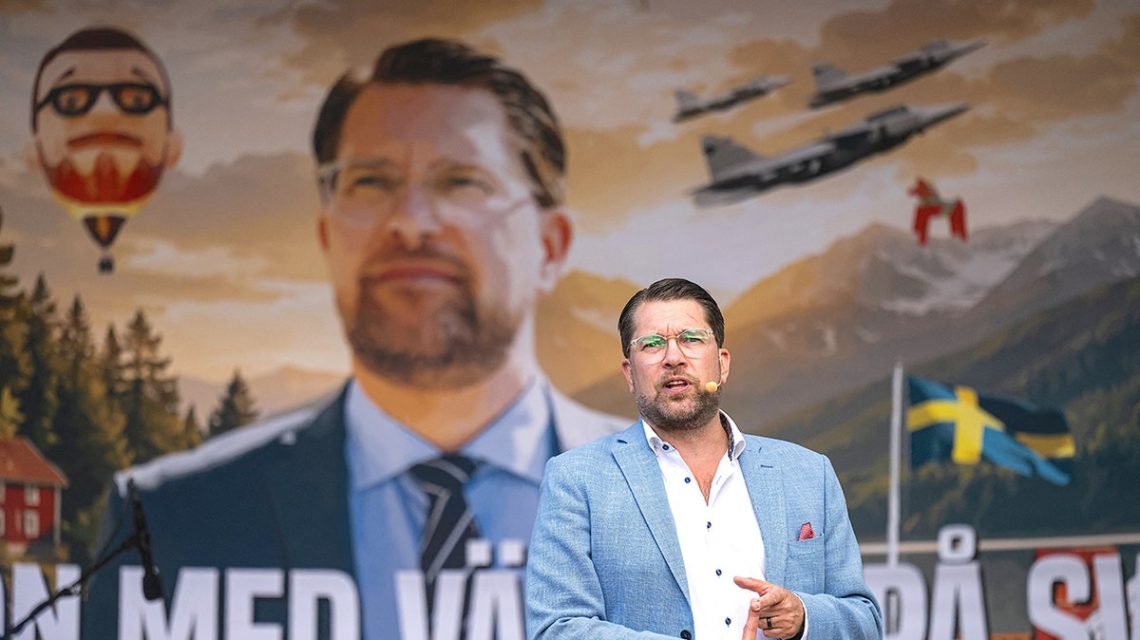
Sweden Democrats leader Jimmie Åkesson participated in a campaign event as part of his party’s national tour ahead of the upcoming election. After Germany’s recent state election results, the Sweden Democrats could participate in government if Kristersson’s party succeeds. The anti-immigration group has shifted towards mainstream politics and may gain cabinet positions. Founded on far-right extremist ideas, the party under Åkesson’s leadership has distanced itself from those origins.
Sweden’s welfare state, once seen as a model globally, now faces economic strain. Governments, from both left and right, have restructured welfare systems. Despite ongoing social benefits, rising crime influences expectations on public services. Sweden transformed from a ‘humanitarian superpower’ to a nation criticized for its migration policies.
Shootings have decreased, but integration issues remain unresolved, according to Schatz. Gang violence plagued Sweden in recent years. When Kristersson took power in 2022, gun violence climbed significantly, including 391 reported shootings and 62 resulting deaths, as per The Swedish National Council for Crime Prevention. Sweden’s homicide rate is notably high compared to other European countries, with four deaths per million inhabitants per year—considerably above the European average of 1.6 deaths.
Crime concerns intertwine with immigration issues. In 2015, Sweden experienced increased immigration due to conflicts in Syria, Iraq, and Afghanistan. About 160,000 asylum seekers arrived, constituting 12% of the EU’s overall asylum applications. The increase strained Sweden’s asylum system, leading to stricter border controls.
The Sweden Democrats stepped into the political scene on anti-immigration grounds. Nicholas Aylott, a political science professor from Södertörn University, emphasized that the migration-crime link shifted electoral priorities. Sweden Democrats initially faced exclusion but gradually won acceptance as a partner among right-wing parties over recent years.
With reduced shootings and tighter immigration policies, the government faces possible defeat by Andersson’s center-left coalition.
 Alan Ritchson Faces Backlash Over Political Remarks
  Himalayan Pilgrimage: A Couple’s Narrow Escape and Lingering Questions
  Former CEO Sentenced for Bank Fraud and Sanctions Evasion
  Russia’s Potential Incursion Into Estonia: NATO’s Resilience Under Scrutiny
  Senators Urge Action to Free Imprisoned Journalist in Iran
  Trump’s Address at UNGA and Key Political Developments