
The term ‘Pay your fair share’ is a popular phrase used by Democratic politicians in Washington, D.C., especially when addressing tax policies affecting wealthy Americans. Despite politicians asserting that the wealthy aren’t contributing enough, data tells a different story. For instance, the top 1% of taxpayers reportedly pay approximately 40% of federal individual income taxes, with the top 10% covering the majority.
Current Contributions
The question arises: If this contribution isn’t sufficient, what would be considered enough? The debates surrounding taxation don’t solely focus on ordinary income taxes. Discussions soon turn to capital gains taxes, Social Security taxes, and estate taxes.
“Billionaire Bezos suggests no taxes for half the nation. Is that crazy or overdue?”
Some politicians aim to impose increasingly higher taxes on successful Americans. Here are five potential tax areas where they may pay even more:
Potential Tax Increases
1. Raising the Top Income Tax Rate
One straightforward method to collect more revenue is by increasing the top tax bracket. High earners already face the highest federal marginal income-tax rates, plus substantial state income taxes, leading to high combined rates in states like California and New York. The top tax rate hasn’t surpassed 39.6% since it was 50% over 40 years ago. Is a return to a 50% rate plausible?
2. Increasing Capital Gains Taxes
This method is another favorite among policymakers, especially if political dynamics shift in Washington. Taxing investment gains similarly to ordinary income seems straightforward, but it overlooks where investment capital originates—from individuals willing to risk their money on businesses and investments with hopes for returns. Heavier taxation on investment returns may inevitably change behaviors.
3. Taxing Wealth During Lifetime
Rather than waiting for income, some proposals suggest taxing wealth as it exists. Consider a scenario where someone builds a $100 million business, yet doesn’t have $100 million in cash. Taxation may be due even if the wealth is tied up within the company. California’s upcoming ballot might provide insights into this approach.
4. Estate Tax Changes
The federal estate tax already applies to estates exceeding the exemption limit, with a rate potentially reaching 40% by 2026. Certain states impose additional taxes as well. During 2000, the federal exemption was below $1 million. If this reverts, families might face taxes up to 50% on estate values.
5. Surtaxes
Instead of steep increases in headline tax rates, adding surtaxes serves as another approach. Existing taxes include the 3.8% Net Investment Income Tax and a 0.9% Medicare surtax on high earners. States have introduced their own surtaxes—the millionaire surtax in Massachusetts and another in California. Incremental surtaxes can accumulate to significant amounts.
Congress has created tax loopholes, which taxpayers lawfully use. If loopholes are problematic, Congress should amend them rather than criticize taxpayers. Addressing America’s ‘fair share’ debate necessitates clarity on what ‘fair’ truly entails. Political rhetoric doesn’t provide definitive tax policies without defining objectives clearly.
Perhaps some taxes require increases, specific deductions could be revoked, and certain strategies might be obsolete. Debates on these issues are necessary, but politicians must first answer one pivotal question: What defines a fair tax rate? Until then, ‘fair share’ remains a political slogan rather than actual tax policy.
 Engaging in Political Conversations with Open Minds
  Managing Public Panic with Transparency and Market-Based Solutions
 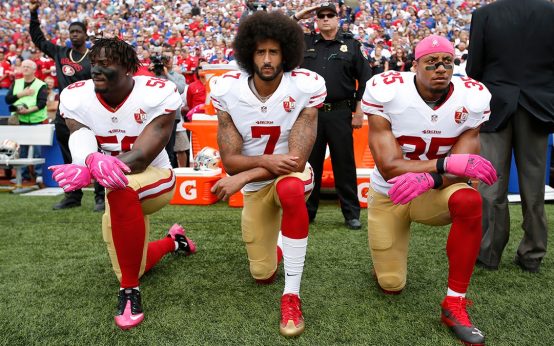 Colin Kaepernick Criticizes NFL and Shares Views on Activism During ‘The View’ Interview
  President Trump Criticizes AI Oversight Proposals
  Discussion on Lindsay Clancy’s Case Highlights Need for Broader Support
  Team USA Women’s Basketball Coach Seeks Unity During World Cup