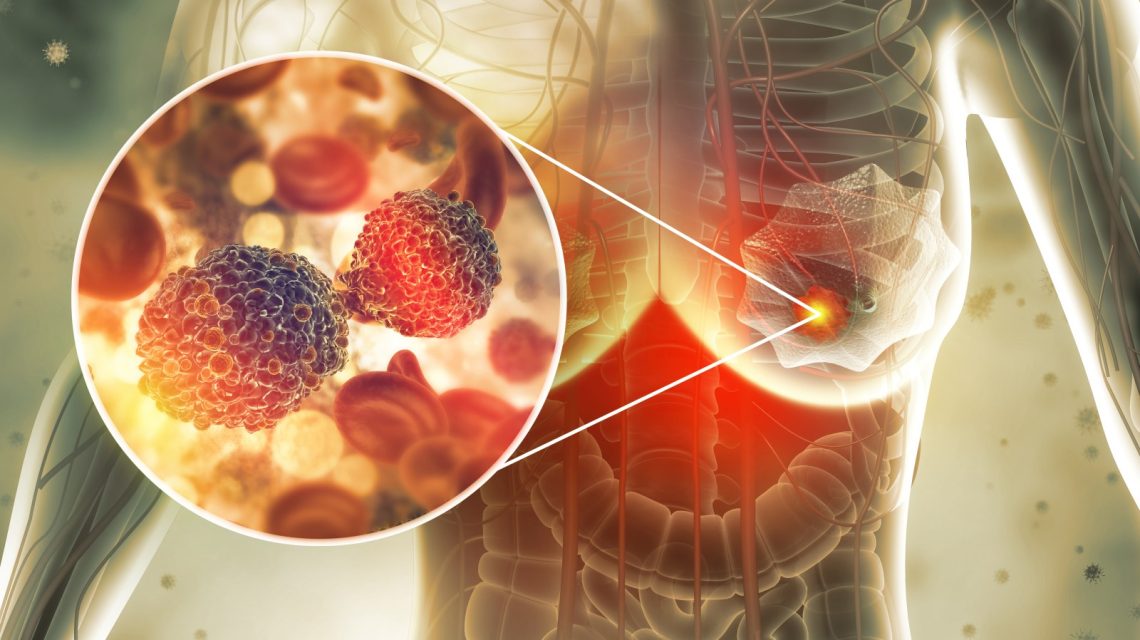
Researchers may have identified how dense breast tissue leads to cancer, providing hope for early intervention. Breast cancer often forms in dense tissue, leading women with this tissue type to receive follow-up appointments after mammograms. Dense tissue, appearing as solid white on a mammogram, complicates breast cancer screening and increases cancer risk, as noted by the Mayo Clinic.
Researchers at UC San Francisco have pinpointed a potential mechanism explaining why dense tissue slightly elevates the risk of breast cancer. Dense breast tissue is stiffer than normal tissue and attracts immune cells that release DNA-mutating chemicals, according to Medical Xpress. These chemicals can damage surrounding cells’ DNA, thereby increasing cancer risk.
For years, medical professionals have capitalized on this relationship to detect cancer post-onset. Recent findings may allow them to prevent the occurrence. Mary-Kate Hayward, first author, emphasized to Newsweek the long-standing knowledge that dense tissue raises cancer risk, but the underlying reasons were unclear. Their study demonstrates how dense tissue alters macrophages, immune cells, leading to the release of chemicals damaging nearby DNA, elucidating how dense tissue may drive cancer.
Study Insights
Published in Cancer Cell, the study involved examining breast tumor samples, measuring tumor stiffness, and taking microscopic images of collagen, a protein that stiffens tissues. The stiffer tumor areas showed increased collagen, scarring, macrophages, and DNA mutations. Additionally, these regions had higher levels of STAT3, a cancer-promoting signaling pathway, hinting at a connection between stiffness and macrophage increase.
Further research using tumors in different gels and mouse models revealed that the stiff environment activated STAT3 in breast cells, attracting macrophages that promote cancer growth. Macrophages on stiff gels produced reactive oxygen species (ROS), classic cancer markers. Although ROS are short-lived, they cause oxidative damage to fats in macrophages, creating DNA-damaging chemicals that can affect adjacent cells.
Hayward remarked to Medical Xpress on the surprising capacity of macrophages to produce DNA-damaging chemicals within tissue, akin to environmental chemicals. Additional experiments supported that dense tissue’s stiffness increased macrophages, aldehydes, DNA damage, and disease advancement.
The researchers aim to explore drugs that inhibit aldehyde formation in macrophages. Hayward stated to Newsweek that targeting these damaging chemicals could potentially preempt tumor formation in high-risk tissue.
 Impact of ‘Food Divorce’ on Relationships
  Long-Term Health Impacts of the 9/11 Attacks
  The Link Between Type 2 Diabetes and Mental Health Conditions in Women
  Debate on BMI and Race in Medical Guidelines
  ChatGPT’s Trusted Contact Feature Aims to Support Users in Distress
  Research on Microclots and Long COVID