China has emerged as a significant figure in the ongoing global debate over artificial intelligence (AI) regulation, prompting calls for cooperation on a global scale to potentially slow down AI development. The country’s top intelligence official has warned about the inherent risks AI poses to the governance and control of the Chinese Communist Party. On Sunday, an article published by the state-run magazine China Cyberspace emphasized the need for stringent government oversight and meticulous party control over AI technologies.
Chen Yixin, head of China’s Ministry of State Security, identified multiple dangers linked with AI, including foreign espionage, misinformation campaigns, and cyberattacks targeting critical infrastructure. Yixin also highlighted U.S. AI models as emerging cybersecurity threats, according to The New York Times.
“AI poses risks ranging from foreign espionage and misinformation campaigns to cyberattacks on critical infrastructure,” Chen Yixin remarked.
Meanwhile, Jack Clark, co-founder of Anthropic, proposed that AI companies should be mandated to maintain a verifiable “kill switch” to shut down potentially dangerous AI systems. Clark told the BBC that Anthropic already has implemented such a mechanism and suggested that governments might eventually mandate independent audits to ensure AI firms can deactivate dangerous systems.
Despite the widespread calls for regulation from lawmakers and AI industry leaders, President Donald Trump has emphasized prioritizing the United States’ competitive edge in AI development over slowing down advancements. Guo Jiakun, spokesperson for China’s Ministry of Foreign Affairs, echoed a similar stance, noting that fearmongering and confrontation could disrupt the process of global AI governance.
“Fearmongering, confrontation and vicious competition will only disrupt the process of global AI governance which serves no one’s interest,” said Guo Jiakun.
China’s state-backed Global Times characterized proposals for tighter controls on Chinese access to advanced chips as reminiscent of Cold War strategies. The Global Times’ stance emphasizes China’s perception of international attempts as containment efforts.
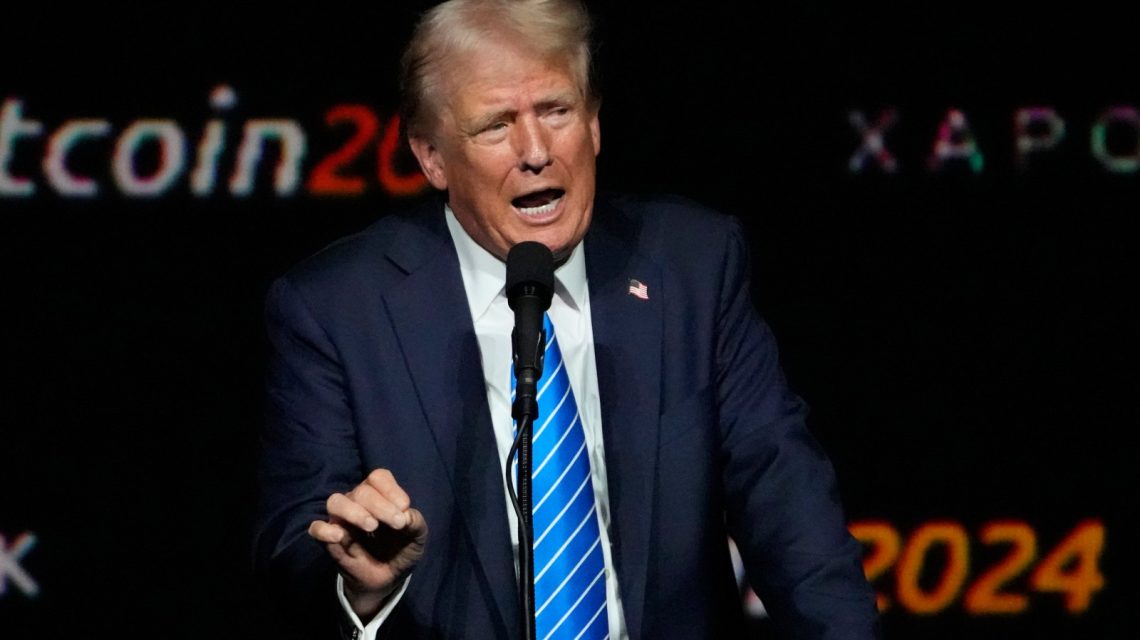
President Trump took to social media with strong comments against regulation, stating that AI needs leaders like him, who are smart and competent to guide AI progress. His remarks illustrate the growing divide between policymakers advocating for rapid AI expansion and influential figures urging caution as technology evolves faster than governments and companies can manage.
“The only control or ‘guardrails’ that AI needs is a STRONG AND SMART (High IQ!) PRESIDENT, and the U.S.A. has that, in spades!” Trump stated in his post.
Dario Amodei, CEO of Anthropic, warned about the risks presented by increasingly powerful AI systems and called for a collaborative global effort to slow frontier AI development to ensure safety protections keep pace. This dialogue reflects broader national security implications, capturing the geopolitical dimension and competition between the United States and China in AI.
U.S. Vice President JD Vance has voiced skepticism regarding AI companies requesting government regulation, suggesting it might be premature and potentially stifling innovation. Contrary to this stance, prominent AI executives, including Amodei, OpenAI’s Sam Altman, and Elon Musk, have endorsed strategies to cautiously slow the development of powerful AI models.
Risk Management in AI Development:
- Cybersecurity experts stress the importance of building robust safeguards alongside innovation, instead of halting progress.
- John Walsh, technology officer at IGEL, expressed concerns over slowing innovation, stating the competitive landscape will not alter because strategic rivals like China, Russia, and Iran are unlikely to pause development.
Walsh proposes AI agents should be treated akin to any system user, restricted to necessary data and tools within trusted environments. Structural identity and access management techniques similar to Zero Trust architecture must be leveraged, he noted.
“Companies should begin treating AI agents much like any other user of their systems. An agent should have an identity, be limited to the data and tools it needs for a specific job and operate in a trusted environment,” Walsh emphasized.
The United States leads in frontier AI development through companies like OpenAI, Anthropic, Google DeepMind, and Meta, but China’s rapid advancements are narrowing the competitive gap. China is ramping up domestic chip development, expanding AI research and deployment, and shifting more top-tier AI researchers to its soil.
China’s government is prioritizing AI leadership strategically, with President Xi Jinping advocating for a global AI governance framework. Simultaneously, China encourages domestic innovation and AI deployment, challenging U.S. dominance.
Strengthening AI Governance and Security:
- Amodei advocates independent evaluations of advanced AI models to verify safety compliance.
- Walsh calls for measures like governance and security deployment alongside innovation rather than halting progress.
- Implementing Zero Trust principles to establish conditions for AI agent activities is crucial.
Walsh describes the importance of setting architectural policies for AI, treating AI agents as non-human identities, and accommodating AI within trusted systems. He highlights industry collaboration and standard-setting in establishing agent identity bound by contextual governance.
Government can create a minimum safety floor, industry innovates beyond it, while ensuring standards evolve as technology changes, Walsh advised. American competitiveness cannot afford to lag behind strategic competitors, he cautioned.
China has signaled its resistance to international regulations perceived as containment strategies, with President Xi recently stating China will not obstruct AI development.
The responses underscore challenges facing global AI regulation advocates amid a strategic competition backdrop. Meaningful international collaboration is essential, but strategic rivalry complicates consensus-building.
 Trump Agrees to Stricter Ethics Rules in Cryptocurrency Regulation
  Trump Rejects Slowing Technological Progress Amid AI Fears
  Sanders and Bannon Unite to Address AI Concerns
  The Future of Crypto Regulation: The Clarity Act
  Expansion of AI-Driven Schools Across the U.S.
  How AI is Transforming the Landscape of Scams