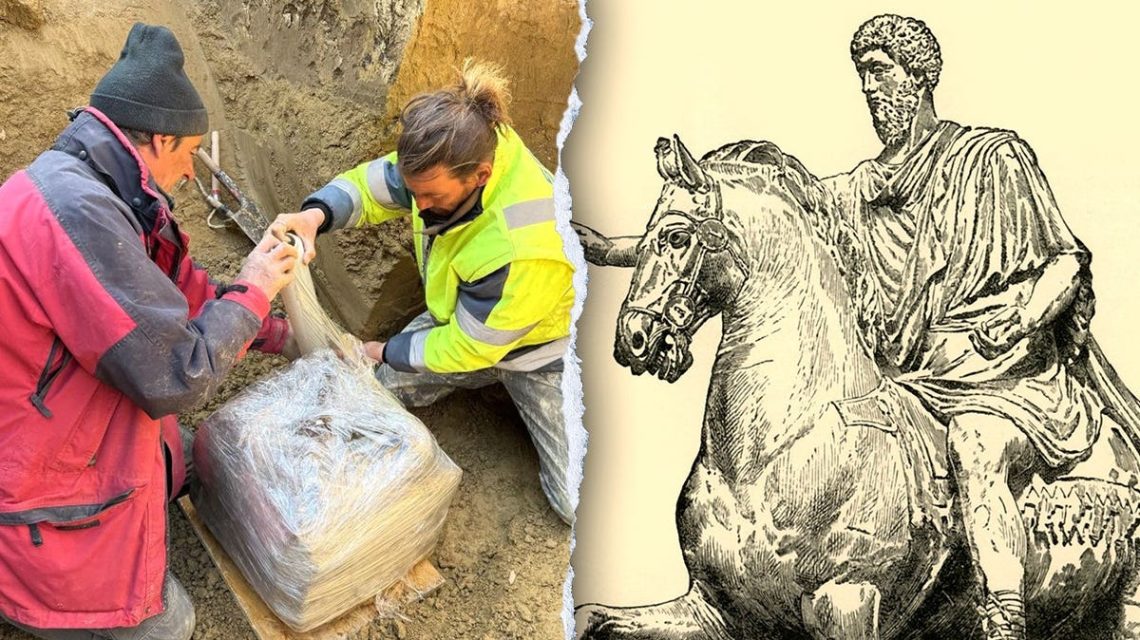
An ancient Roman military camp has been discovered in Slovakia, complete with the remains of soldiers, weapons, and armor. This significant archaeological find, near Šurany in western Slovakia, was revealed by the Institute of Archaeology of the Slovak Academy of Sciences (SAS) earlier this summer. The excavation took place before the construction of an industrial park, covering about 370 acres.
The camp, dating back to the second century A.D., is tied to the reign of Emperor Marcus Aurelius. It likely served during the Marcomannic Wars, which were a series of fierce conflicts with Germanic tribes along the northern frontier of the Roman Empire. Aurelius ruled Rome from 161 to 180 A.D. and is renowned as both a powerful leader and a Stoic philosopher, with his writings compiled into the influential work “Meditations.”
The discovery follows the identification of the first Roman camp in the Hron River region near Želiezovce, where it is believed Aurelius wrote parts of Meditations.
This is the first Roman military camp uncovered in Slovakia’s Nitra region. Unlike traditional Roman camps, this site boasts an irregular layout while still maintaining features typical of Roman marching camps. It includes defensive structures such as five entrance gates, fortifications, and a unique clavicula gate design that features a curved ditch and rampart, making attackers vulnerable.
Archaeologists unearthed numerous human skeletal remains. Complete skeletons and scattered bones were found in pits, wells, shallow graves, and ditches. The camp was abandoned following a conflict with Germanic forces, but the identities of the deceased remain uncertain.
Lead archaeologist Marek Vojteček suggests many of the remains belong to Roman soldiers, offering insights into Roman activities north of the Danube during the late second century. Alongside skeletal remains, the team found Roman military equipment, such as spears, arrowheads, helmet fragments, armor pieces, belt fittings, coins, and caligae military sandals, identified by iron hobnails in their soles. Everyday objects such as axes, knives, and gaming dice were also discovered.
Research continues at the site
The excavation is part of a long-term research process expected to take years for full analysis. The discovery holds significance beyond Slovakia, revealing crucial information about Roman history.
Last year, another notable discovery included a mass grave beneath a soccer field in Vienna, containing remains of up to 150 individuals, believed to be Roman soldiers and Germanic tribesmen.
 Trump’s Approach to Iran at the United Nations
 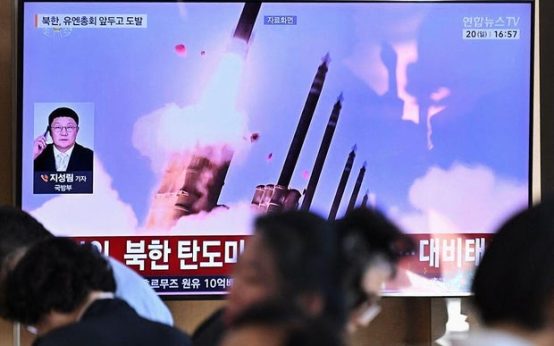 North Korea’s Missile Launches Escalate Tensions
 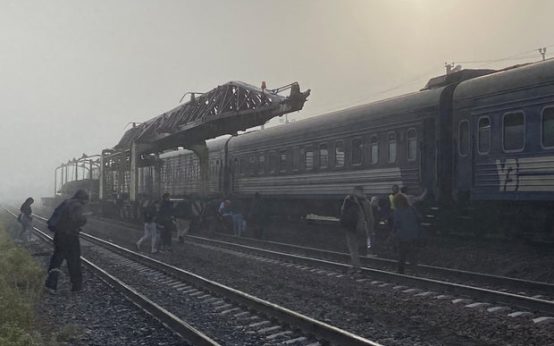 U.S. Plans for Permanent Army Base in Poland Amid Tensions with Russia
  Berlin’s Mayoral Race: A Candidate Inspired by New York Leadership
 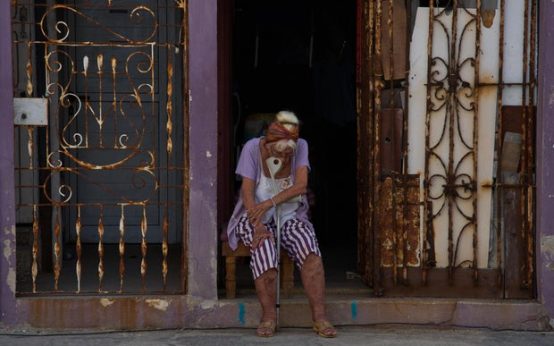 Cuba Faces Sixth Power Grid Collapse Amid U.S. Fuel Blockade
  Daring U.S. Rescue Mission in Iran