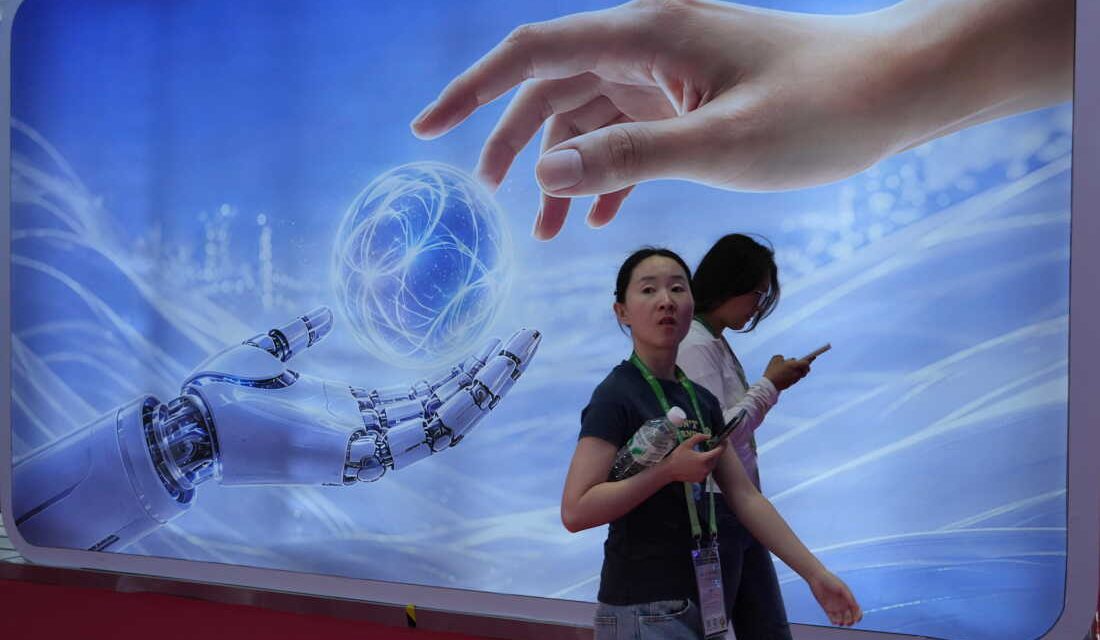
Visitors observed a display featuring artificial intelligence and a human hand at the China International Supply Chain Expo in Beijing. On the same day, China’s Ministry of Foreign Affairs responded to calls from the head of Anthropic, a tech firm, for the United States to limit China’s AI capabilities. The call aimed to encourage a global slowdown in AI development.
U.S. President Donald Trump and Chinese leader Xi Jinping are set to discuss AI governance and other matters on September 24. Dario Amodei, CEO of Anthropic, warned in an essay that China’s lead in AI could threaten the U.S. and the world. He advocated for ongoing sales restrictions on advanced AI chips and equipment to China to maintain the U.S.’s advantage.
The Chinese Foreign Affairs Ministry emphasized cooperation in AI across all parties. Spokesperson Guo Jiakun stated that fearmongering and aggressive competition disrupt global AI governance.
On Sunday, President Trump minimized calls to slow AI progress, reaffirming U.S. leadership in the field. According to him, AI dominance is crucial. Amodei also suggested that AI agents might overrun the internet within months unless development is paced.
Trump and Xi’s Summit Discussion
During their late September meeting, Trump and Xi are expected to address AI governance. Chinese companies have created robust AI models that rival U.S. models in capability while being more cost-effective. Xi has proposed a global AI governance framework among Global South nations, presenting China as an open-source AI community pioneer.
An article from China’s Ministry of State Security advocated for an AI security management system to be established quickly.
China Responds to Accusations
China’s media outlet, Global Times, criticized Amodei’s essay as an attempt to “contain” China, likening it to a “Cold War playbook” for AI. The essay followed a U.S. cybersecurity advisory accusing Chinese AI developers of harmful activities. China’s Commerce Ministry rejected these accusations, labeling them as unfounded and highlighting widespread use of techniques like “distillation” among AI companies. They accused the U.S. of striving for an AI industry monopoly.
Both countries seek to prevent the other from gaining technological dominance, according to Lizzi C. Lee, a fellow at the Asia Society Policy Institute. Lee questioned the form of cooperation desired by the U.S., given its restrictions on China’s access to advanced technology.
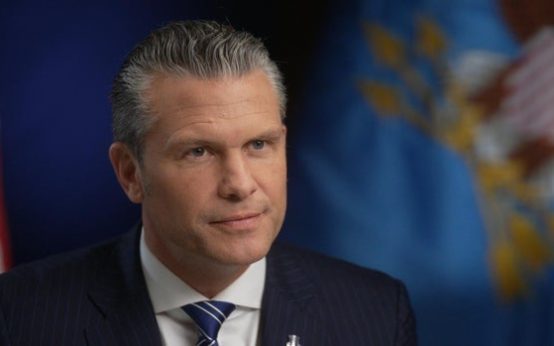 Daring U.S. Rescue Mission in Iran
  Inside the Daring Rescue of American Airman in Iran
 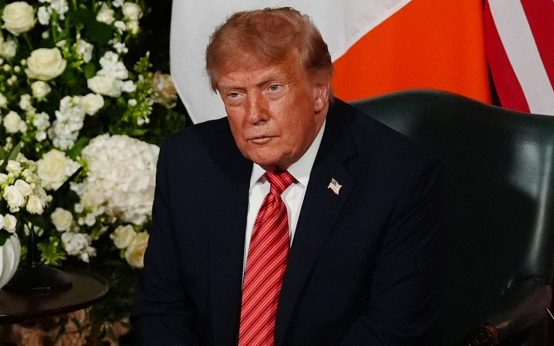 Trump Discusses Chinese Surveillance and Iran’s Missile Strike
 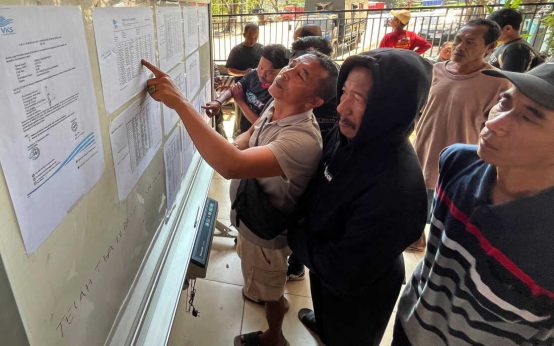 Search for Missing Passengers After Java Sea Ferry Disaster
 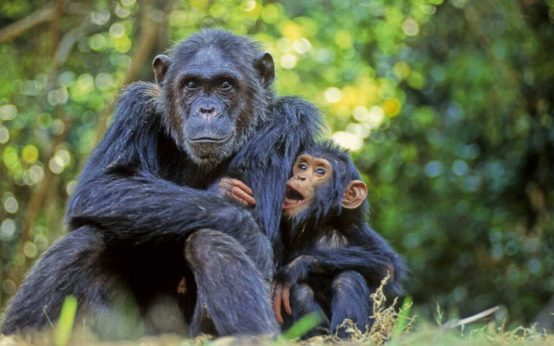 Chimps and Self-Medication: Insights from Gombe Stream
  U.S. Claims Victory Over Iran Amid Concerns