Voter Concerns and Legal Actions Against Federal Interference
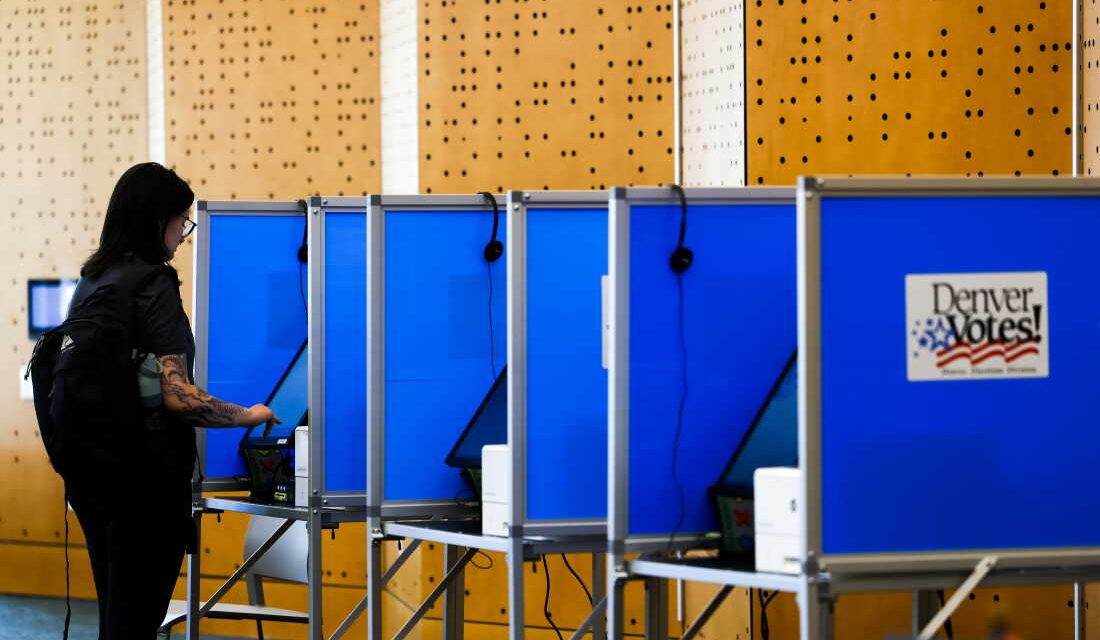
On June 30, a voter cast her ballot during Colorado’s primary election at the Central Library in Denver. Paul López, the city’s clerk and recorder supervising elections, noted a specific worry among voters this year: the potential presence of federal agents at polls. “Every meeting has someone asking about federal agents at polling places,” López stated.
Federal interference at polling stations is illegal, yet López and other election officials are preparing for this scenario due to suggestions from Trump administration members about deploying federal officers to polling sites. López recently joined a coalition that filed a lawsuit aimed at preventing this scenario under federal law.
Lawsuits and Rhetoric
Two separate coalitions have initiated lawsuits, each targeting different legal angles to block federal involvement at polling locations. NPR revealed the latest lawsuit, filed by civil rights groups and unions. In May, President Trump mentioned he would take “any action necessary” to ensure “honest” elections in the U.S.
Earlier this month, DHS Secretary Markwayne Mullin indicated that Immigration and Customs Enforcement (ICE) agents could serve warrants at polling stations. While DHS stated ICE isn’t targeting polling venues, they left room for enforcement actions if a public safety threat emerges.
Impacts on Voter Perceptions
Research from the University of California San Diego highlighted the ramifications of the administration’s announcements. Approximately 40% of voters believe ICE agents might be present at voting locations in their area. Notably, voters of color expressed heightened concern about potential questioning by immigration authorities, despite their U.S. citizenship.
López reassured voters that any federal presence at polling sites would lead to arrests. “Those attempting intimidation would face prison sentences,” López assured.
Legal Arguments and Historical Context
The lawsuit López is involved with argues that deploying armed federal officers contravenes a federal law dating back to the Civil War. Brian Netter, legal director at Democracy Forward, described recent statements from the Trump administration as a significant deviation from established U.S. law.
The new lawsuit, filed in Washington, D.C., asserts that federal officers at the polls violate the 1965 Voting Rights Act, which prohibits intimidation at polling stations. It criticizes immigration officers for using flawed methodologies and faulty data, potentially leading to unlawful investigations and detentions of U.S. citizens, especially those from minority communities.
Response and Broader Implications
A whistleblower claimed DHS’s Unlawful Voter Initiative—aimed at identifying noncitizen voters—is relying on faulty data, erroneously flagging U.S. citizens. DHS responded that its investigative procedures are conducted professionally.
The administration has charged several individuals with illegal voting, contributing to what the lawsuit describes as a “climate of intimidation” for voters, especially from minority communities.
DHS refuted allegations of racial profiling, calling such claims “disgusting.” The White House clarified that the president hasn’t discussed deploying ICE to polling places.
Bethany Li, executive director at the Asian American Legal Defense and Education Fund, connected the current fears to historical issues during the civil rights movement. She noted that the Voting Rights Act was designed to prevent such voter intimidation.
Organizations involved in the lawsuit urge voters to exercise their rights without being discouraged. Héctor Sánchez Barba, CEO of Mi Familia en Acción, encouraged voters to “know your rights, plan your vote, and make your voice heard.”
 Federal Appeals Court Decision Against Trump’s ‘Third-Country’ Deportation Policy
  President Trump’s Controversial Ban on Media Outlets Sparks Press Freedom Concerns
  U.S. Security Agreement in Greenland Sparks Optimism and Concerns
  Cook County’s Property Tax Bridge Loans
  A Controversial Stance on Immigration Policies Sparks Debate in South Carolina
  Trump Administration Challenges In-State Tuition for Undocumented Students