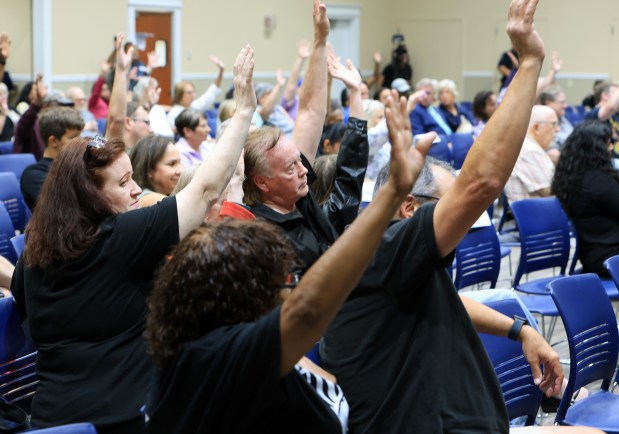
Illinois American Water proposes a rate increase to address aging infrastructure, replace lead service lines, and build more resilient systems amid climate change and community growth. Residents and local officials argue that the company should use its profits for improvements rather than increase rates for customers. The proposal sparked a heated Illinois Commerce Commission hearing in Bolingbrook attended by approximately 160 people, including officials from Bolingbrook, Homer Glen, and Woodridge, as well as representatives for state legislators, according to fire officials.
Residents expressed concerns to the ICC about having to choose between necessities, like paying water bills or buying groceries. Water is essential, and there is no option to switch utility companies, they argued. Homer Glen Mayor Christina Neitzke-Troike questioned why Illinois American Water hadn’t communicated about the proposed rate increase before a local board meeting or town hall. “I’ve never seen any of you in my village,” Neitzke-Troike stated emphatically.
Our residents tell us they are left with little to no choice to either reduce water consumption to a barebones minimum or move away from the village because of the water and sewer rates.
Illinois American Water seeks around $129 million over two years, reduced from an earlier $143 million proposal. The increase would mean an average rise of $10 per month for residential customers using 3,500 gallons and $23 for the same amount in wastewater. These changes aim to fund approximately $577 million in system improvements by December 2027, addressing factors like aging mains, lead removal, and chemical contaminant issues.
The ICC will decide on the rate increase proposal by December 18. If accepted, this would mark the fourth rate hike for Illinois American Water in a decade. According to Jim Chilsen from the Citizens Utility Board, the company has already secured $230 million in rate hikes over ten years. Despite substantial profits exceeding a billion dollars annually, Chilsen describes the increases as burdensome for customers.
Residents such as April Palmer expressed frustration over frequent rate hikes despite growing company profits. Others shared personal financial struggles, like Rosetta Spielman and Allaina Humphreys, who reported water bills of $280 and $250 per month, respectively. Concerns also surfaced about response times to service disruptions, with Nancy Mizura describing a delayed response to a water main break that resulted in flooding.
Local officials, including Bolingbrook Mayor Mary Alexander-Basta, have voiced their opposition to the rate hike. Bolingbrook’s Village Administrator, Al Stonitsch, mentioned a pending Village Board resolution against the rate increase. Bolingbrook Trustee Jose Quintero questioned at what point rate increases would be deemed excessive.
Republican gubernatorial candidate Darren Bailey also criticized the proposal, labeling Illinois American Water a monopoly seeking profits at the expense of families without alternative options. Bailey emphasized the need for the ICC to protect customers from excessive rates.
Rebecca Losli, President of Illinois American Water, highlighted the significant capital intensity of operating water and wastewater systems compared to electric or natural gas. Since 2015, the company has invested over $2 billion in improvements, which Losli argues reduce disruptions and bolster service reliability. The urgency of updating aging systems to avoid severe future disruptions was also stressed.
Illinois American Water offers assistance programs for low-income customers, including partnerships with local Salvation Army organizations for one-time bill assistance. The ICC is accepting comments on the rate proposal through its website or by phone.