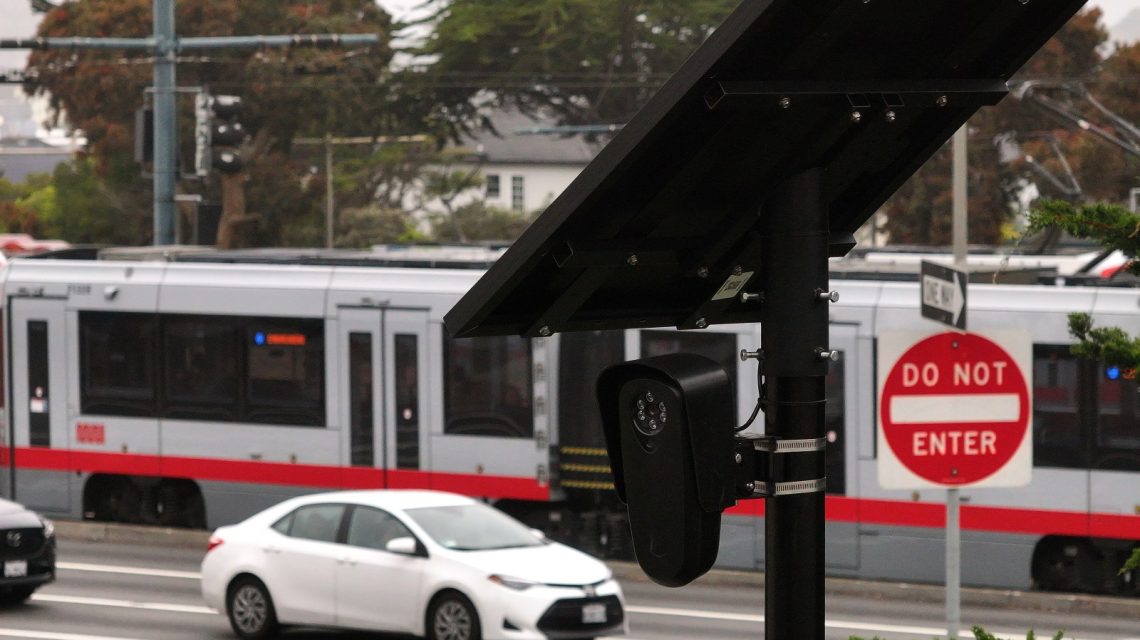
Representative Thomas Massie, a Republican from Kentucky, announced plans to introduce legislation aimed at withdrawing federal funds from municipalities and police departments employing automatic license plate readers (ALPR) and other mass surveillance systems.
Massie, recognized for his libertarian views on government surveillance and privacy, declared the upcoming legislation in a post on X. He stated, “I’ll soon be sponsoring a bill to withhold federal money from municipalities and police departments that deploy Flock (and other style) cameras to surveil law abiding citizens.”
Targeted Surveillance Systems
The proposal primarily targets systems produced by Flock Safety, an Atlanta-based company recognized for its ALPR technology. Flock collaborates with over 5,000 law enforcement agencies across more than 6,000 communities nationwide, operating tens of thousands of cameras. These cameras compile images of passing vehicles, documenting license plate numbers, vehicle make, model, color, and the time and location of sightings.
Flock Safety’s Response
A Flock Safety representative communicated to Newsweek that Massie’s bill would significantly impact public safety. “Withholding federal funding from the thousands of police departments relying on license plate reader technology would have real consequences for public safety,” the spokesperson stated.
In 2025, Flock estimates their technology supported over one million public safety investigations, assisted in 20% of resolved cases in jurisdictions partnering with Flock, and aided in locating more than 10,000 missing people. Rather than banning this crucial tool, the spokesperson suggests Congress should enforce strong safeguards to ensure accountability and responsible use.
Deepening Surveillance Debate
Massie’s proposal highlights a growing national debate concerning the swift expansion of ALPR networks. Advocates argue the technology is essential for solving crimes, recovering stolen vehicles, and issuing Amber Alerts. Critics claim continuous tracking creates vast databases capable of monitoring citizens’ movements without suspicions of wrongdoing.
The forthcoming bill builds upon earlier legislation that Massie co-introduced with Representative Lauren Boebert from Colorado. The Surveillance Accountability Act demands government agencies secure probable-cause warrants for specific surveillance activities and bans warrantless facial recognition and vehicle-tracking technologies. The lawmakers emphasized the need for this legislation to enhance Fourth Amendment safeguards against unreasonable searches and surveillance.
Law enforcement officials often promote ALPR systems as resources that bolster limited departmental capacity. However, this technology has faced local resistance. NPR reported communities like Flagstaff, Arizona; Cambridge, Massachusetts; and Santa Cruz, California, recently ended or opted not to renew contracts with Flock, citing issues surrounding data ownership, privacy, and information-sharing policies.
Legislative Challenges Ahead
Massie’s initiative confronts considerable obstacles in Washington. Though surveillance skepticism appeals to some lawmakers on both sides of the political spectrum, law enforcement organizations and many Congress members usually back crime-fighting tools funding.
Any legislative move to penalize departments utilizing these systems is likely to meet resistance from lawmakers concerned with public safety, along with local agencies substantially investing in such infrastructure. Massie’s proposal remains in its initial phases, with formal bill text yet to be released.
Newsweek sought comments from the Fraternal Order of Police via email.
 Concerns Over Chinese Influence in Automotive Technology
  U.S. and China to Discuss AI Transparency at Washington Summit
  Media Pool Suspends Coverage of Trump After Banning CNN and Others
  Gen Z Voters: Shifting Political Landscape Ahead of 2026 Midterms
  Virginia Gov. Abigail Spanberger Ends Division of School Sports by Sex
  California Families, Political Donations, and Alleged Foreign Influence: A Closer Look