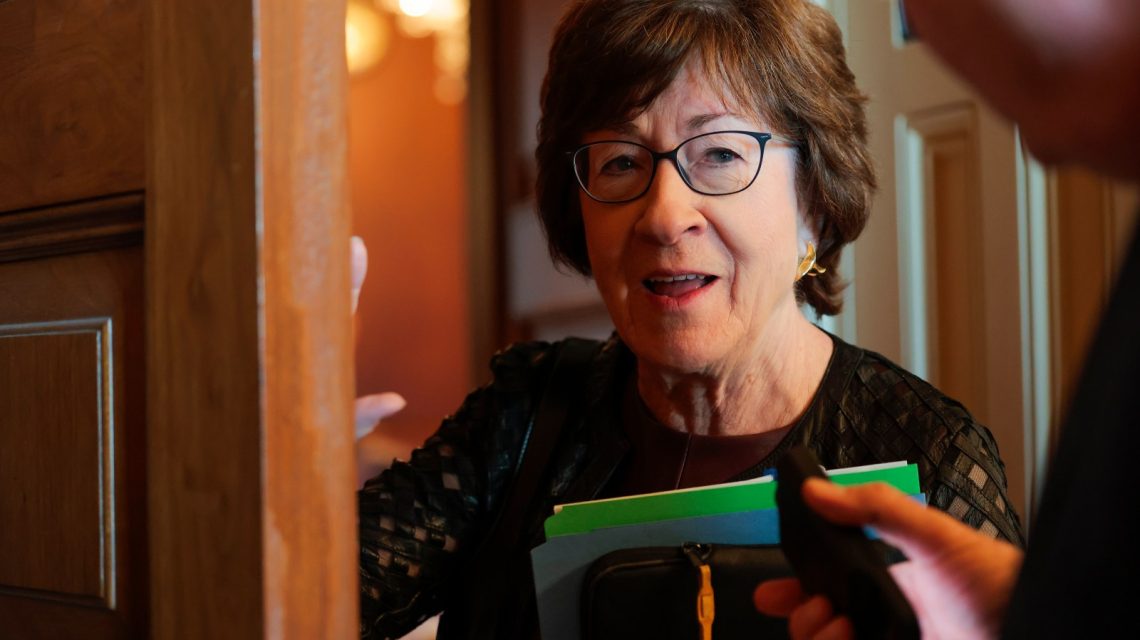
Senator Susan Collins’ independent voice has become a central issue in the Maine Senate race. She faces a strong challenge from former Maine Senate President Troy Jackson, a Democrat, ahead of November’s midterms. Democrats aim to associate Collins, a Republican, with President Donald Trump, unpopular in Maine, suggesting she only opposes him when her vote holds no significant impact. Collins, however, highlights several major votes where she opposed the administration on key priorities.
Maine, which typically leans Democratic, supported former Vice President Kamala Harris by 7 points in 2024. Yet, Collins has consistently won reelection, attributed to her personal popularity and moderate bipartisan reputation. How Mainers perceive her independence in the Trump era might determine her reelection success, making this a focal point for both campaigns with less than six weeks until Election Day.
Blake Kernen, Collins’ campaign spokesperson, emphasized her perfect voting record and her status as one of the Senate’s most independent members, as recognized by Georgetown and the nonpartisan Lugar Center in nine of their last eleven indexes. Kernen also contrasted Collins’ record with that of opponent Troy Jackson, labeling him as an extreme partisan politician.
Maggie Amjad, Jackson’s spokesperson, criticized Collins for voting with Trump 96% of the time, including confirming judges who overturned Roe v. Wade and supporting legislation that cut $1 trillion from Medicaid to fund tax breaks for the wealthy.
Collins’ Voting Record with Trump
A CQ Roll Call report found Collins voted with Trump 95% of the time in 2025. This placed her among the least pro-Trump senators, behind only Senators Lisa Murkowski of Alaska and Rand Paul of Kentucky. Despite this, Democrats emphasize her consistent support for Trump, with Jackson criticizing her for claiming to support working-class families while largely voting with Trump.
Criticism from Maine Democrats has surfaced over several votes, notably her vote for Supreme Court Justice Brett Kavanaugh. Her support of policy like the Safeguard American Voter Eligibility Act and the confirmation of Robert F. Kennedy Jr. as Health and Human Services secretary also faced scrutiny. Collins stood out as one of the most anti-Trump Republicans during his first term, voting to convict him in his impeachment trial and opposing the Affordable Care Act repeal in 2017.
Key Votes Against Trump
Collins has taken stands against Trump on several matters. She has criticized his tariffs and pushed back against some Trump priorities as the chair of the Appropriations Committee. She opposed the Iran war’s trajectory, advocating for clear missions and strategies, and voted against the One Big Beautiful Bill, citing negative impacts on Medicaid and missed opportunities for energy entrepreneurs. Collins also opposed a rescissions package canceling federal funding without sufficient details and voted against nominations she deemed concerning, such as Pete Hegseth’s for Defense Secretary and Todd Blanche for Attorney General. She voiced against FBI Director nominee Kash Patel due to his political activities.
Relationship with Trump
Trump and Collins have never had a close alliance. She did not support him in the 2016 and 2024 elections and voted to impeach him in 2021. Collins is recognized as a moderate Republican, frequently opposing Trump’s measures.
Current Polls and Developments
Polls indicate a close contest between Collins and Jackson. A poll by The New York Times, The Portland Press Herald, and Siena University shows Collins ahead by 3 points. However, other polls give Jackson a slight lead. The race also faced controversy from a ProPublica report alleging interactions between Collins and a major campaign donor, though Collins’ office denied these allegations.
The Maine Senate race is pivotal for Democrats aiming to secure a Senate majority. While defending seats in states won by Trump, they view Maine and North Carolina as top opportunities for flipping GOP-held seats.
In the coming weeks, both candidates will focus on connecting with independent and undecided voters, emphasizing their strengths to garner support before Election Day.
 Supreme Court Rejects Missouri’s Trump-Backed Congressional Map: Analysis and Implications
  Talarico’s Narrowing Poll Lead Over Paxton in Texas Senate Race
  House Democrat Introduces New Articles of Impeachment Against Trump
  Iran War Debate Among Senate Nominees
  Texas Senate Race: Talarico Challenges Paxton to Fox News Debate
  Judge Holds DHS in Contempt Over Deportation