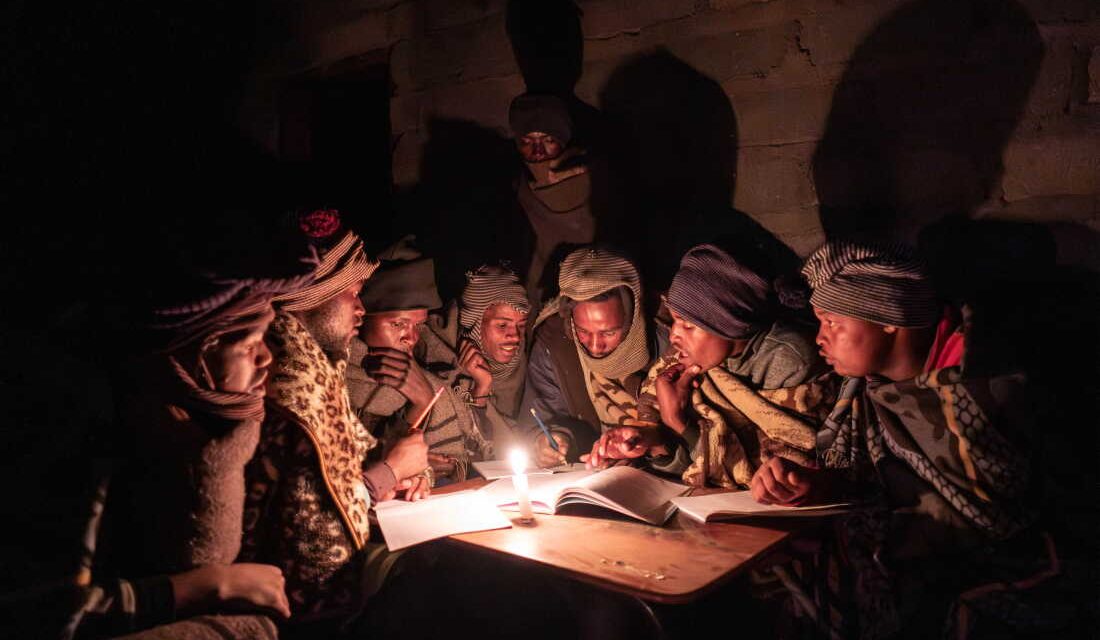
In the highlands of Lesotho, shepherds attend night schools, offering a rare chance for education. Kabelo Mohai and Lepeli Maapesa make arduous treks from their cattle posts to the Good Shepherd School each evening. Wrapped in blankets against the cold, they trek from mountainous terrain to reach the fluorescent-lit building in Semonkong where over 40 herders gather for classes.
In Lesotho, the economy relies heavily on livestock, with wool and mohair making up a significant portion of agricultural exports. This tradition leads many young boys to take up herding, often sacrificing schooling for work. According to the World Bank, nearly half of Lesotho’s boys engaged in herding activities in 2018. Mohai, who started herding at age 9, exemplifies this educational sacrifice, managing only to complete primary school.
To give herders a second chance at education, various night schools, often run on tight budgets by volunteers, have emerged across the country. These schools provide basic education in reading, writing, and counting. Despite financial challenges, these classes allow students like Mohai to dream of different futures.
Khotso Rants’etile, another herder, spends his days in isolation, living in a makeshift hut. His only companions are his animals and dog. Though he enjoys the solitude, the isolation highlights a lack of social interaction and educational opportunities.
Night schools, like the one in Semonkong, offer herders a chance to socialize and gain essential life skills. Sister Rosemary Mokebe, a nun and teacher at the Good Shepherd Night School, sees the importance of these schools for both the economy and the students’ futures. There are around 155 such schools nationwide, supported initially by NGOs but increasingly by the government.
In classrooms filled with students of various ages, some as young as 15 and others in their 40s, these schools provide more than education; they create a community for people often isolated by their work. Motlatsi Monoana, a middle-aged herder, learns to read and write at one of these schools, with hopes of finding new opportunities beyond herding.
For young students like Ketso Mokoena, these educational initiatives can lead to high school and beyond. Mokoena, who once faced ridicule for herding, now studies at a government-sponsored school, aspiring to become a pharmacist.
The impact of these schools extends beyond academics. They help herders develop social skills and learn to express themselves in a community setting. According to Lisemelo Mosakeng from the Lesotho Association for Non-Formal Education, this socialization is crucial for personal development.
In rural Thaba-Tseka, teacher Mampho Makha volunteers at a night school she founded after teaching her father to read and write. Her dedication stems from personal experience, and she continues to offer classes despite financial constraints.
Makha’s tin shack classroom hosts a diverse group of students learning under the glow of mobile phones. Her commitment ensures these shepherds and villagers gain essential literacy skills for independence and empowerment.
Julie Bourdin and Tommy Trenchard document these educational efforts in Lesotho, highlighting the impact of night schools on the lives of shepherds. Despite challenges, the dedication of educators and students shows the power of education in transforming lives.
 Professor Lin’s Dual Journey: Expert and Stage IV Patient
  Selective Accountability in Education Raises Concerns
  Debate Over New York City’s Specialized High School Admissions
  Addressing Loneliness Among College Students
  Candy Thompson’s Journey Back to Christianity
  Understanding College Costs and Financial Aid