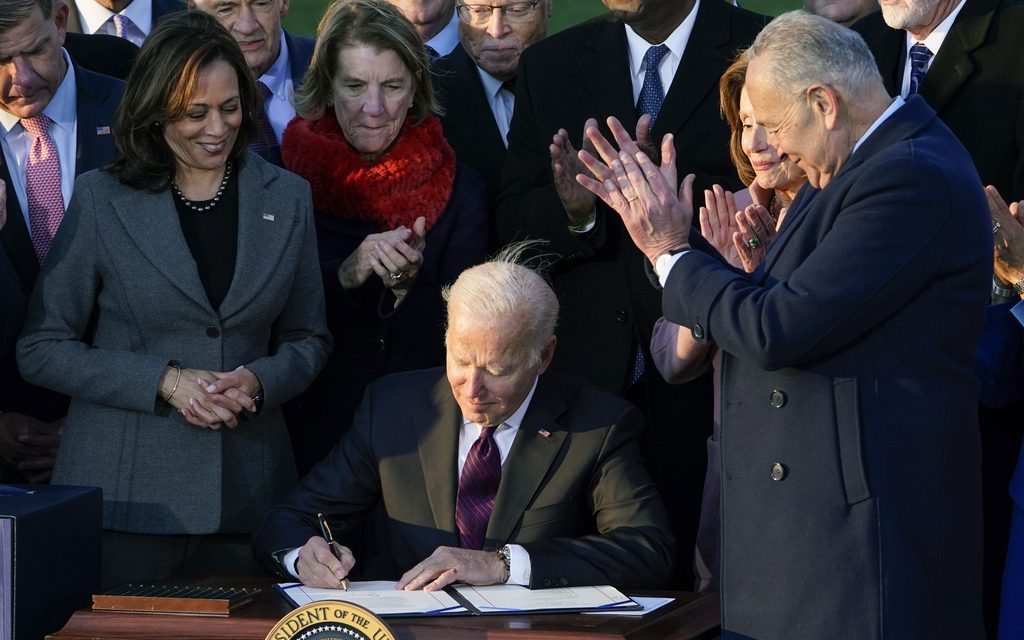
President Joe Biden signed a historic $1.2 trillion bipartisan infrastructure bill into law on November 15, 2021. This significant legislative milestone took place during a ceremony held on the South Lawn of the White House in Washington. Coming up, on February 27, 2024, the Biden administration is set to unveil plans for 17 projects across the United States, aimed at improving access to renewable energy in rural areas, with a particular focus on Native American tribes. These initiatives, amounting to a total cost of $366 million, are financed through the infrastructure law passed in 2021.
The pressing challenge for American families is clear. Prices continue climbing at grocery store checkouts. Gas prices are exceeding $4 per gallon, and even more in certain locations. Operating air conditioners over the summer added to consumer expenses. Escalating medical bills compound the financial strain, alongside rising housing costs. Inflation is advancing faster than wage growth.
Amid this context, both political parties are keen to center the 2026 election around affordability issues. The Republican approach faces criticism, as they focus on policies perceived to exacerbate oil price spikes and deploy ICE agents in communities, alongside efforts to grant favorable deals and immunity to former President Trump and his associates. Actions suggested to negatively impact affordability include significant cuts to Medicaid, supporting tariffs that burden families financially, and driving up insurance costs by inhibiting tax credit extensions under the Affordable Care Act.
A growing sentiment resonates that Washington consistently falls short on addressing working families’ needs. Republicans leverage this cynicism. Encouraging voters to believe neither party will effect meaningful change, they engage their base with divisive social and cultural discourse.
Challenging this notion, the Democrats point to legislative achievements during the 117th Congress. In 2022, key laws aimed at economic and affordability improvements were enacted. The CHIPS and Science Act and the Inflation Reduction Act targeted consumer prices, energy costs, and healthcare affordability, ensuring major corporations contributed fairly.
Democrats assert their impact with significant infrastructure investments in November 2021. The bipartisan law dedicated over half a trillion dollars to job creation, water and energy system enhancements, and affordable high-speed internet access for underserved communities.
Highlighting the necessity of public engagement in governmental processes, citizens are urged to evaluate actions taken by those in power. Rewarding effective leadership and rejecting unproductive governance is pivotal.
As his congressional tenure concludes, Steny H. Hoyer reflects on his experiences in Congress. He emphasizes that closely divided government should not equate to ineffective governance. With a commitment to consensus-building and focused decision-making, leaders can deliver meaningful outcomes.
Moving forward, a call to action rings clear. Future congressional leaders must be prepared to collaborate beyond party lines and uphold high expectations. Steny H. Hoyer, representing Maryland’s 5th District, who served as House majority leader across multiple terms, highlights the essential nature of bipartisan dedication to turning legislative intent into tangible benefits for the American populace.
 The President’s Shift Towards Big Government
  AOC Hosts Event at Cornell Amid Controversy
  Trump’s Construction Endeavors in Washington, D.C.
  President Trump to Announce Undisclosed News
  Detroit Free Press Endorses Abdul El-Sayed in Senate Race
  Texas Senate Race: Talarico vs. Paxton Polling Insights