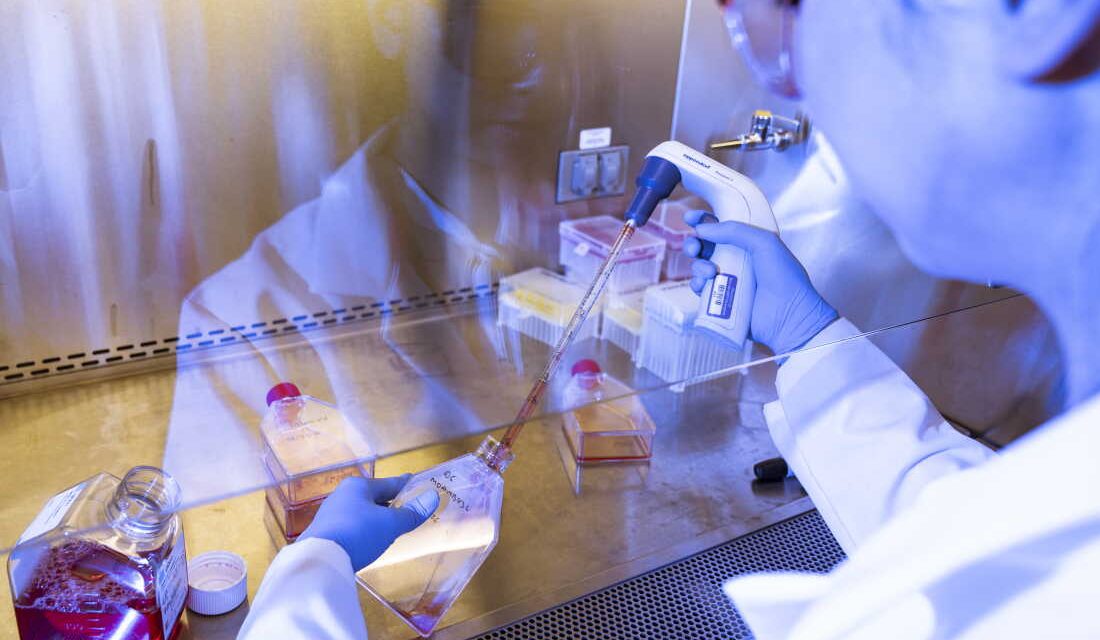
Cathy Tie, founder and CEO of Origin Genomics, is leading her New York City startup’s efforts in innovative gene editing technology. This technology focuses on repairing defective genes to prevent inherited diseases.
Tie welcomed an NPR team to Origin’s labs, asking them to keep the exact location undisclosed for security reasons. Inside the lab, Tie demonstrated the company’s cryogenic storage unit, which holds human embryos donated by couples hoping to edit out disease-causing mutations.
She elaborated on using stem cells extracted from these embryos to test Origin’s experimental gene editors. The goal is to prevent future generations from inheriting debilitating genetic disorders.
Using gene-edited embryos to create babies remains illegal in the United States.
Tie aims to shift perspectives on her company’s gene-editing technology. She advocates for considering its benefits against the inherited diseases affecting millions globally, including Huntington’s disease and cystic fibrosis.
Origin also explores gene editing on other cells with genetic mutations, including stem cells made from adult skin and fibroblasts. Their technology incorporates artificial intelligence to enhance precision and effectiveness.
Mackenzie Calle for NPR documented Tie’s examination of cells injected with Origin’s gene editors, intended to repair mutations linked to breast cancer.
Despite advancements, ethical concerns about gene-editing persist, compounded by the history of the field. In 2018, Chinese scientist He Jiankui created the first genetically modified babies, igniting global controversy due to safety risks associated with such early-stage technology.
New techniques like prime and base editing have since improved accuracy, yet skepticism over genetic modifications’ safety remains. Tie’s goal with Origin is to prove these methods safe for preventing genetic disorders, despite expert caution about the rapid pace of research.
Concerns of Designer Babies
The prospect of using gene editing for ‘designer babies’—with enhanced traits beyond health—remains contentious. Critics worry about potential misuse leading to ethically questionable outcomes like mass-produced, genetically engineered humans.
Companies screening embryos for traits such as IQ and height intensify this concern. Academic scrutiny of private sector motives remains critical; scientists critique their transparency about intentions.
While Tie insists Origin focuses solely on health benefits, fears of unregulated ‘genome-editing tourism’ linger. Less regulated clinics might exploit these advancements overseas.
Tie’s previous connections with the notorious Chinese scientist add pressure for transparency and safety assurances in her work.
Hope for Disease-Free Generations
Tie envisions a future where gene editing could ethically prevent inherited diseases, advocating for comprehensive regulation to ensure responsible use of this technology.
Nicole and Asaf Ezra, a couple whose family’s plagued by an inherited cancer mutation, shared their hopes with NPR. They seek to use gene editing to spare their children from Nicole’s family’s genetic condition, familial adenomatous polyposis.
“The amount of women this would help would be amazing,” Nicole says, expressing hope for the potential positive impact on many.
Society’s initial fears over IVF parallel current concerns on gene editing. The couple believes in regulation for ethical application, not abandonment of promising technologies.
 The Role of Home in Addressing Children’s Mental Health
  Teens and Distracted Parenting: Impact on Emotional Well-being
  Global Cancer Burden from Infections: Findings for 2024
  Voluntary Recall of Mezzetta Peperoncini Due to Pest Contaminant
  Leila Mirhaydari’s Journey Through Kidney Transplant Challenges
  Political Push for Insulin Price Cap