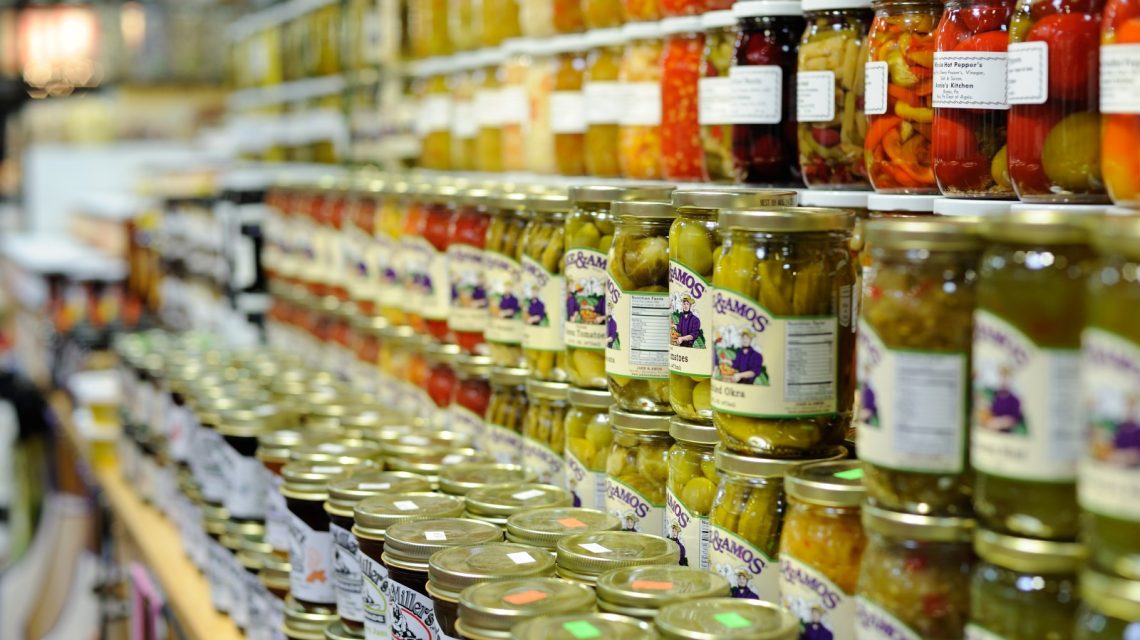
G. L. Mezzetta Inc. has issued a voluntary recall for a specific lot of Mezzetta GOLDEN GREEK PEPERONCINI MEDIUM HEAT, 32-ounce jars. This action follows concerns over a potential pest contaminant, as reported by the U.S. Food and Drug Administration (FDA).
In response to a video on social media showing the potential contaminant, the company quickly contacted the consumer and began investigating the situation. The video, which has gained over 230,000 views on TikTok, depicts what seems to be a rodent in a jar of the peppers. The woman in the video expresses disbelief upon discovering the contaminant.
“Here with the pot roast I wanted to make, Mississippi style, but there’s a dead baby mouse, there’s a dead baby mouse in my pepperoncini’s,” she comments.
No illnesses or injuries have been reported in relation to this recall, according to the alert. The recall does not affect any other products. Newsweek reached out to G. L. Mezzetta Inc. for further comment.
Recall Details
The recall pertains only to the GOLDEN GREEK PEPERONCINI MEDIUM HEAT, 32 oz., specifically with a lot number of 720106 and SKU number of 10106328. The company has pinpointed distribution locations of the affected product and is collaborating with them to remove it from sale.
The product in the consumer report has been requested for retrieval and analysis to evaluate sanitation and food safety records alongside production details. Buyers are advised not to consume the recalled peppers and to contact the company at [email protected].
Throughout the year, numerous recalls have emerged due to possibilities like damage, foodborne illness, contamination, lack of inspection, or undeclared food allergens. Recently, a recall involving Star Meat Delivery Inc. encompassed about 167,639 pounds of raw beef, pork, and goat due to lack of federal inspection.
Context of Rising Concerns
The increased attention to foodborne illnesses and recalls remains prevalent nationally, including salmonella and cyclospora instances. Keith Schneider, a food safety expert at UF Institute of Food and Agricultural Sciences, conveyed that while recalls seem frequent, this availability of information through social media and 24-hour news might amplify awareness.
“We tend to hear about them much more often because we have much greater access to information. We now have 24-hour news and social media, so when there is an outbreak or recall, people can hear about it repeatedly throughout the day. An actual news report can go viral, but so can information from someone who may not understand food safety or the science behind an outbreak,” Schneider explained.
Schneider also highlighted ongoing issues with foodborne pathogens. Annually, salmonella affects around 1.2 million people, averaging 100,000 cases monthly. Norovirus results in roughly 20 million cases each year. Notably, this summer’s cyclospora cases have exceeded usual figures significantly.
Newsweek’s publication utilized Martyn, their AI assistant. For more details, contact Newsweek editors.
 Leila Mirhaydari’s Journey Through Kidney Transplant Challenges
  Political Push for Insulin Price Cap
  The Impact of Private Equity on Hospitals
  A Mother’s Journey: Raising a Son with Down Syndrome
  Potential Impact of Changes to the National Vaccine Injury Compensation Program
  Living with Sickle Cell: The Glover Family’s Journey