Charlie Cook, a veteran in tracking U.S. elections, started his political newsletter in 1984, offering insights into countless races for president, Congress, and governor. Cook describes the upcoming midterm election as the strangest he has witnessed. What initially appeared as a typical midterm, where a president halfway through their term might face setbacks, could now turn disastrous for Republicans.
Historically, the party holding the presidency often experiences losses. For instance, Democrats gained 41 House seats during President Trump’s 2018 midterm. Cook points out that this election season began favorably for Republicans, even prior to aggressive gerrymandering influenced by Trump. Yet, the prospect of significant Democratic gains looms large.
In the Senate, many seats are situated in states Trump won in 2024. Five out of seven toss-up races are in states he won, some by a substantial margin. In the House, Republicans maintain control with a slim margin. Cook states, “A party cannot lose a seat they don’t have.” Nevertheless, Trump’s low approval ratings, an unpopular war, persistent inflation, and his overindulgences are threatening GOP-held seats, including those in traditional Republican areas like Alaska, Florida, Iowa, Ohio, and Texas.
“I’m not a meteorologist, but it’s kind of like three competing weather fronts collided,” Cook remarked. “One was Iran and gasoline, diesel prices going sky high… Then there’s trade, tariffs, overall non-energy cost of living, tariff impact on farmers. And then the third is kind of the catch-all and it’s everything from ballrooms, reflecting pools, arches, vaccines, Medicaid cuts.”
Nathan Gonzales, another seasoned election analyst, agrees with Cook’s observations. Gonzales manages Inside Elections and has over 25 years of experience analyzing political contests. Gonzales notes a troubling situation for Republicans, stating Trump’s low approval has galvanized Democrats, alienated independents, and created apathy among Republicans. These conditions could lead to noteworthy Democratic successes.
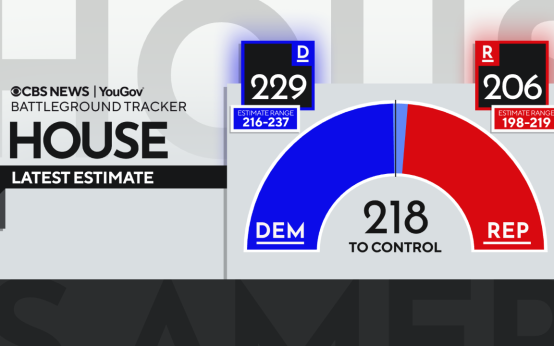
Democrats need only three seats to control the House. Achieving this would mark the seventh consecutive midterm where partisan control switched in either chamber. Gonzales draws parallels to 2006 when dissatisfaction with an unpopular Republican president and a Middle East war resulted in Democratic gains. He recalls Republican inadequacy despite their research and fundraising advantages. Voters dismissed Republican messaging due to widespread dissatisfaction.
In 2006, during President Bush’s second term, Democrats gained control of the Senate and took 31 House seats, enabling Nancy Pelosi to become the first female House Speaker. Cook and Gonzales foresee similar Democratic gains in 2026.
Gonzales anticipates a Democratic gain of seven to 15 House seats, with Republican losses potentially soaring if circumstances worsen. In the Senate, Democrats are projected to gain three to five seats, placing the chamber in a precarious balance. Gonzales suggests Republicans need a turnout boost to preserve their Senate control.
Cook concurs that Mike Johnson’s speakership might end soon. He estimates the GOP could lose 25 House seats or more, highlighting the rarity of major losses with few competitive districts. In the Senate, Cook sees the best GOP scenario as losing merely two seats, retaining control with Vice President JD Vance as a possible tiebreaker.
As the election approaches, uncertainty prevails. The results could range from a significant Democratic wave to minimal shifts. Voters will decide the landscape soon.
 Trump Announces New Federal ‘Super Intelligence Force’
  A New Chapter for Britain’s Economy: Analyzing Andy Burnham’s Promises
  Key Insights from CBS News House Model Estimate on Midterms
  Trump’s Influence on Executive Power
  High Stakes as U.S. Supreme Court Tackles Key Cases
  George Clooney’s Watchlist for the 2028 Presidential Election