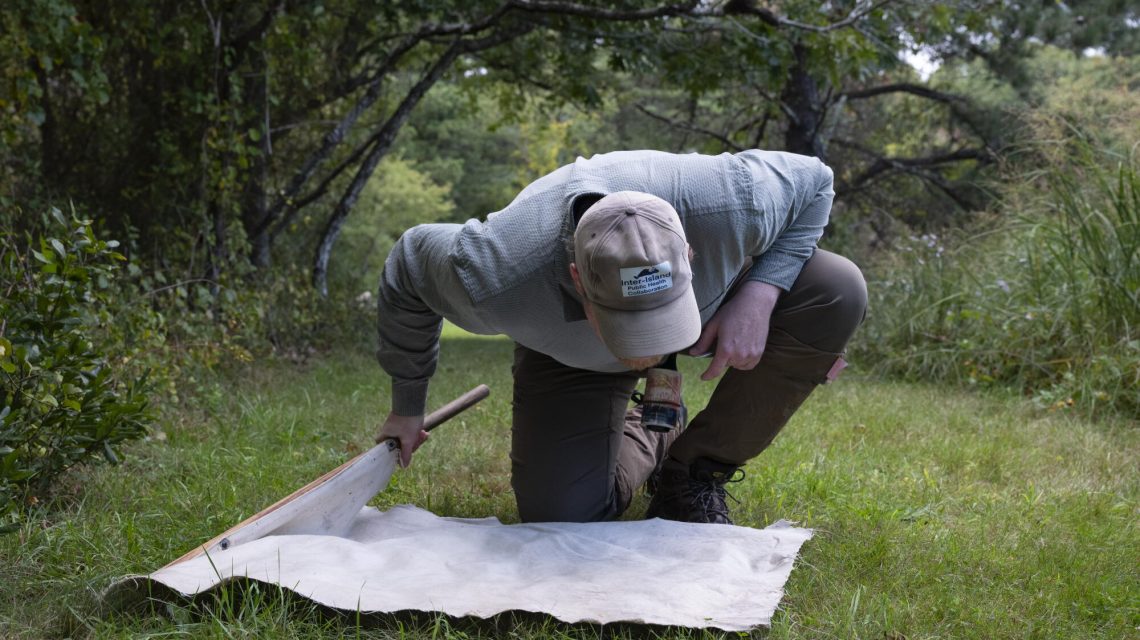
WEST TISBURY, Mass. — Patrick Roden-Reynolds, a public health biologist, demonstrated how pervasive ticks have become by collecting 11 ticks with a swatch of white flannel in a yard. He captured the ticks with tweezers and stuck them to a lint roller. He warned, “It’s like a plague. Ticks are everywhere now.”
Martha’s Vineyard residents face a troubling surge in lone star tick bites. These ticks cause alpha-gal syndrome, an allergic reaction to red meat, dairy, and other mammalian products. Victims suffer from symptoms like fiery itching, hives, headaches, nausea, fever, vomiting, or abdominal cramps dubbed “knives in the stomach.”
Lone star ticks have ventured far from the Southeast in recent years, reaching areas from Maine to Oklahoma. Climate change and reduced hunting have led to an increase in whitetail deer, which serve as hosts for the ticks to breed. The allergy, discovered in 2007, offers no known cure, leaving victims struggling with delayed reactions.
Some Martha’s Vineyard residents suffer severe reactions, including Jean-Marc Dupon, a former chef who faced anaphylaxis twice when exposed to mammalian products. Meat fumes alone can trigger illness for some, proving distressing for island inhabitants.
The first confirmed alpha-gal fatality occurred in 2025, highlighting the need for urgent attention. While the precise number of affected individuals remains uncertain, a CDC study shows a significant portion of the population in certain states testing positive for alpha-gal antibodies.
Misdiagnosis is prevalent, as most healthcare providers are unfamiliar with alpha-gal syndrome, complicating patient treatment. Local efforts focus on spreading awareness and adapting services, with Martha’s Vineyard Hospital reporting exponential rises in alpha-gal cases. The hospital has opened an outpatient clinic for tick victims and launched extensive research projects to understand the syndrome better.
The community is pressured to respond to this crisis. School menus offer meatless options, and island restaurants adjust recipes to cater to those affected. Efforts to repel ticks in backyards with treatments are sparking debate over safety concerns.
Hope lies in developing a tick vaccine, although progress remains distant. Meanwhile, reducing deer populations is crucial. Massachusetts extended the hunting season by six weeks, and hunters like Brian Athearn are determined to lower deer numbers, contributing venison to food pantries despite having alpha-gal syndrome himself.
Residents adopt preventative clothing and insecticides to protect against bites while outdoor activities. Roden-Reynolds and biologists conduct surveys with permethrin-infused clothing to track tick spread, documenting alarming numbers over time.
 Faith and Healing: Insights from ‘The Angels Among Us’
  Dengue Fever Outbreak in U.S.: Rising Cases and Health Measures
  Supreme Court to Hear Landmark Cases on Climate Change and Immigration
  Readers Share Views on Dementia, Ant Warfare, and College Affordability
  Silent Atherosclerosis: Insights from New Research
  The Growing Threat of Glacial Lake Outbursts and the Urgent Need for Mitigation