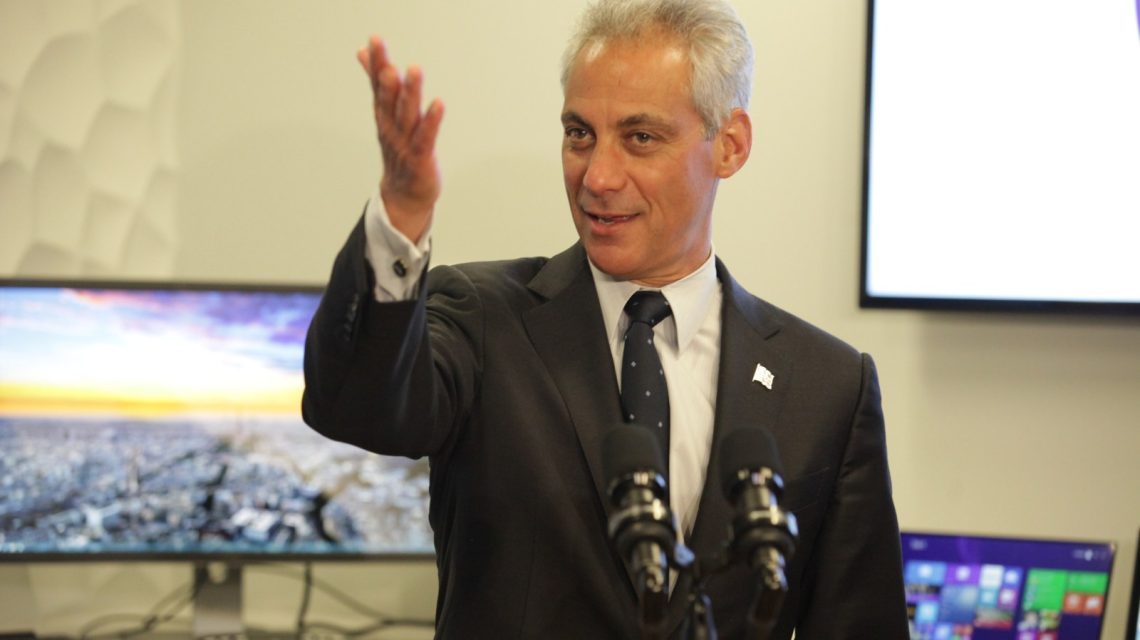
Rahm Emanuel has sparked a debate on the future path of the Democratic Party by suggesting that democratic socialists function as a separate political entity. His remarks gained attention following significant primary victories by candidates supported by the Democratic Socialists of America (DSA).
During a segment on NBC News’ Meet the Press with Kristen Welker, Emanuel emphasized that democratic socialists do not merely represent a faction within the Democratic Party. He stated, “They are their own party. They held a convention in Chicago just six weeks ago.” He further highlighted their policy positions, asserting that ideas like defunding the police, open borders, and releasing prisoners are not aligned with Democratic values.
Tensions Within the Party
Emanuel’s remarks come as he considers a 2028 presidential run. The Democratic Party faces internal tensions, balancing between traditional establishment figures and a rising progressive element. Emanuel suggests that Democrats need to create a broad coalition, including independents and disaffected Republicans, to secure victory. He cited competitive states like Arizona, Georgia, and Wisconsin as critical in shaping electoral outcomes.
He argued for a focus on attracting Romney Republicans and independents who have distanced themselves from the Republican Party. Emanuel believes the Democrats must address what he describes as a “brand problem” by showcasing concrete results rather than opposing former President Donald Trump.
“We have to prove that we cannot just fight Donald Trump. But we can fight for America,” Emanuel stated, urging the party to prioritize issues like ethics reform, affordability, and wages.
Democratic Socialism and Party Dynamics
DSA-backed candidates have gained prominence in primaries, pushing for policies like Medicare for All and expanded social programs. Democratic socialism advocates for democratic institutions to bolster social welfare and increase government roles in healthcare and education. Notable figures such as Alexandria Ocasio-Cortez and Rashida Tlaib exemplify this movement.
Some within the Democratic Party argue that certain DSA positions diverge from moderate and swing voter priorities. Emanuel acknowledged internal policy debates but maintained that fundamental differences exist between the Democratic Party and the democratic socialist movement.
House Minority Leader Hakeem Jeffries also distances himself from DSA’s agenda, emphasizing the need to focus on reducing costs for essentials like groceries, gas, housing, and healthcare. Jeffries described the caucus as inclusive of progressives, moderates, and Blue Dog Democrats, but clarified he does not support policies such as Medicare for All.
Recent Democratic Socialist Victories
The success of DSA-backed candidates has fueled discussions about the Democratic Party’s future direction. Abdul El-Sayed’s victory in Michigan’s Democratic Senate primary exemplifies this trend, highlighting a push toward progressive policies. Despite policy disagreements, Emanuel affirmed his support for El-Sayed as the Democratic nominee.
Additional notable DSA victories include Claire Valdez’s win in New York and Darializa Avila Chevalier’s challenge in a Philadelphia-based district. These successes reflect the growing influence of the DSA and its ability to bring issues like Medicare for All and affordable housing into mainstream Democratic discourse.
Emanuel stressed that despite these victories, certain DSA positions, such as defunding the police and open borders, diverge sharply from Democratic Party principles. He asserted the need for dialogue only if policy positions shift to align with broader Democratic values.
 Resignation of Frank Strada: Tennessee’s Prison System Leadership Under Scrutiny
  Latino Voters Shift Away from Trump and Republicans Ahead of Midterm Elections
  Rep. Tom Emmer’s Campaign Efforts and Critique of Democratic Party
  Jonathan Turley on Protests Aimed at Supreme Court Justices
  Exploring Michael Lewis’s Insights into Civil Service
  Latino History Course at Chapman University – A Deep Dive