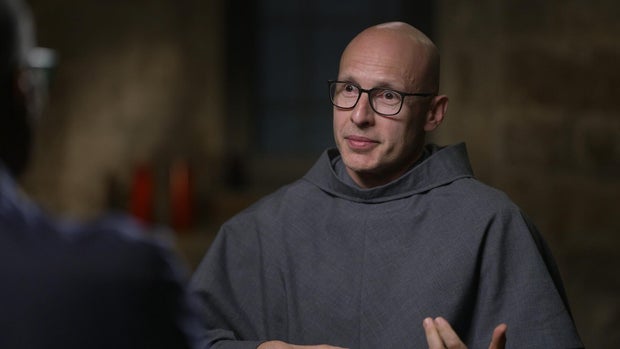
Sergio Fusetti faced an overwhelming challenge after earthquakes damaged the Basilica of Saint Francis of Assisi. Despite years of effort, over 80,000 fragments remain misplaced. Fusetti remarked, ‘Only artificial intelligence can help us here.’ A collaboration of art historians and engineers is now employing digital technology and AI for restoration.
Earthquakes and the Basilica
The Basilica of Saint Francis of Assisi, nestled in Umbria’s hills, serves as a testament to the life of Saint Francis, admired for his humble existence. Renowned artists like Cimabue and Giotto enriched the basilica with depictions of Francis’ life. Since its creation, the basilica has faced more than 20 earthquakes. In 1997, two major quakes claimed four lives and left Fusetti injured.
Friar Guiulio Cesareo, present during those quakes, still feels anxious whenever he senses movement. He recalls the tremor that jolted the church’s stone archways.
‘If something shakes, even the wind sometimes, I feel a chill inside,’ he shared. ‘The damage was a shock for Italy.’
Modern Technology for Restoration
Dedicated restorers have been addressing the basilica’s artworks, yet challenges persist. Friars partnered with Haltadefinizione, a company expert in high-definition photography. Giovanni Borelli’s team is constructing a digital model of the basilica using sophisticated cameras.
“You can see all the smallest details of the work of art, the strokes of the painting, of the brush. You can see everything in great detail,” Borelli said.
Utilizing drones and lasers, Borelli plans to produce a record-breaking 3D blueprint. This digital twin, expected next year, ensures precise restoration in case of future seismic events. AI will aid in reassembling missing pieces and combating damage like cracks and discoloration. ‘With AI, minutes,’ Borelli explained, contrasting with manual efforts taking years.
Preserving and Sharing Art
Borelli’s ambition extends to accessibility. Technologies previously used for ancient Roman bath remains are enhancing basilica preservation. Scanners reveal hidden structures and intricate mosaics, allowing virtual immersion into Italy’s history.
Borelli acknowledges VR’s limits in replicating historical encounters but values its educational potential. ‘You can run, let your fantasy run wild,’ he adds.
Friar Cesareo envisions technology sharing faith and beauty’s legacy with wider audiences, stating, ‘Technology helps us to go farther away, to reach more people than we could before. And in a more efficient way.’
 Amir Odom Discusses His Departure from the LGBTQ Movement
  Reviving the Spirit of Ken Kesey’s Iconic Bus ‘Furthur’
  Examining Complex Issues of Sex, Gender, and Consent
  Ancient Roman Artifacts Discovered Off Sardinia’s Coast
  Broadcaster Fired Over Teen Tweets: A Closer Look
  Elgin Lanes: A Bowling Alley Reborn