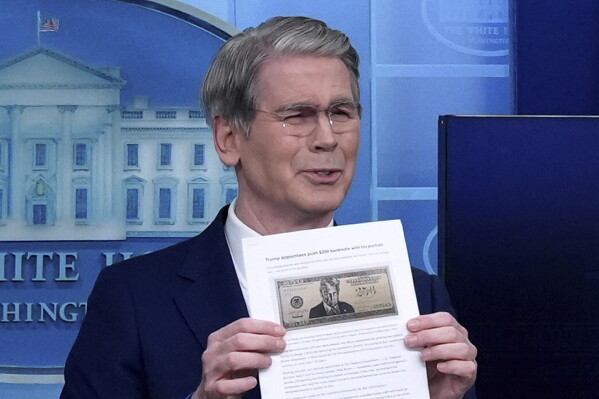
The global community is becoming wary of lending money to President Donald Trump’s administration. This concern is leading to rising interest rates, which are increasing affordability pressures, hindering economic growth, and posing a political risk during the upcoming midterm elections.
The recent surge in energy prices, prompted by the conflict involving Iran, has impacted the cost of bonds essential for U.S. government funding. The interest rate on a 10-year U.S. Treasury note now exceeds 4.44%, up from 3.95% before the conflict began in late February. Consequently, average mortgage rates have reached a nine-month high, and auto sales have slowed.
This issue is not confined to the United States, as interest rates are climbing worldwide. This is due to rising inflation expectations, questions about government debt sustainability, and increased investment in artificial intelligence. President Trump has assured Americans of a strategy to reduce the $1.8 trillion annual budget deficit. His plans include revenue from tariffs, a “Gold Card” visa program, spending cuts by the Department of Government Efficiency, and an emphasis on economic growth. Recently, he highlighted the role of a fraud task force, led by Vice President JD Vance, in achieving budgetary savings.
“If he does really great, we’ll have a balanced budget without having to do anything,” Trump said.
However, economists doubt these measures will effectively address the deficit. Government debt servicing costs have tripled since 2021, exceeding $1 trillion annually, as noted by Jessica Riedl, a budget and tax expert at the Brookings Institution. She criticized Trump’s tax cuts, which could add $5 trillion to 10-year deficits, with tariffs only marginally offsetting costs.
Deficits are anticipated to increase as Social Security and Medicare costs surpass tax revenues. The 10-year Treasury rate peaked at 4.67% in May before declining with Iran ceasefire negotiations. Previous rate increases were linked to Trump’s “Liberation Day” tariffs, which later decreased when tariffs were moderated.
Kent Smetters of the Penn Wharton Budget Model highlighted that 60% of increased 30-year Treasury yields result from anticipated U.S. borrowing, with the remaining 40% due to inflation from the Iran conflict and tariffs. Former White House economic adviser Glenn Hubbard expressed concerns about diminished U.S. borrowing capacity in potential economic crises. He believes current political leaders lack ideas to address such challenges.
Political Implications of Rising Interest Rates
Higher interest rates present Democratic candidates with additional issues to critique. These rates, coupled with high costs for essentials, concern voters significantly. In Colorado’s fifth congressional district, Democrat Jessica Killin emphasizes that rising deficits and interest rates make purchasing homes, cars, and managing credit more difficult. Killin, an Army veteran, emphasizes the worsening borrowing costs alongside existing gas price concerns.
Her opponent, Joe Reagan, another Army veteran, focuses on fiscal responsibility. He argues that dollars spent on interest could instead support infrastructure, education, and veterans’ services. Both Democrats challenge Republican Rep. Jeff Crank in a district their party considers a potential gain. Killin criticizes alleged contradictions between Trump’s statements and actions regarding the deficit.
New Deficit Management Strategies
The administration aims to lower budget deficits, though recent reductions relied partly on tariff revenues deemed illegal by the Supreme Court. Treasury Secretary Scott Bessent mentioned potentially eliminating $500 billion in annual fraudulent spending to reduce the deficit significantly. This estimation partially originates from a 2024 Government Accountability Office report, which identified significant fraud during the pandemic period when government borrowing was high.
Bessent contends the administration received an unfavorable deficit situation from former President Joe Biden. He aims to lower the deficit to 3% of the U.S. GDP, which is currently about double that figure. However, specifics regarding a timeline for this target remain vague.
Investors demonstrate confidence in the U.S. economy by buying shares in American companies, boosting stock market value. Nonetheless, rising interest rates indicate concerns over national debt as a potential U.S. vulnerability. Many economists believe financial markets might pressure political leaders to address fundamental imbalances.
“That is what debt is about: I believe you will pay me back,” said Hubbard. “That works until it doesn’t.”
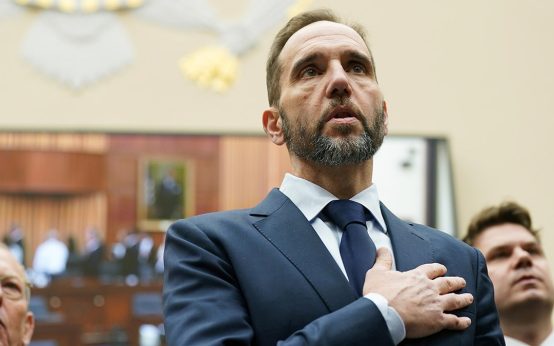 House Republicans Release Transcripts in Jack Smith Investigation
 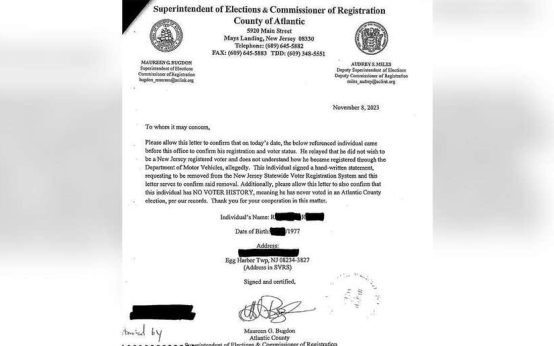 RNC Files Lawsuit for Transparency in New Jersey’s Voter Roll Maintenance
 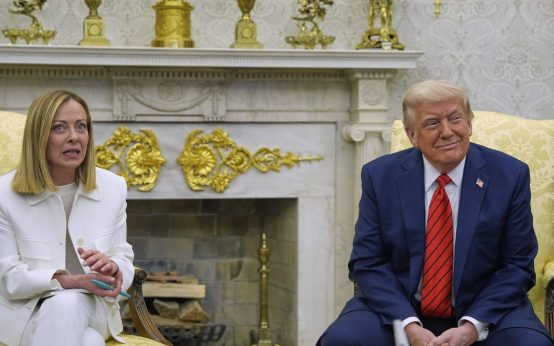 Italian PM Giorgia Meloni Skips UN General Assembly Amid Growing Tensions
  Calls Grow for Ireland’s Soccer Team to Boycott Matches Against Israel
  Congressman Randy Fine’s Bold Political Stance and Views on AI Regulation
  Political Messaging and Strategy Leading Up to Midterms