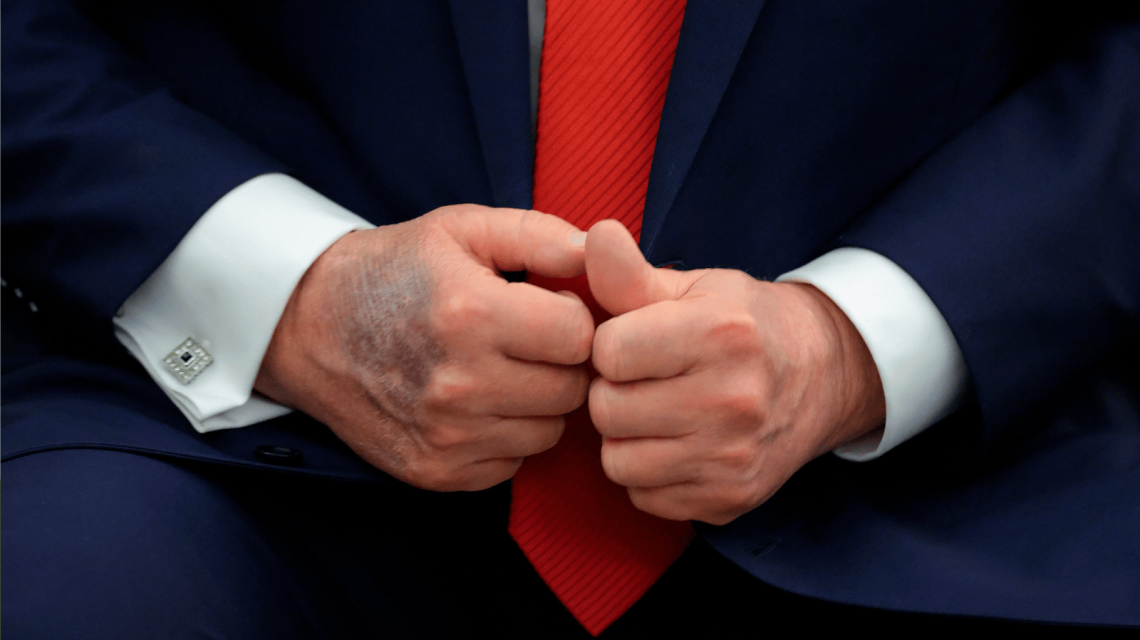
President Donald Trump has defended his daily aspirin routine, stating he takes it every day despite uncertainty about its effectiveness. He mentioned to reporters on Saturday that while he’s unsure of its benefits, aspirin has become a psychological necessity for him. Trump expressed, “I don’t know if it works or not, but I’ve been doing it for a long time, and here I am.”
Trump’s Consistent Aspirin Commentary
At 80 years old, Trump has repeatedly discussed his aspirin usage over the last year. In interviews with The Wall Street Journal (WSJ), he and his doctors revealed he takes a 325-milligram aspirin daily. This dosage is higher than the standard 81-milligram “low-dose” aspirin often prescribed for heart patients.
In January, Trump explained to the WSJ: “They say aspirin is good for thinning out the blood, and I don’t want thick blood pouring through my heart. I want nice, thin blood pouring through my heart.” Despite doctors suggesting a lower dose, Trump has persisted with the higher amount, citing long-term usage and superstition.
Trump attributed visible bruises on his hands to aspirin use, acknowledging it makes him bruise more easily. He stated that makeup helps cover these marks, commenting, “I have makeup that’s easy to put on, takes about 10 seconds.”
White House Doctors and Aspirin Use
Dr. Sean Barbabella, Trump’s physician, confirmed to the WSJ that the president takes 325 milligrams of aspirin daily for “cardiac prevention.” The White House consistently refers to aspirin use when asked about bruising on Trump’s hands. Earlier this year, Press Secretary Karoline Leavitt stated that the bruising resulted from frequent handshaking, and aspirin use was part of a cardiovascular prevention regimen.
Barbabella assured that Trump’s health remains robust. Statements cited by several sources noted “excellent metabolic health” and indicated Trump’s cardiovascular health appears significantly younger than his chronological age.
Expert Opinions on Daily Aspirin
Aspirin functions by thinning the blood and reducing platelet clumping, aiding in the prevention of heart attacks and strokes for some patients. However, it also raises bleeding risk.
Recent medical recommendations have shifted, with the U.S. Preventive Services Task Force advising against daily aspirin for preventing a first heart attack or stroke in adults 60 and older due to bleeding risks outweighing benefits. The Mayo Clinic similarly cautions that daily aspirin therapy isn’t suitable for everyone, and warns of potential serious side effects like gastrointestinal bleeding. While the benefits are established for “secondary prevention” in individuals with previous heart attacks or strokes, the debate continues on its benefit for preventing the first cardiovascular event.
Significance of the Discussion
Trump’s comments arise amid ongoing scrutiny over his health, particularly given his age as the oldest person inaugurated as U.S. president. This situation highlights that aspirin is not universally beneficial. The decision to take daily aspirin and determining the appropriate dose should consider one’s medical background, cardiovascular risks, and bleeding risks.
Newsweek has reached out to the White House for further comment.
Newsweek’s reporters and editors collaborated with Martyn, an AI assistant, in producing this story. For more information about Martyn, visit Newsweek’s site. For inquiries, contact Newsweek editors Tobias Meyjes and Cristina Diciu.
 The Ongoing Debate Over the Death Penalty: A Case in Tennessee
  Trump Offers $5,000 Proposal to Boost Republican Election Prospects
  Partisan Tensions in Congressional Hearings
  Senator Kennedy Warns GOP on Voter Concerns Over Cost of Living
  Virginia’s Shifting Political Landscape Ahead of Midterms Highlights Data Center Debate
  Senator Kelly Accuses Trump of Vote-Buying with Cash Proposal