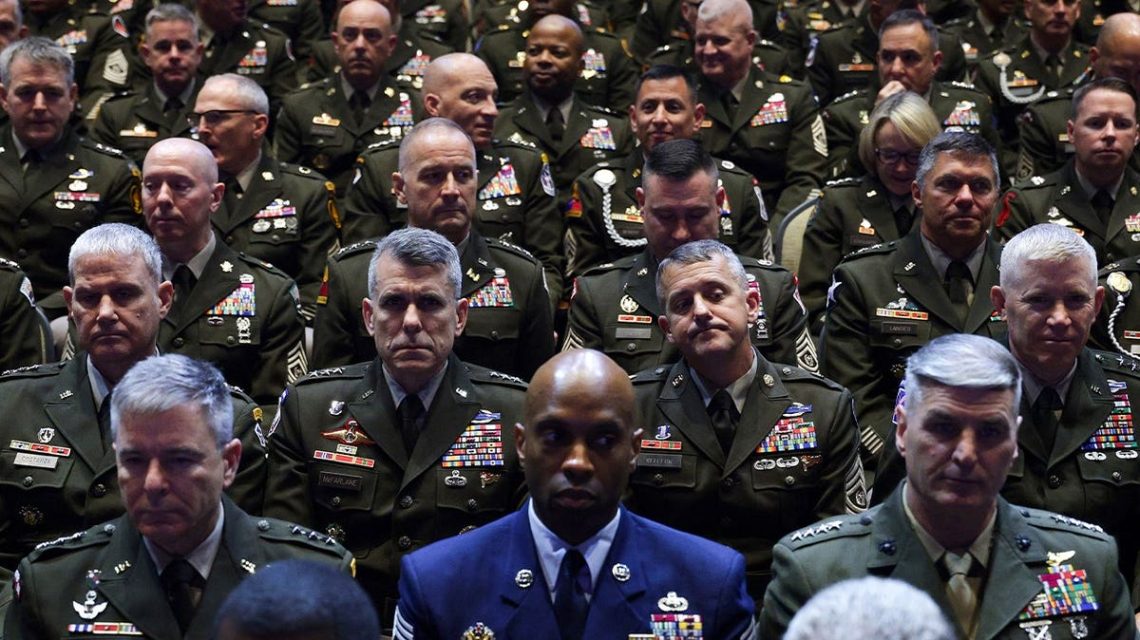
The Pentagon has announced a major change in the promotion process for senior military officers, aimed at selecting future generals based on their ability to solve complex military problems. This marks a significant shift in decades-long practices for all branches of the military.
New Assessment Approach
Documents reveal that each military service has developed a version of the Joint Warfighting Evaluation (JWE), a standardized test that assesses operational planning, decision-making, and leadership in simulated combat scenarios. Starting from the fiscal year 2027, promotion boards will use these assessments in addition to traditional performance evaluations.
Focus on Combat Performance
The initiative, led by Secretary of War Pete Hegseth, emphasizes evaluating officers’ combat abilities rather than career management skills. Senior Pentagon adviser Stu Scheller noted the difference between excelling at one’s job and impressing supervisors.
Details of the JWE
Different versions of the JWE include online simulations, in-person wargames, and scenarios where officers must respond to AI-powered adversaries. For instance:
- The Army plans a remote written test followed by a digital wargame for eligible colonels.
- The Air Force will conduct a two-hour online analysis and a simulation.
- The Navy requires a three-hour written test and a wargame at the Naval War College.
- The Marine Corps will have an eight-hour remote evaluation with AI-supported elements.
These assessments aim to supplement, not replace, existing evaluations and provide an additional measure for promotion boards.
Weight of the New Assessment
Although the JWE will be used as a new metric, its influence on promotion decisions is still under consideration. Scheller indicated that the exact weighting will be determined after initial evaluations from February to June 2027.
Wider Military Overhaul
This initiative is part of a broader reform by Hegseth to improve the selection and retention of senior military leaders. He has pledged to promote top performers more rapidly, remove low performers swiftly, and transform evaluations into meaningful tests. Additionally, he has reduced senior leadership positions, aiming for a 20% cut in four-star roles and a 10% decrease in general officer positions.
Hegseth’s approach has garnered criticism over political influence on traditionally service-led promotion processes. He has intervened in promotion lists, leading to significant changes in military leadership.
 California Governor Faces Lawsuit Over Death Sentence Commutations
 Allegations of Anti-Jewish Discrimination at CUNY School
 School Choice and the Texas Education Debate
 Trump’s Cryptocurrency Ventures and Their Impact on Supporters
 Amy Klobuchar’s Challenge as Minnesota Governor
 The Purpose and Challenges of Signature Collection for Political Candidates in Illinois