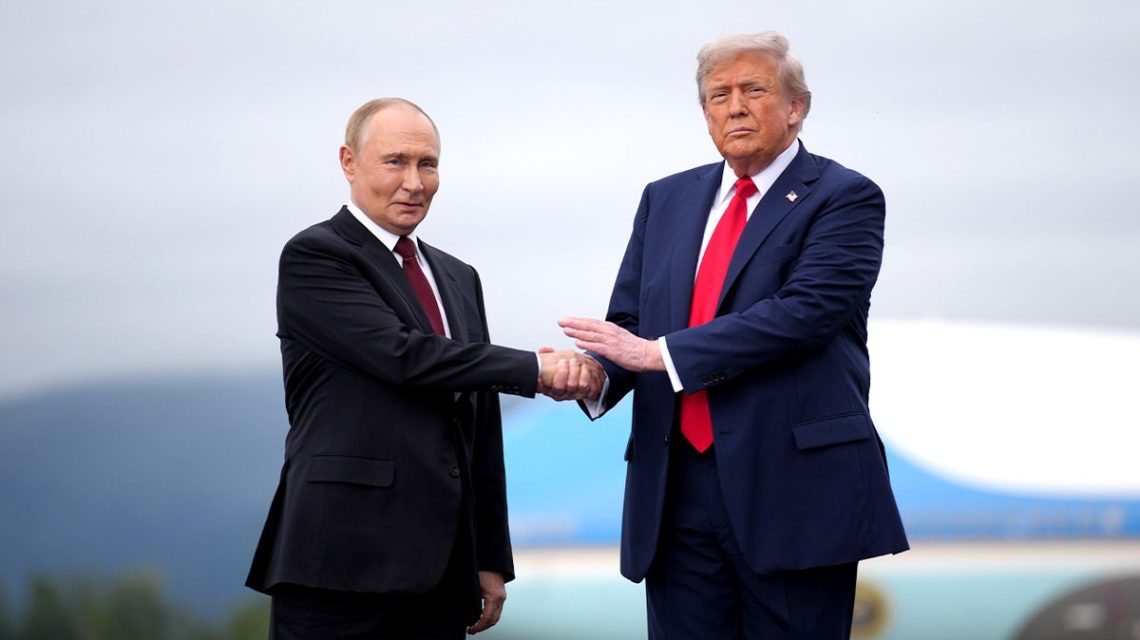
The expiration of a historic nuclear arms reduction treaty this Thursday marks the beginning of a new and uncertain era in nuclear relations between the United States and Russia. For the first time in over fifty years, there will be no binding limitations on the size of nuclear arsenals for these two nations, nor will there be established procedures for inspection and verification of nuclear activities.
Matt Korda, who serves as associate director of the Nuclear Information Project at the Federation of American Scientists, explains that this change requires both countries to reevaluate the assumptions guiding their nuclear strategies. “Until now, nuclear modernization programs on both sides were developed under the assumption that central limits would remain untouched,” Korda says. “Without these limits, both countries will need to adjust to an uncertain nuclear outlook.”
“Without those central limits … both countries are going to be reassessing their programs to accommodate a more uncertain nuclear future.” – Matt Korda
In 2023, Russia suspended its involvement in the New START treaty, halting inspections and data exchanges. With the treaty’s expiration, no legal framework remains to govern the nuclear arsenals of these nations. The absence of a successor agreement puts more emphasis on international cooperation, particularly involving China. The current administration emphasizes the need for China’s involvement in arms control discussions because of its growing nuclear capabilities.
As Secretary of State Marco Rubio pointed out, “For effective arms control in the 21st century, it is crucial to include China, particularly given its expansive and rapidly advancing stockpile.” However, experts are skeptical that China will restrict its nuclear capabilities until achieving a more balanced power dynamic with other major nuclear powers.
China targets to amass 1,000 nuclear warheads by 2030, yet this number remains small compared to the arsenals of Cold War-era powers. By early 2026, statistics reveal that the U.S. and Russia together account for approximately 86% of the world’s nuclear stockpile, each holding around 4,000 warheads. Despite significant reductions from the Cold War peak of over 70,000 warheads, the world’s nuclear stockpile remains concerningly high at about 12,000 in 2025.
Despite Russia’s suspension of New START in 2023, the country expressed interest in extending the treaty for another year, reflecting shared constraints rather than a strategic shift, according to Korda. “Currently, it’s not in Russia’s interest to dramatically escalate an arms race as its modernization efforts face challenges, and industrial resources are committed to the conflict in Ukraine.”
The lack of inspections and data exchanges means countries must rely on independent intelligence, elevating uncertainties and leading to worst-case scenario planning. Without the treaty’s constraints, immediate concerns arise about how swiftly existing nuclear warheads could be deployed rather than the development of new ones.
Ankit Panda from the Carnegie Endowment for International Peace notes China’s capacity to accelerate the placement of additional warheads, stating, “Russia could act more swiftly than the United States by placing more warheads onto its currently deployed missiles.” Panda explained this would involve the augmentation of intercontinental ballistic missiles (ICBMs) and submarine-launched missiles.
“Uploading would be a process of adding additional warheads to our ICBMs and submarine-launched missiles,” Ankit Panda noted. “The Russians could be much faster than the United States.”
Korda also highlights that although a significant upload of warheads is unlikely to occur instantly, it could alter force levels significantly within a couple of years, albeit with substantial financial costs. This dynamic is further complicated by industrial capacity limitations, given the U.S. nuclear weapon production now pales against historical levels.
Nicole Grajewski, a fellow at the Carnegie Endowment, mentions that while Russia may excel in warhead production, its delivery systems are tied up due to the ongoing war in Ukraine. She emphasizes that conventional weapon manufacturing competes with strategic nuclear delivery capabilities, limiting the rate of expansion for new assets like intercontinental missiles and submarine-launched weapons.
Amid these developments, the focus intensifies on systems not covered by treaties, such as the Poseidon nuclear-powered torpedo and nuclear-powered cruise missiles. These represent a shift in strategic military investments beyond traditional nuclear platforms.
Former President Donald Trump has previously expressed interest in pursuing arms control agreements involving Russia and China, with recent gestures indicating a potential shift in the U.S. approach to nuclear testing. “Given the testing processes in other countries,” he remarked in October, “I’ve instructed the Department of War to initiate nuclear weapon tests on equal terms.” This poses further implications for future nuclear dynamics.
 Federal Appeals Court Decision Against Trump’s ‘Third-Country’ Deportation Policy
  President Trump’s Controversial Ban on Media Outlets Sparks Press Freedom Concerns
  Ed Sheeran’s Philadelphia Concert Amid Controversy
  U.S. Secures Strategic Control Over Greenland
  U.S. Security Agreement in Greenland Sparks Optimism and Concerns
  Cook County’s Property Tax Bridge Loans