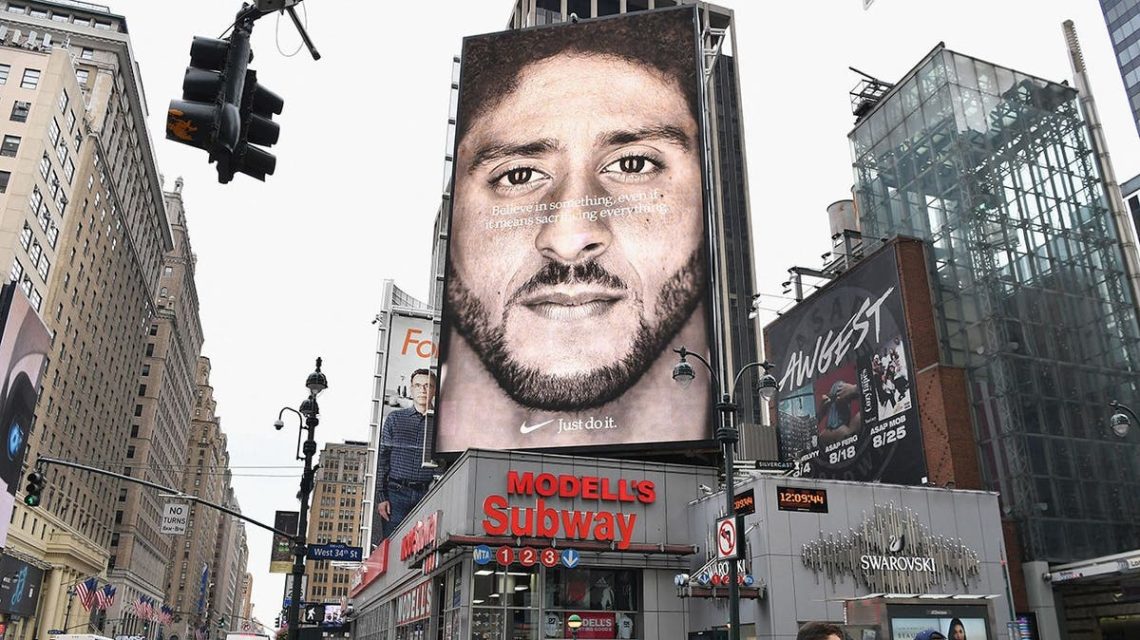
At 860 words, the memo from Nike CEO Elliott Hill conveyed a clear message to employees. Within those words, one key point stood out: “Over the past year, we’ve put sport at the center of everything we do. We’re seeing encouraging signs of progress, but we have more work to do to win over the long term.” This memo was sent on October 1, just a day before Nike’s stock dipped to $33.87 per share, its lowest point in over 12 years.
Nike, once a dominant force in athletics, is now anticipating further layoffs in 2027. These cuts follow two rounds of staff reductions earlier in the year. A notable part of Nike’s brand journey includes an ad featuring quarterback Colin Kaepernick displayed in New York City on September 8, 2018. This campaign highlighted Kaepernick’s activism against police violence, which placed Nike at the heart of a contentious societal issue.
In recent years, Nike has made several decisions viewed by some as politically motivated. Dan Zaksheske of Outkick highlighted actions supporting a more left-wing audience. For instance, Colin Kaepernick became the face of Nike’s 30th anniversary “Just Do It” campaign in 2019. Following George Floyd’s death in 2020, Nike released an ad titled “For Once, Don’t Do it,” addressing America’s societal issues.
In 2023, Nike collaborated with Dylan Mulvaney, a male identifying as female, to advertise women’s apparel, despite some controversies surrounding Mulvaney’s previous partnerships. The 2017 “Equality” commercial is another example, featuring slogans like “the ball should bounce the same for everyone.” Nike has also prominently featured Pride and LGBTQ themes in brand messaging.
The impact of these campaigns on Nike’s financial performance is complex. While no single campaign can be blamed for stock performance, the decline is significant. After peaking at $177.51 per share in November 2021, the stock has fallen 81%. This reflects a broader link between brand actions and perceptions among its audience.
A notable criticism involves the delay of Caitlin Clark’s signature sneaker, which did not launch until June of the current year. Sports commentators Ethan Strauss and Dan Wetzel noted that Nike prioritized launching A’ja Wilson’s sneaker first, despite Clark being a top-selling WNBA jersey name. Though A’ja Wilson is a superior player skill-wise, Clark’s influence on basketball culture remained unmatched.
Nike seems to recognize its current state, with changes initiated after being removed from the S&P 100 index. CEO Elliott Hill’s memo detailed future plans. These include a new campus in India, improvements to the supply chain, and reorganization into three regional blocks: Americas, APGC (Asia Pacific and Greater China), and EMEA (Europe, Middle East, and Africa).
Yet, the emphasis on putting sports first cannot be ignored. The intertwining of politics and sports often drives audiences away, as evidenced by declining NBA ratings following 2020. Nike’s examples demonstrate a similar pattern, where political overtones have possibly harmed brand reputation.
Despite these shifts, Nike has yet to publicly comment on the stock situation. Meanwhile, columnist Matt Calkins from Outkick focuses on intersecting sports with cultural themes, highlighting these dynamics within brands like Nike.
 Tech Accountability Amid AI Advancements
  Potential of Advanced Nuclear Power in Meeting U.S. Energy Demands
  Venezuelan Man Accused of ATM Hacking in U.S. Custody
  History of Panic Surrounding Technological Innovations
  AI’s Influence on Critical Thinking in Knowledge Work
  Virginia’s Shifting Political Landscape Ahead of Midterms Highlights Data Center Debate