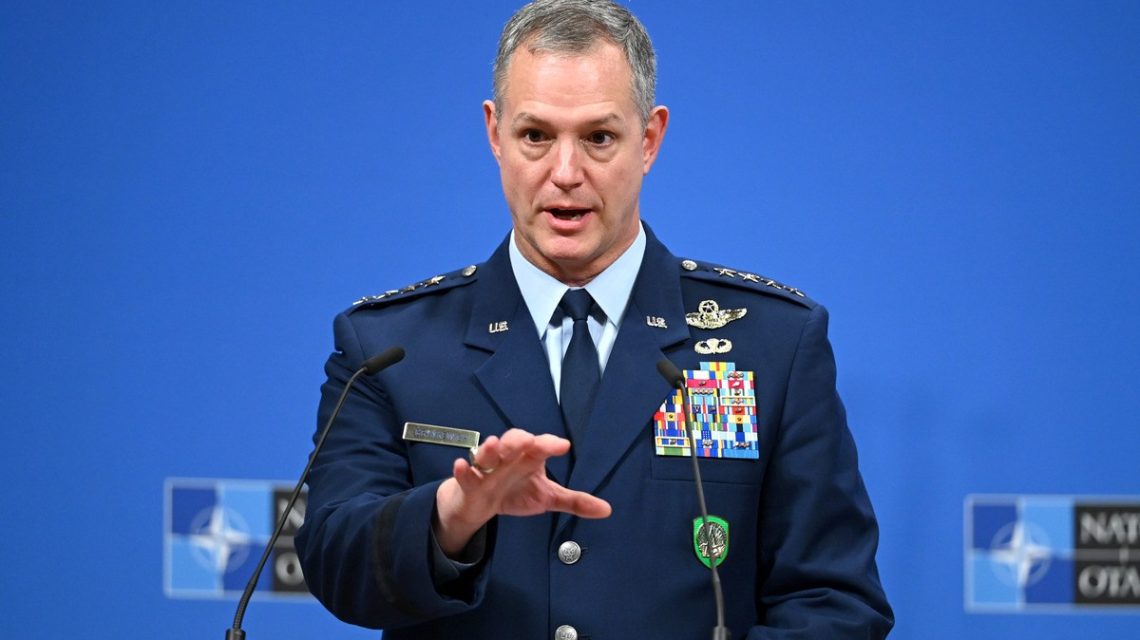
NATO’s Supreme Allied Commander Europe, General Alexus Grynkewich, outlined the alliance’s preparedness for any potential attack on its member states. Amidst concerns from intelligence chiefs regarding possible Russian aggression on NATO’s eastern front, Grynkewich emphasized the alliance’s readiness.
At a security forum held in Warsaw, Poland, Grynkewich stated that NATO’s 32 member countries have agreed on a unified approach termed a “theory of victory.” This strategic framework ensures that NATO remains vigilant, discouraging any nation from attacking its members. In the event of such an attack, NATO will be prepared to defend vigorously.
Recent warnings from NATO officials highlight the risk of Russia intensifying its “hybrid warfare” tactics against alliance members. Hybrid warfare encompasses actions such as cyberattacks, misinformation campaigns, and targeting critical infrastructure like power grids and undersea cables. The possibility of a limited military operation or land seizure is considered the worst-case scenario rather than an extensive invasion like that in Ukraine.
Denmark’s military and foreign intelligence agency reported an increase in Russia’s cyber and sabotage activities in Europe. They described this behavior as evidence of Moscow’s growing willingness to take significant risks.
NATO countries are working to expand their military stockpiles and bolster defense spending. This move comes after pressure from U.S. President Donald Trump, who encouraged European allies and Canada to decrease dependence on U.S. military support. This is part of a broader U.S. strategy to focus on potential threats from China regarding Taiwan.
Nations bordering Russia or Ukraine, in particular, have been unsettled by a series of drone and missile incidents. Some officials interpret these as Russian attempts to test NATO’s reactions and undermine support for Ukraine.
Response Strategy in Case of an Attack
General Grynkewich reassured forum attendees that although conflict is not imminent, NATO remains prepared. Should an attack occur, NATO would deploy land forces to intercept the breach. Aircraft and ships would counteract the aggressors using a mix of cost-effective munitions and long-range precision weapons.
The alliance’s space and cyber capabilities would also be activated, though Grynkewich did not detail their specific roles. Advanced sensors would detect and neutralize any other forms of attack before they gain momentum.
If enemy forces pressed on or reinforced, NATO would target not only the attacking troops but all supporting elements. The strategy includes utilizing numerous low-cost weapons alongside fewer but more precise, expensive missiles to overwhelm the opposition.
This is an evolving situation and further updates will follow.
 Calls for New Leadership in Ukraine Amid Political and Energy Tensions
  Tragic Shipwreck off Djibouti Coast Claims Over 139 Lives
  Global Coordination Behind Anti-Israel Protests
  Addressing Challenges in Horizontal Escalation
  Pope Leo XIV Condemns Death Penalty Amid Planned Execution Livestream
  Hurricane Simon Strengthens to Category 4, Threatens Mexico’s Pacific Coast