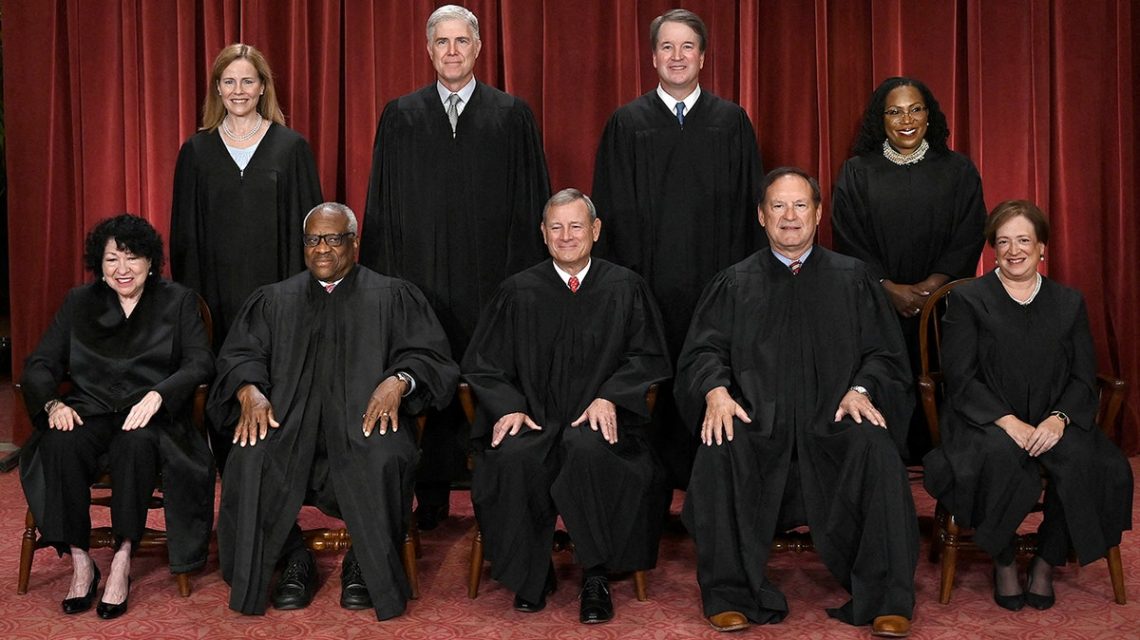
The question of whether to increase the number of justices on the U.S. Supreme Court remains a contentious issue. Opinions vary widely among Americans and lawmakers, reflecting the complex nature of this legal and political debate.
Public Opinions on Supreme Court Expansion
Americans interviewed by Fox News shared different views on the subject. Tim from Washington, D.C., expressed caution, saying, “If it’s not broken, don’t fix it.” He suggests leaving the number of justices as is, considering the possibility of bias if the size were to change.
On the other hand, Derek, also from Washington, believes more justices could introduce a broader range of opinions. “You’d have more of a consensus on whatever they’re voting on,” he noted, highlighting the potential for a more robust deliberative process.
Legislative and Political Proposals
The discussion follows the failure of a Republican-supported constitutional amendment aimed at permanently fixing the court’s size at nine justices. Despite this setback, Democratic lawmakers have presented various proposals to reshape the court. These include increasing its membership, establishing term limits, and enforcing stricter ethics rules.
One proposal from U.S. Rep. Al Green, D-Texas, suggests expanding the bench from nine to 13 justices. Rep. Ro Khanna, D-Calif., has also introduced a measure to implement 18-year terms for newly appointed justices, signaling a shift toward limited tenure.
Arguments and Counterarguments
“If we’re gonna change the size, we need to do it now,” said Carl from Texas, stressing the urgency he perceives in this issue. However, questions about the motivations behind such efforts persist. Some, like Tim, see them rooted in political bias.
Republicans caution against these changes, viewing them as reactions to unfavorable rulings. They attempted to enshrine the nine-justice limit through a constitutional amendment, but the proposal did not achieve the necessary two-thirds majority in the House. Further steps, such as Senate approval and state ratification, remain unfulfilled.
The U.S. Constitution’s Article III, Section 1, establishes the Supreme Court but leaves its size to Congressional discretion. Initially set at six seats in 1789, the court’s size has varied, with the current nine seats established by Congress in 1869.
 Katie Zacharia Takes on Role of White House Press Secretary
  South Carolina U.S. Senate Debate: Graham vs. Andrews
  Fox Nation’s Documentary on Alleged Trump-Russia Collusion Plot
  Debunked Claims of Celebrity Endorsements for Trump
  Calls for New Leadership in Ukraine Amid Political and Energy Tensions
  Pennsylvania’s New Tracker Highlights Data Center Development Amid AI Debate