Updated on: February 5, 2026 / 6:28 AM EST / CBS/AP
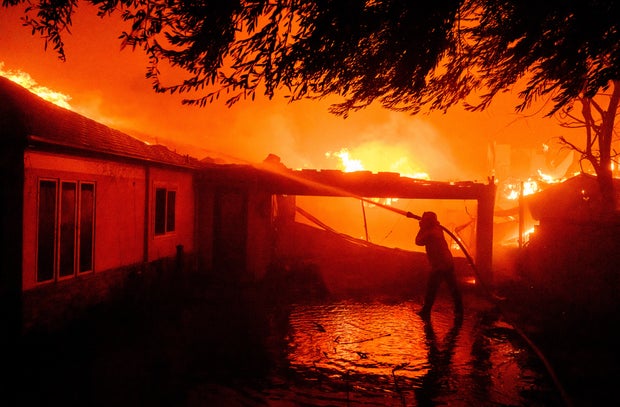
A recent study reveals that persistent exposure to pollution from wildfires results in tens of thousands of deaths each year in the United States. The study, published in the journal Science Advances, highlights that between 2006 and 2020, long-term exposure to fine particulates from wildfire smoke led to an average of 24,100 deaths annually in the contiguous United States.
“Our message is: Wildfire smoke is very dangerous. It is an increasing threat to human health,” said Yaguang Wei, a study author and assistant professor in the department of environmental medicine at Icahn School of Medicine at Mount Sinai.
Other experts agree with the study’s findings. Michael Jerrett, a professor of environmental health science at the University of California, Los Angeles, stated that these estimates are reasonable. He emphasized the need for more research to increase scientific confidence in the outcomes through varied methodologies.
Health Risks from PM2.5 Exposure
The study’s researchers concentrated on the health effects linked to chronic exposure to fine particulate matter, or PM2.5, which is a significant concern from wildfire smoke. These tiny particles can penetrate deep into the lungs and enter the bloodstream. Short-term exposure can cause irritation like coughing and itchy eyes, while long-term exposure can exacerbate existing health problems and lead to respiratory, cardiovascular, neurological diseases, and premature death.
Min Zhang, a postdoctoral student at the Icahn School and one of the study’s authors, pointed out, “Wildfire smoke PM2.5 has emerged as a significant environmental hazard in the U.S., driven by the increasing frequency and intensity of wildfires due to climate change.”
The increase in wildfires is attributed to climate change, decades of poor forest management, and urban development expanding into fire-prone areas, raising the wildfire risk significantly. Jerrett noted that while wildfire deaths aren’t directly listed on death certificates unless caused by fire burns, the smoke’s impact primarily affects vulnerable populations, resulting in lost lives.
Case Study on Los Angeles Fires
Research from August highlighted that the fires in Los Angeles in 2025 had a more deadly impact than initially estimated. A study dedicated to these fires showed that 440 additional deaths were attributable to the smoke during a specific period, exceeding the expected number based on historical data.
Earlier research in 2024 estimated that NOAA’s exposure to wildfire smoke from 2008 to 2018 resulted in premature deaths of tens of thousands of Californians. The study cited specific counties with notable numbers of deaths due to PM2.5 exposure.
Research Methodology and Findings
The study authors analyzed the correlation between average yearly exposure to PM2.5 from wildfire smoke and mortality rates across different U.S. counties. They employed federal mortality data from 3,068 counties for all death causes, including specific diseases such as circulatory, neurological, and respiratory diseases. The inclusion of fatalities from falls and transportation accidents, which are unrelated to smoke exposure, helped validate the findings.
Yaguang Wei observed, “We found no association for car accidents and falls, while for other diseases, we found statistically significant effects.” Notably, the correlation between neurological disease deaths and particulate exposure was crucial.
The study found that the impact of smoke varied by season and demographics, with more pronounced effects during cooler months. Rural areas and communities with a younger population appeared to be more susceptible.
The data indicated that an increase of just 0.1 micrograms per cubic meter of PM2.5 resulted in an estimated 5,594 additional deaths annually.
Jerrett remarked on the study’s wide-ranging scope due to its large population sample, covering most causes of deaths in the U.S. However, he noted the dynamic nature of wildfire smoke could lead to data discrepancies and suggested county-level data could carry estimation errors.
Policy Implications and Needed Mitigation
Wildfire smoke remains largely unregulated by the Environmental Protection Agency (EPA) as it is often considered a natural disaster. The study authors argue for effective mitigation strategies backed by EPA regulation to address this critical health threat.
Environmental sciences professor Kai Chen from Yale School of Public Health emphasized the urgency of EPA regulation on PM2.5 from wildfire smoke, stating, “These findings underscore the significant risks associated with the Trump administration’s rollbacks in climate change policies amid climate change-induced wildfires.”
 Cold Weather Alerts and El Niño Influence
  Turning Home Food Waste into Compost: A Guide
  Chicagohenge: When Sunlight Aligns with City Streets
  Fat Bear Week 2026: A Look at the Contest and Its Competitors
  California Governor Declares Statewide Emergency Ahead of El Niño Storms
  EPA Rollbacks and the Impact on Indiana Communities