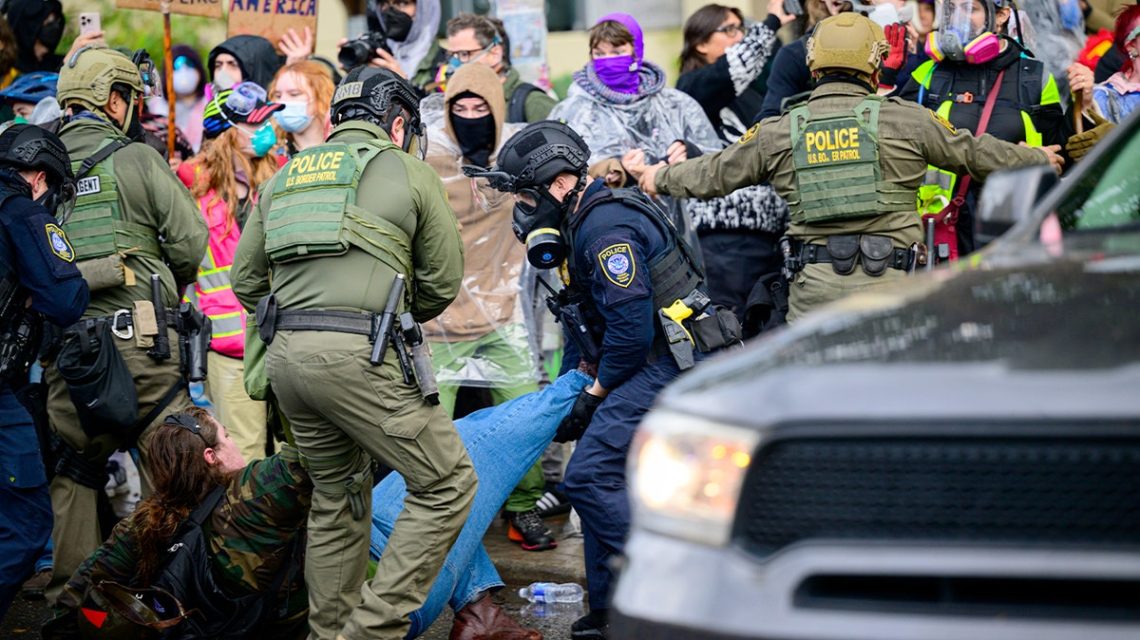
A recent ruling by a federal judge delivered a significant blow to the Department of Homeland Security (DHS), restricting its ability to carry out warrantless immigration arrests in Oregon without specific assessments of flight risk. This decision comes amidst allegations that federal agents were engaging in a pattern of unlawful arrests, potentially violating existing laws.
U.S. District Judge Mustafa Kasubhai granted a preliminary injunction in a class-action lawsuit against DHS and U.S. Immigration and Customs Enforcement (ICE). According to the court, there were instances where individuals were arrested for alleged immigration violations without the necessary warrants and without proper determination of their likelihood to evade arrest.
In his ruling, Judge Kasubhai mandated that the government immediately inform immigration officers, employees, agents, and contractors of this decision. Furthermore, any future warrantless arrests are required to be documented in detail, with case-specific justifications provided on a regular basis.
Due process calls for those who have great power to exercise great restraint. That is the bedrock of a democratic republic founded on this great Constitution. I think we’re losing that.— Judge Mustafa Kasubhai
The Associated Press highlighted evidence presented during the proceedings which revealed that immigration officials in Oregon conducted operations where individuals were detained without warrants or proper assessment of the possibility of them fleeing.
During an exhaustive hearing, Victor Cruz Gamez, a 56-year-old long-term U.S. resident, shared his experience as one of the plaintiffs. Despite having legal work authorization and a pending visa application, Cruz Gamez was detained during a routine stop while driving home. He was held in immigration detention for three weeks, even after presenting a valid driver’s license and work permit. He detailed the fear and anxiety his detention caused his family, recounting how his wife and grandchildren were too afraid to leave their home for several weeks.
An attorney later intervened to secure the release of Cruz Gamez, who was facing the threat of deportation at the time. During the court proceedings, a government lawyer expressed regret for the ordeal Cruz Gamez and his family went through.
While DHS has yet to provide a statement regarding Judge Kasubhai’s ruling, the lawsuit continues to unfold, with significant implications for how immigration enforcement is conducted in Oregon and possibly beyond.