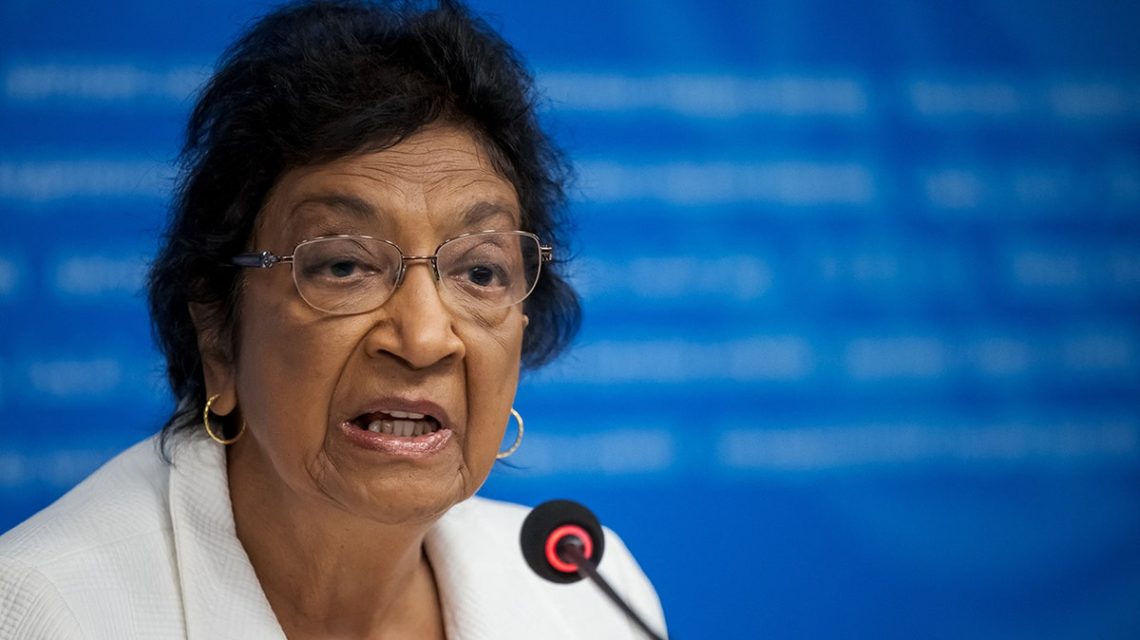
The Nobel Peace Prize was established with the intent to honor those who significantly contribute to advancing peace among nations. However, the selection process often rewards figures from the international activist community, emphasizing those who align with progressive political views rather than purely contributing to peace.
Navi Pillay and Recent Developments
This year, Navi Pillay receives the prize amid controversy. Best known for leading a U.N. inquiry that accused Israel of genocide in Gaza, her selection reflects a U.N. environment where opposing Israel can sometimes be seen as commendable.
Beyond this incident, Pillay has a history of contentious responses to free speech issues. Her reaction to the bombing of Denmark’s embassy in Pakistan following the publication of Mohammad cartoons, and later to Charlie Hebdo’s publication, suggest she favored restrictions over defending free expression.
In 2022, Pillay supported fellow commissioner Miloon Kothari after he made inflammatory remarks about a “Jewish lobby.” This led to Pillay’s recognition event being canceled in Berlin.
Historical Decisions of the Nobel Peace Prize
The Nobel Peace Prize has had a history of controversial choices. In 1994, Yasser Arafat, known for violent political tactics, received the award. 2007 saw it awarded to Al Gore and the Intergovernmental Panel on Climate Change. In 2009, then-new U.S. President Barack Obama was recognized without significant political achievements. The EU was awarded in 2012 despite no specific peace endeavors highlighted.
Not all notable peace efforts receive recognition. For example, the Abraham Accords fostered diplomatic ties between Israel and several Arab nations, illustrating practical peace-making through alliances and negotiations.
Criticism and Reflection
The Nobel Peace Prize is determined by a committee appointed by Norway’s parliament, and they often favor those aligning with their progressive beliefs rather than universal peace ideals. The committee’s decisions can be critiqued, and the automatic respect historically given deserves reassessment to align more closely with Alfred Nobel’s original intent.
Daniel Schatz, a political science expert, highlights the importance of distinguishing between symbolic gestures and tangible peace efforts. The Nobel Peace Prize should uphold its foundational purpose of celebrating genuine advancements in world peace.
 Greek Coastguard Rescues Woman After 20-Hour Sea Ordeal
  Egg Hub Program Empowers African Farmers to Combat Food Insecurity
  Pope Leo XIV Diagnosed with Lung Cancer After Surgery
  Protests Over Education Reform Escalate in France
  French AI Entrepreneur’s Warning to American Voters: Avoid Democrat Policies
  Pope Leo XIV Undergoes Successful Lung Surgery