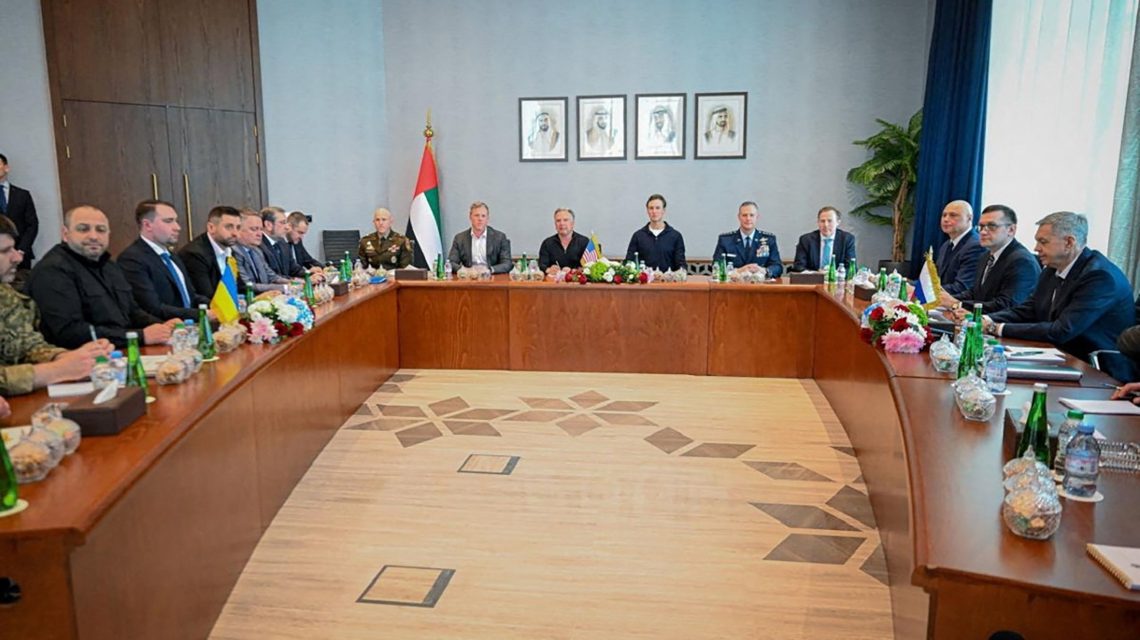
In a significant diplomatic development, the trilateral discussions involving American, Ukrainian, and Russian negotiators have concluded in the United Arab Emirates on Thursday. The primary result of these talks was an agreement between Russia and Ukraine to exchange hundreds of prisoners of war. Concurrently, the United States and Russia have decided to resume high-level military-to-military dialogue, which had been suspended since the latter part of 2021.
Ukrainian President Volodymyr Zelenskyy had previously indicated that Ukraine was anticipating a prisoner exchange with Russia imminently, following the first round of discussions in Abu Dhabi. Steve Witkoff, serving as the U.S. peace envoy under President Donald Trump, detailed on social media that the exchange would involve 314 prisoners, marking the first exchange in five months.
“This positive outcome is the result of peace talks that have been comprehensive and productive,” Witkoff stated. “While there is still significant work remaining, it is clear that ongoing diplomatic efforts are yielding tangible outcomes, pushing forward the quest to end the conflict in Ukraine.” A statement from the United States European Command echoed this sentiment, highlighting the agreement to restore military communication channels between the U.S. and Russia.
“Maintaining ongoing dialogue between military establishments is essential for global stability and peace. It facilitates transparency and helps in de-escalation,” stated the EUCOM. “This communication channel will provide consistent contact as efforts continue towards establishing lasting peace.”
Following these discussions, the prisoner exchange was swiftly executed. President Zelenskyy shared a video showcasing returning Ukrainian soldiers, emphasizing the critical nature of the exchange after such a lengthy delay. Kyiv confirmed that 157 Ukrainian prisoners were returned, with many having been held since 2022. Russia, releasing its contingent to Belarus, planned to transport the soldiers back for medical care in Russia.
During the negotiations, the Ukrainian delegation was led by key figures like Rustem Umerov, Secretary of Ukraine’s National Security and Defense Council, while Russia’s participants included Kiril Dmitriev, a prominent negotiator with the Trump administration. The discussions also involved Jared Kushner, U.S. Special Envoy, highlighting the high-profile nature of these talks aimed at peace.
Umerov characterized the discussions as “substantive and productive,” focusing on real-world solutions. Dmitriev, meanwhile, highlighted the progress achieved, while also criticizing hindrances from certain European factions opposing the talks.
The discussions delved into complex issues, such as the conflict over the Donbas region, control of the Zaporizhzhia Nuclear Power Plant, and Western security guarantees to Ukraine. These are viewed as vital for preventing future aggression from Moscow.
Amidst these diplomatic efforts, military actions persisted. Russia launched a heavy barrage of missiles and drones into Ukraine overnight, targeting various regions, including Kyiv. Ukraine’s forces managed to intercept many of these threats. In retaliation, Ukraine struck multiple strategic points under Russian control.
The use of Starlink satellite communications by both sides remains a contentious issue. Ukraine acknowledged working with SpaceX to regulate the terminals used by their forces, while Russian forces reportedly faced disruptions, which highlights ongoing technological warfare elements.
 Pregnant Haitian Woman Faces Uncertainty as TPS Ends
  Iran Issues New Demands Over Strait of Hormuz
  Toddler Causes Flight Cancellation Due to Seat Belt Issue
  Pentagon Urges Defense Industry to Increase Weapon Production
  Middle East Developments: Iran’s Stance on Strait of Hormuz and Regional Tensions
  Nigerian Forces Rescue Hundreds from Captivity in Major Operation