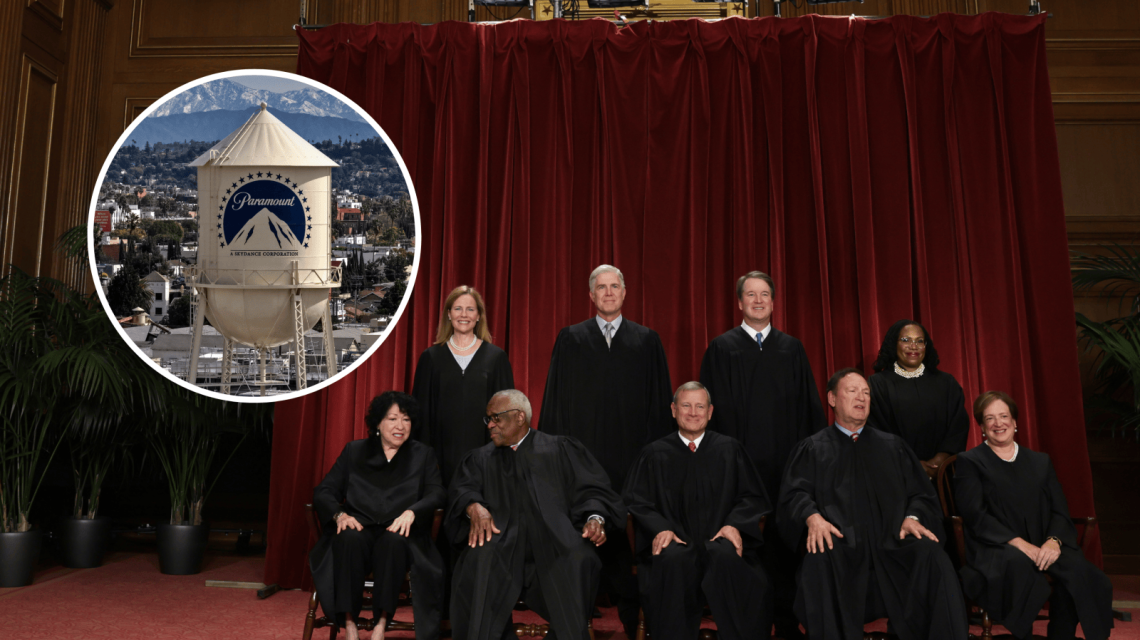
Overview of the Supreme Court Case
Supreme Court justices recently heard arguments in Salazar v. Paramount Global. This case has potential consequences for digital privacy litigation under the Video Privacy Protection Act (VPPA) of 1988, which aims to protect consumers’ personal information.
The Court considered how the VPPA applies in today’s digital landscape. Michael Salazar brought the case, accusing Paramount of violating the VPPA by sharing his viewing history from 247Sports.com with Facebook.
Arguments Presented
During the hearing, Chief Justice John Roberts and other justices engaged with attorney Paul Clement, representing Paramount Global. Clement used examples like Chick-fil-A’s website to argue that Salazar is not a protected consumer since he subscribed to a newsletter rather than a video service.
Clement humorously acknowledged his focus on easy hypotheticals, drawing laughter from justices. Roberts countered, suggesting that Clement should tackle more complex scenarios.
Paramount argued that Salazar didn’t qualify as a ‘consumer’ under VPPA as he accessed videos through a newsletter. Conversely, Salazar’s attorneys argued that the newsletter subscription to a video service provider does qualify one as a consumer.
The Core Legal Question
The Court is tasked with interpreting the VPPA’s definition of ‘consumer.’ Specifically, they must decide whether ‘goods or services from a video tape service provider’ includes all of the provider’s offerings or solely its audiovisual content.
Video Privacy Protection Act of 1988
The VPPA was enacted after a video rental store revealed Supreme Court nominee Robert Bork’s rental history. This disclosure sparked bipartisan concern, leading to the law’s creation. Although it had no significant impact on Bork’s nomination, the incident highlighted privacy risks.
Future Developments
The Supreme Court will issue a ruling by June 2027, likely concluding the current term. The Court will continue addressing major cases on the Second Amendment, voting rights, and climate change in its term.
Associated Press contributed to this article.
 Digital Assets and Their Role in Modern Banking
  U.S. Military Explores Hypersonic Weapons Amid Stockpile Refills
  DIRECTV’s Flexible Streaming Options
  Concerns Raised Over Safety of ChatGPT for Teens
  A Comprehensive Guide to Choosing Husqvarna Chain Saws
  Tech Accountability Amid AI Advancements