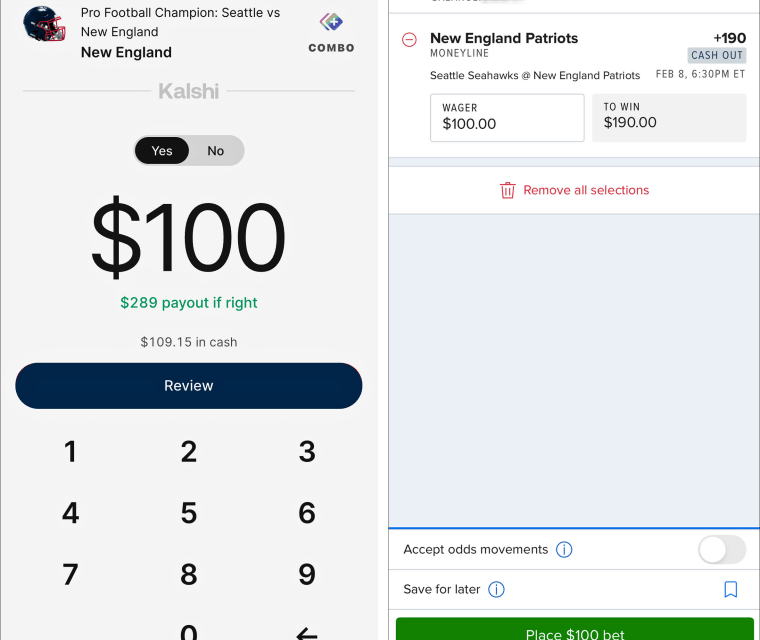
Sports betting remains illegal in California, yet innovative platforms known as ‘prediction markets’ are enabling individuals nationwide to wager on sports events. Companies like Kalshi and Polymarket are gaining traction by marketing ‘contracts’ rather than bets. While critics contend this is merely a reformulation of sports gambling, these platforms are expanding significantly, even reaching states like California, where sportsbooks are banned.
Understanding Prediction Markets
The emergence of prediction markets in California—especially during high-profile events like the Super Bowl—raises complex legal questions about what constitutes betting. Professor I. Nelson Rose, an expert in gaming laws, highlighted the ambiguity by referencing a century-old California statute that criminalizes sports betting, yet prediction markets are still operational.
Kalshi reported that trading volumes for the Super Bowl exceeded $161 million shortly before the event, illustrating growing interest. These markets enable users to trade contracts on events, offering them a chance to profit based on their predictions. When users win, they receive payouts after transaction fees. This method contrasts with traditional sportsbooks, which act as ‘the house’ and make money from losing bets.
“It’s totally different than gambling, because you’re trading with an equal counterparty on a federally regulated exchange, and you’re not betting against the house,” noted Sean Patrick Maloney, head of the Coalition for Prediction Markets.
While Kalshi and Polymarket did not comment, they have consistently argued against the notion that their platforms engage in gambling.
Comparing Platforms
Kalshi and similar platforms attract users with potential high returns, like a $100 investment on a favored team yielding $289 if successful. This potential profit structure is allowed in California but not accessible through traditional companies like FanDuel due to legal restrictions.
Economics professor Koleman Strumpf likened prediction markets to financial markets, as these platforms allow users to bet against others rather than a house. However, critics argue the distinction is negligible since the practices resemble gambling in essence.
State and Federal Dynamics
Despite rapid growth, prediction markets face resistance from state governments. Some states, such as Massachusetts and Nevada, have taken legal actions against these platforms, arguing they offer unregulated sports gambling. In New York, the state’s attorney general warned consumers about these platforms lacking regulatory protections found in traditional sportsbooks.
Maloney mentioned the need for federal regulation over state-by-state regulation, pointing to a misunderstanding of these markets. In California, the legal landscape remains complex, as the state passively monitors ongoing national litigation.
User Experience and Market Expansion
Despite the legal uncertainty, users are increasingly engaging with prediction markets. An anonymous user in California noted the platforms feel similar to sportsbooks, albeit with different profit dynamics. The user described these markets as taking less from each transaction, which may make them more appealing to casual bettors.
While less comprehensive than sportsbooks, prediction markets are gaining a foothold where sports betting is illegal. As interest grows, companies may increasingly seek to exploit this expansive market, inviting future regulatory debates.
Fanatics Sportsbook CEO Matt King emphasized the value of regulated markets, pointing to the ongoing presence of illegal betting activities. Recognizing the potential for growth, major companies like DraftKings have ventured into prediction markets, fostering further competition.