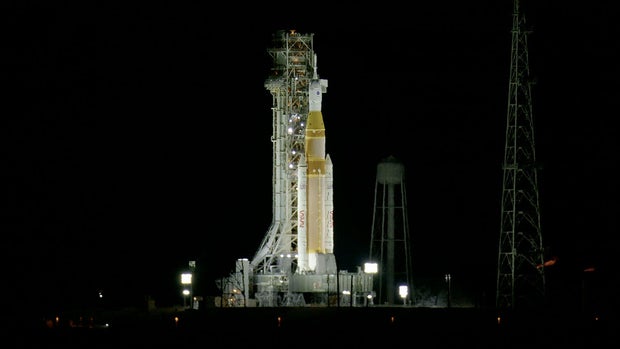
NASA is in the process of addressing a fuel leak that disrupted a critical dress rehearsal countdown for the Artemis II rocket. The agency aims to carry out an on-pad repair, followed by another fueling test, with plans to launch four astronauts on a groundbreaking lunar mission in March.
Addressing the Technical Issue
Lori Glaze, a senior manager at NASA, stated that the team is analyzing the data from the incident and developing a repair strategy. The expectation is to execute necessary repairs directly at the launch pad. The Artemis II mission is poised to send astronauts Reid Wiseman, Victor Glover, Christina Koch, and Canadian astronaut Jeremy Hansen on a journey around the moon.
“We believe that the forthcoming work can be completed at the pad,” Glaze mentioned regarding the repair plan.
The dress rehearsal was aborted due to a hydrogen leak occurring before the rocket was fully fueled with super-cold propellants. With the moon mission now postponed until March, the crew has ended a pre-flight quarantine and will resume their training program.
Details of the Fueling Complexity
The hydrogen leak was pinpointed between two umbilical plates where a large fuel line attaches to the rocket’s base. Although adjustments managed to stabilize the situation during initial fueling, a spike in the leakage occurred towards the end of the rehearsal. Consequently, the automated systems halted the countdown, preventing the test from fulfilling all its objectives.
John Honeycutt, overseeing the Mission Management Team, emphasized the value of the test since it offered critical insights into the rocket’s performance under simulated conditions.
“The opportunity allowed us to fully assess the system before any crew flights,” Honeycutt remarked.
History and Future Steps
This marks only the second flight attempt for the Space Launch System (SLS), the world’s most powerful rocket. Initial test flights had previously been delayed due to similar issues that required substantial troubleshooting and repairs.
Hydrogen, noted for being both extremely flammable and the lightest chemical element, poses unique challenges when used as rocket fuel. Its propensity to leak under exacting conditions requires validations at the launch pad itself.
The Artemis II leak occurred at a crucial connector point amid the fueling lines entering the rocket. This intricate system necessitates comprehensive testing, a lesson NASA had learned from multiple fueling rehearsals during the initial Artemis I mission.
Implications for Other Missions
The delayed launch for Artemis II collides with plans to deploy another crew to the International Space Station (ISS). The team of astronauts is scheduled to prepare at the Kennedy Space Center for a flight aboard a SpaceX Falcon 9 rocket. This mission has been adjusted due to a prior early crew return involving medical concerns.
The recent Falcon 9 mission encountered a second stage anomaly, which might inform clearance procedures for future launches. Nonetheless, SpaceX is evaluating the anomaly’s data to identify causes and solutions.
The Falcon 9 mission sequence is crucial, ensuring that adequate personnel remains at the ISS to conduct essential operations and maintain safety protocols.
 Mass Shootings Highlight Escalating Violence in South Africa
  Biden Administration’s Role in Gaza Examined
  Arrest of Several Men in Gloucestershire on Explosives Charges
  Hungary’s Political Transformation: Challenges and Alliances
  Upcoming Events and Challenges for Prince Harry and Meghan Markle in the U.K.
  U.S. Navy Confirms Increase in Injured Troops from Iran Conflict