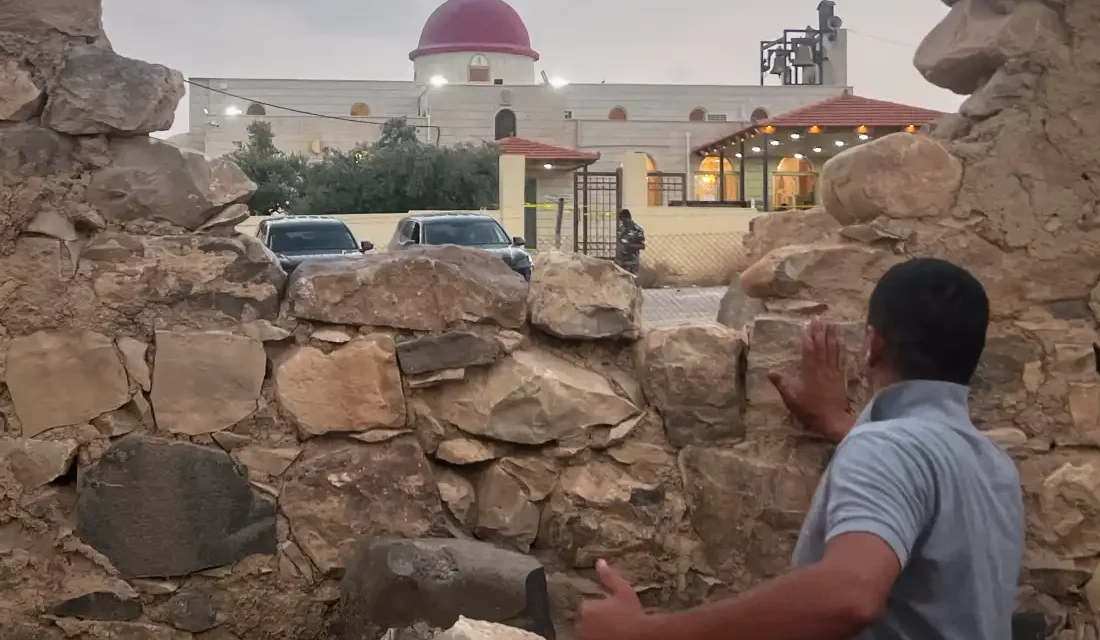
On Friday, gunmen opened fire during a funeral at a Greek Orthodox church in Hamoud village, located in Jordan’s Karak governorate. The tragic event claimed the lives of seven people and left 40 others wounded, according to authorities.
The shooting occurred in Karak, which is situated about 90 kilometers south of Amman, Jordan’s capital. Jordanian state television broadcasts depicted two individuals approaching the church with pistols and firing. A third person followed, wielding a semiautomatic rifle before all three ran toward the church.
Footage from witnesses revealed broken glass and blood inside the church. Dorgham Halasa, a mourner present during the attack, recounted the scene, noting that intense gunfire began 15 minutes into the funeral. Panic ensued, although Halasa did not see the attackers himself. Others mentioned seeing four gunmen.
The Associated Press has not independently confirmed the number of assailants, and Jordan’s security services have yet to provide specific details. A government statement informed that the attack was executed by unknown assailants, with no indication of captures or casualties among them. Investigations are in progress, according to official sources.
In response, Jordan declared three days of national mourning, as reported by the Petra News Agency. Soldiers and security officers were present outside Prince Ali Military Hospital during a visit by King Abdullah II to the attack survivors on Friday.
Karak holds a minority Christian demographic, with a history of violence, including a 2016 incident where gunmen targeted police, resulting in 10 fatalities and numerous injuries at a Crusader castle. Those attackers were neutralized by Jordanian security forces after a prolonged confrontation.
Jordan’s Health Minister, Ibrahim al-Budour, highlighted that two individuals wounded in the recent attack remain in critical condition. King Abdullah II vowed on social media to confront the act with severe consequences and expressed condolences to the families affected, wishing recovery for the injured.
Prime Minister Jafar Hassan characterized the attack as stemming from extremist ideology and pledged that the perpetrators will face justice. Regional condemnation of the attack was widespread, with reactions from Lebanon, Syria, Egypt, and Oman. Ahmed al-Tayeb, the grand imam of Al-Azhar in Cairo, denounced the attack, calling it a terrorist act. Iraq’s Foreign Minister Fuad Hussein conveyed Iraq’s solidarity with Jordan in the battle against terrorism.
U.N. Secretary-General Antonio Guterres labeled the funeral attack as “especially heinous,” urging accountability for those responsible, as explained by his spokesman, Stephane Dujarric.
 Senate Report on Trump’s Impact on U.S. Foreign Policy Costs
 The Untold Consequences of America’s Geopolitical Decline
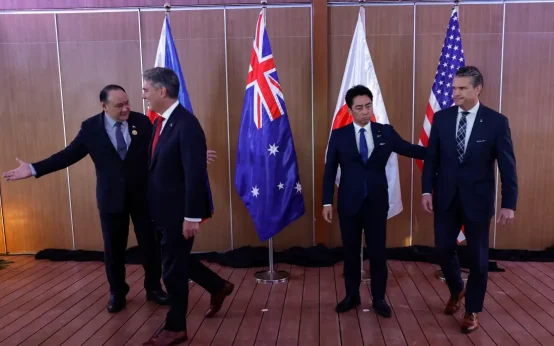 Defense Leaders Discuss Security Concerns in Asia
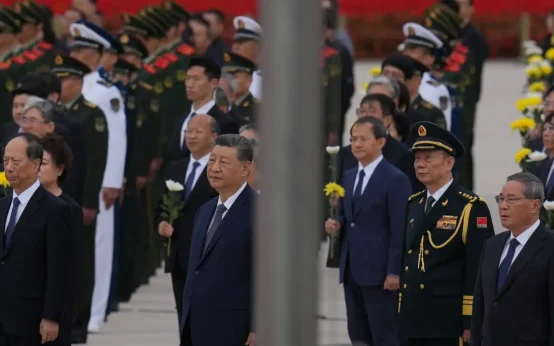 China’s Leadership Elevates Key Military Figure, Adopts Anti-Corruption Measures
 U.S. Blocks Shipments from Chinese Biotech Firm BGI Group over Forced Labor Concerns
 Israel’s Political Landscape: Challenges Ahead