In a concerning development out of Houston, a local doctor has found himself at the center of serious allegations. Dr. John Stevenson Bynon Jr., prominent for his role as director of abdominal organ transplantation and surgical director for liver transplantation at Memorial Hermann Health System, was indicted last month by a grand jury on five counts of making false statements concerning healthcare matters. The charges, announced by federal prosecutors, reveal a potential breach of trust and significant implications for those involved.
According to the indictment, Dr. Bynon allegedly falsified medical records for five different patients, actions which rendered them ineligible for much-needed liver transplants. Tragically, of these patients, three passed away, while two others managed to receive liver transplants by seeking care at different medical facilities. The affected parties, including the patients, their families, and members of their healthcare teams, reportedly had no idea about the alleged falsification of medical records.
U.S. Attorney Nicholas J. Ganjei expressed serious concerns about the case, remarking, “Dr. Bynon is alleged to have betrayed the most sacred duty of a medical professional—to heal.” He further added that Bynon’s actions allegedly stole precious time and hope from those who trusted him, ultimately preventing them from receiving life-saving organ transplants.
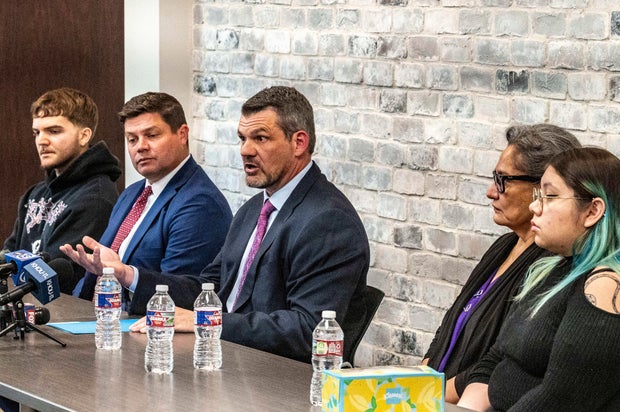
Amidst these grave allegations, Bynon’s attorney, Samy Khalil, vehemently defended his client outside the federal courthouse, emphasizing Bynon’s longstanding career dedicated to organ transplantation. Khalil stated, “Nothing he did was unlawful. Everything that he did was lawful and in good faith. We look forward to clearing his name in a court of law and educating, frankly, the government on the medical concepts that undergird this totally, totally misguided prosecution.”
While Memorial Hermann Health System and UTHealth Houston, which employs Dr. Bynon, declined to immediately comment on the situation, broader implications loom over the case. The indictment and the accompanying press release from the U.S. Attorney’s Office have yet to touch upon a specific motive for Bynon’s conduct.
Jason Hudson, Acting Special Agent in Charge of the FBI Houston Field Office, highlighted the human impact at the core of these allegations: “Ultimately, at the center of this case are vulnerable patients who hung their hope of survival on a nationally renowned surgeon now federally charged for manipulating their medical records.” According to the Department of Justice (DOJ), many patients remained unwittingly ineligible for organ offers due to these alleged actions.
In the wake of these allegations coming to light, Memorial Hermann temporarily ceased its liver and kidney transplant operations in 2024. The suspension lasted one year, after which the program resumed its services.
Dr. Bynon is now facing civil lawsuits from the families of several patients who passed away while waiting for liver transplants. These families are seeking clarity regarding whether their loved ones were denied transplants directly due to the doctor’s actions.
The indictment details dramatic consequences for patients due to record manipulation. For example, one patient was ineligible to receive a donor organ offer for 149 days and subsequently died in 2024 under Bynon’s care. Another patient was ineligible for 69 days and died during a liver transplant surgery in December 2023. Similarly, a patient in urgent need of a liver transplant died shortly after allegedly incorrect donor matching criteria hindered the process.
CBS Houston affiliate KHOU-TV reported on interviews with affected families. They described how the alleged falsifications led to their being removed from the transplant waiting list, exacerbating their conditions.
If found guilty, Dr. Bynon faces serious legal repercussions, including potentially up to five years in federal prison along with a fine of up to $250,000 for each count. Furthermore, in February 2025, the Organ Procurement and Transplantation Network, responsible for managing national organ donations, identified Memorial Hermann as a member not in good standing, a notable action signaling serious concerns about patient safety and care quality.