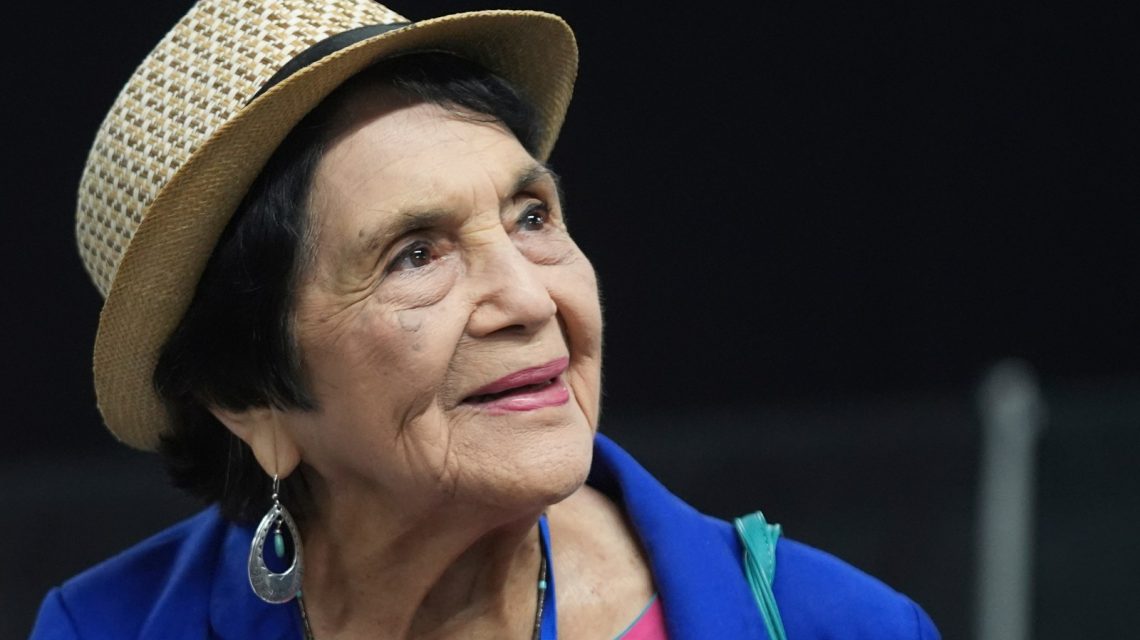
Dolores Huerta, the renowned labor organizer and civil rights leader, passed away at the age of 96 in Bakersfield, California. Known for co-founding the organization that evolved into the United Farm Workers (UFW) of America, she was a pivotal figure in negotiating landmark contracts for agricultural laborers, introducing the slogan “Sí, se puede.” Her family expressed deep sorrow, emphasizing the profound impact of this loss while requesting privacy.
The Dolores Huerta Foundation confirmed her death, stating she died surrounded by her family. No immediate cause of death was provided. Plans to honor her life and legacy will follow.
Huerta gained national recognition by organizing a largely Latino and Filipino workforce with limited political influence. As a committed negotiator, strike organizer, and lobbyist, she was instrumental in securing higher wages, healthcare, and protections from pesticides for farmworkers. Her efforts extended beyond labor to encompass advocacy for voting rights, women’s participation in politics, immigrant rights, racial equality, environmental justice, and LGBTQ+ rights. Over six decades, she emerged as a prominent Latina activist in America.
Huerta played a crucial role in transforming farmworkers into a significant national labor and political force. While César Chávez became the movement’s public face, Huerta was integral in key negotiations and legislative efforts, organizing strikes and boycotts, and advocating among elected officials.
Her legislative achievements included extending aid to families and securing Spanish language accessibility for driver’s license exams. Huerta was a key force behind the California Agricultural Labor Relations Act of 1975, which guaranteed farmworkers’ rights to unionize and negotiate collectively— the first law of its kind in the U.S.
Fatima Goss Graves of the National Women’s Law Center lauded Huerta’s “extraordinary legacy” in workers’ rights and justice. Derrick Johnson of the NAACP urged continuation of her work for labor and civil rights.
From Teacher to Activist
Born on April 10, 1930, in Dawson, New Mexico, Huerta relocated to Stockton, California, with her mother and siblings. Her parents’ activism influenced her deeply. After teaching in Stockton, she realized the need to organize parents for community improvements.
She joined the Stockton Community Service Organization, leading voter registration efforts and advocating for Latino communities. By the late 1950s, Huerta was lobbying in Sacramento, establishing her political advocacy role.
Building a Movement
Introduced by Fred Ross Sr., Huerta met Chávez in 1955. Together, they founded the Agricultural Workers Association in 1960 with Larry Itliong and later the National Farm Workers Association.
In 1965, they responded to the Delano grape strike, merging their organizations to form what became the UFW. Huerta’s leadership and mobilization were pivotal in sustaining the strike and boycotts, securing crucial labor agreements.
She coined “Sí, se puede,” signifying her belief in collective empowerment. The slogan, later adapted by Barack Obama, encapsulated her career in organizing and political pressure.
Beyond Labor
Huerta’s advocacy evolved to include feminism and Latino political representation. Feminist alliances inspired her to challenge gender discrimination in the movement. Nationally, she encouraged Latina political candidacies and supported notable figures like Bill Clinton and Obama.
Her activism reached into immigrant rights, voting access, and LGBTQ+ equality. Even in her 90s, Huerta remained active, facing arrests for nonviolent protests and enduring personal sacrifices for the cause.
Complex Partnership With Chávez
Huerta’s professional relationship with Chávez, often strained, was key to the movement’s success. In 2026, she disclosed past sexual abuse by Chávez. She explained her silence was to protect the movement’s achievements, reinforcing her individual leadership legacy.
Honors and Recognition
Huerta’s accolades include being the first Latina in the National Women’s Hall of Fame, receiving the Eleanor Roosevelt Human Rights Award, and the Presidential Medal of Freedom. Her foundation advances education, voting rights, and social justice.
Dolores Huerta’s life signified the power of grassroots activism. Her legacy was an affirmation that ordinary individuals could effect systemic change, highlighting that “every moment is an organizing opportunity,” as she believed and practiced.
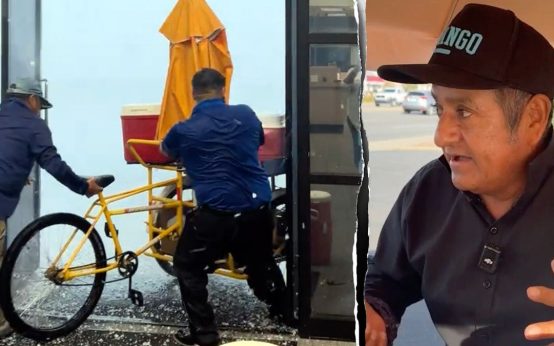 Arizona Bank Employees Rescue Food Vendor During Storm
 Colorado Family Challenges Denial of Preschool Benefits Based on Religious Choice
 Tragic Loss of Stone Romberg While Attempting Bird Rescue
 Lawrence Wright’s ‘Redemption’ Explores Unlikely Sisterhood
 Dolores Huerta: A Look Back at Her Legacy
 Mother’s Account of Traumatic Incident Involving Her Disabled Son