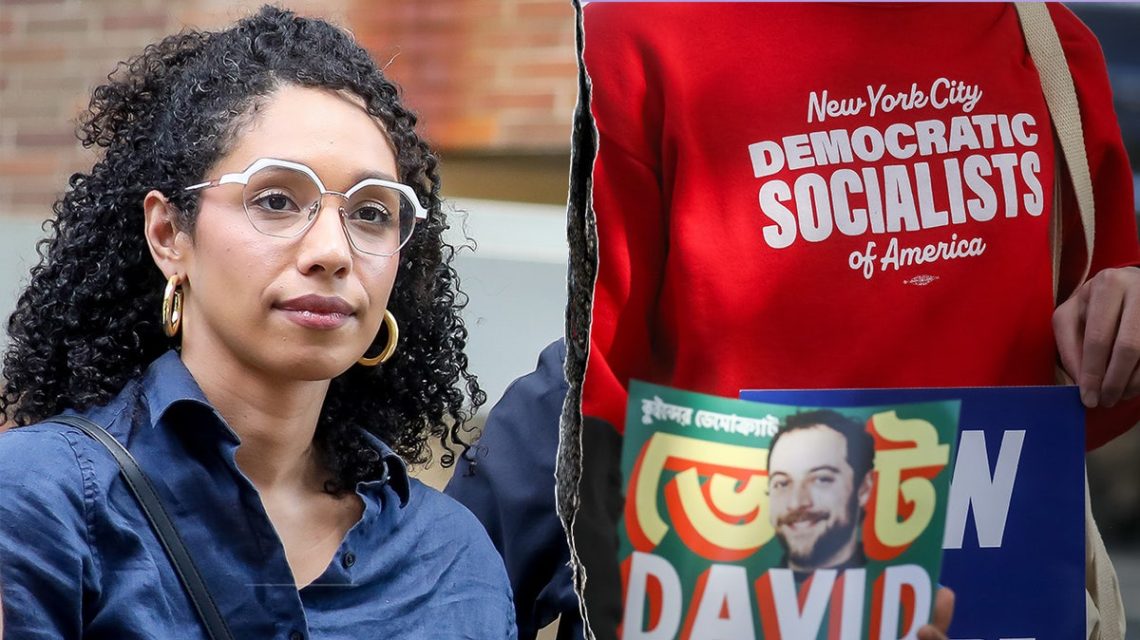
An obscure congressional strategy could prevent Democratic Socialists of America (DSA) members from taking office in the House of Representatives next year, even after winning their elections. Members-elect are required to swear an oath to uphold the Constitution before officially joining the House. Traditionally, all 435 members take this oath together, led by the House speaker.
A debate in conservative circles suggests that any member-elect could challenge another’s right to be sworn in if they present sufficient evidence that the person would not uphold their oath. This would then lead to a House-wide discussion and a vote on whether the member-elect should be sworn in.
For DSA members, a potential argument might involve the group’s stance on replacing the current U.S. Constitution. Several DSA candidates and democratic socialists have recently secured primary wins across the nation.
GOP Objections and Procedures
Rep. Keith Self, R-Texas, indicated he might use this method. He argued that one cannot swear to defend the Constitution while seeking to dismantle it. Self emphasized the importance of taking the oath sincerely and without ulterior motives. He expressed concerns about DSA candidates gaining influence and called for the Constitution’s enforcement to prevent individuals who aim to replace it from assuming power.
The term “Red-Green Alliance” is often used by conservatives to describe collaboration between extreme left groups and radical Islamic entities. Self stated that anyone intent on undermining the Constitution should not be sworn in to defend it.
According to a Center for Renewing America analysis, a challenge against a member-elect’s eligibility can prompt the House speaker to request they step aside during the debate. The opposing member should provide documentation to the House to consider if the evidence shows that the member-elect intends to disrupt the constitutional framework.
The House would then vote on a resolution to assess whether the member-elect is intent on undermining the constitutional order. If the resolution passes, it could bar the member-elect from being sworn in.
Potential Challenges and Legal Precedents
This theory involves several conditions. If House Minority Leader Hakeem Jeffries, D-N.Y., becomes speaker, he might dismiss the challenge. Current Speaker Mike Johnson, R-La., might also reject it if Republicans maintain control. Johnson recently called the idea of not seating elected Democrats a “nonsense narrative” and committed to following the law.
This approach conflicts with Supreme Court precedents. The 1969 Powell v. McCormack decision stated the House cannot exclude an elected member if they meet age, residency, and citizenship requirements.
The case involved Adam Clayton Powell Jr., a New York Democrat who faced financial scandals. After winning reelection in 1966, he was denied the oath by the House speaker. The House passed a resolution preventing him from taking his seat, but the Supreme Court later overturned it.
Nonetheless, some Republicans still consider revisiting this tactic. Rep. Tim Burchett, R-Tenn., expressed to the New York Post his intention to block Darializa Avila Chevalier’s entry to Congress due to a past social media post where she disparaged the American flag.
These efforts, whether successful or not, highlight the partisan tension rising before next week’s midterm elections. The situation suggests that political divides will continue to shape upcoming congressional actions.
Elizabeth Elkind covers the House of Representatives for Fox News Digital and has previous bylines at Daily Mail and CBS News. Follow her on Twitter at @liz_elkind and send tips to [email protected].
 Voting Continues Despite Concerns in Midterm Elections
 Alaska Governor Mike Dunleavy Orders Investigation into Allegations Against Peltola’s Campaign
 Trump Cancels Kansas Rally Amid Tight Senate Race
 Sen. Ted Cruz Warns of Potential Far-Left Shift if Abdul El-Sayed Wins Senate Race
 The Untold Consequences of America’s Geopolitical Decline
 Gov. Hochul Plans Solution for Wage Freeze due to Job Losses