
Changing Perspectives on Higher Education
The conversation around higher education often revolves around issues such as the rising costs of tuition, the career prospects after graduation, and whether obtaining a degree genuinely equips students for the evolving job market. These concerns are increasingly relevant as students and parents evaluate the return on investment of a college education.
However, as technology advances, particularly with artificial intelligence shaping various industries, educational institutions must reassess the skills they impart. Among these, one traditional skill remains crucial for navigating an AI-dominated future: critical thinking.
The Role of Critical Thinking
Critical thinking, long emphasized in liberal arts education, involves analyzing and evaluating information systematically. It equips students to approach problems with reason and clarity. In a fast-paced world where AI handles routine tasks, those who excel in critical thinking can offer innovative solutions and strategic insights that machines cannot.
This skill benefits graduates regardless of their field, from science and engineering to humanities and social sciences. The ability to think critically sets individuals apart in the workforce, providing them with a competitive edge.
Paul Solman, a seasoned journalist for PBS News Hour since 1985, notably focuses on business and economics, offering insightful perspectives on matters such as education.
Conclusion
While the debate on higher education may focus heavily on tangible outcomes like jobs and salaries, it is essential not to overlook the intrinsic value of critical thinking. As technology evolves, this enduring skill becomes even more vital, preparing students to tackle not only today’s challenges but also those of tomorrow.
 Dartmouth College Provost Resigns Over AI Disclosure Issue
 The University of California’s Role in Unifying the State
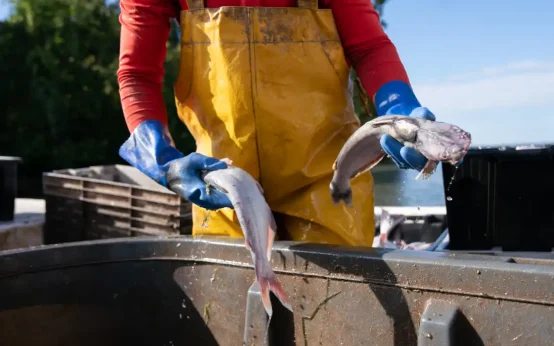 Chesapeake Bay Schools Tackle Blue Catfish Invasion
 Elmwood Park’s John Mills Elementary Awarded Governor’s Blue Ribbon School
 Judge Rules West Point’s Faculty Speech Limits Unconstitutional
 Cornell University in Turmoil Amid Campus Rape Allegations