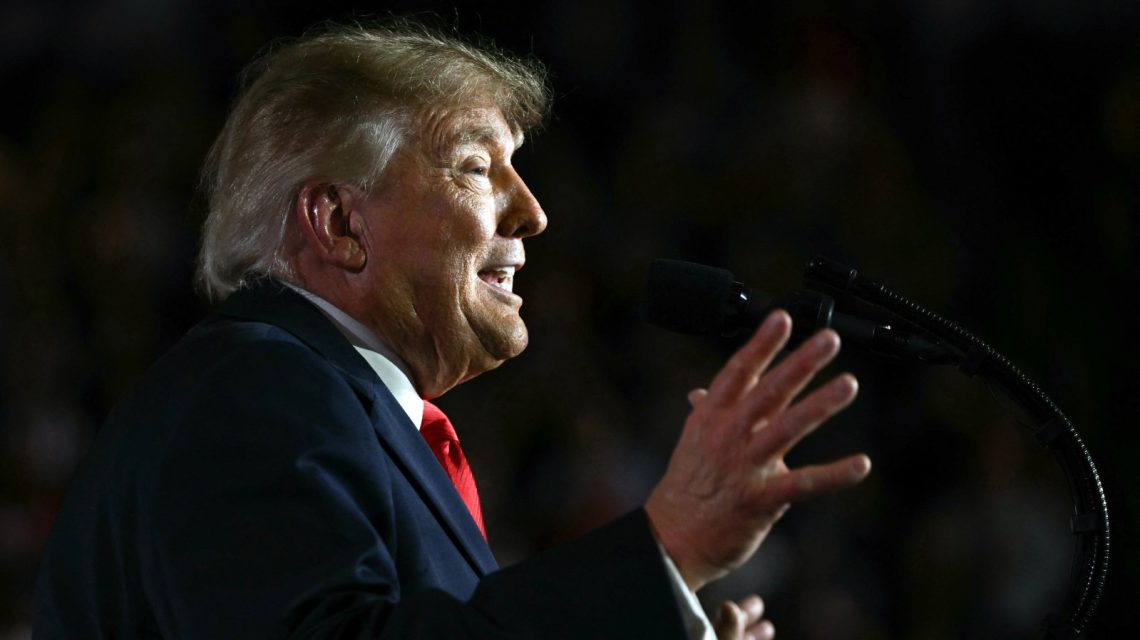
President Donald Trump has adopted a more diplomatic tone towards Canada as the two nations gear up for trade negotiations. These talks arise amidst U.S. economic concerns, prominently featured ahead of Tuesday’s midterms.
Canadian Prime Minister Mark Carney stated on social media that he had discussions with President Trump about resolving their prolonged trade dispute. Officials from both countries are preparing for continued negotiations. Trump confirmed this conversation and indicated that an agreement could be near, following months of tariffs and disagreements that have challenged relations between the neighboring countries.
This potential dialogue occurs at a crucial point for the president. Americans are voting in record numbers leading up to Election Day, and the cost of living consistently ranks high among their concerns. Trump’s economic management is under scrutiny. His tariffs on Canadian goods, meant to safeguard American industries and secure better trade terms, have also caused issues for U.S. businesses reliant on cross-border trade.
Carney described his conversation with Trump as productive. The two countries discussed an agreement aimed at supporting jobs, improving affordability, and protecting Canada’s sovereignty. “Our teams will now be working in the coming weeks to deliver that outcome,” Carney shared.
While speaking to reporters in Iowa, Trump expressed optimism. “We have the concept of a very good deal with Canada,” he remarked. The president suggested that such an agreement would benefit American farmers and hinted at the possibility of reviving the Keystone XL oil pipeline, previously blocked by former President Joe Biden in 2021.
Despite quick exchanges in the media, no terms have been announced, and negotiations are expected to continue past Tuesday’s election. This open dialogue departs from the confrontation that has characterized relations between Washington and Ottawa this year.
The Impact of the Trade War
Canada withdrew from negotiations in August, opposing American demands that Carney claimed would threaten Canadian sovereignty, its French-language protections, and the car manufacturing sector. Following this, Trump enacted tariffs of 50 percent on approximately $20 billion worth of Canadian goods, which led to retaliatory actions from Ottawa.
This dispute has affected both sides of the border. Many American manufacturers depend on Canadian steel, aluminum, and automotive components. At the same time, farmers and other exporters rely on Canadian consumers. Tariffs have increased business costs importing Canadian goods, and Ottawa’s retaliatory measures have made some American products pricier for Canadian buyers.
The tariff impact is particularly pronounced in battleground midterm states such as Michigan, where the car industry heavily depends on cross-border operations. The trade conflict has also surfaced as an election matter in regions like Maine.
Tariffs and Public Perception
For Trump, reducing tariff tensions comes at a challenging political time. A recent Reuters/Ipsos poll shows his approval rating at 32 percent, with 73 percent believing the cost of living is moving in the wrong direction. The poll also indicates Democrats leading Republicans by 47 percent to 36 percent among registered voters pre-midterms.
Official inflation data underscores pressures on American homes. Consumer prices rose 3.7 percent annually to September, with gas prices jumping 9.1 percent for the month, as reported by the Bureau of Labor Statistics. Consumer confidence has dropped, with the University of Michigan’s sentiment index falling to 48.0 in October from 53.6 last year.
Trump consistently argues tariffs will boost American manufacturing, protect jobs, and strengthen Washington’s bargaining power. However, these measures have introduced higher costs and uncertainty for U.S. companies, especially those with Canada-linked supply chains.
A potential agreement with Ottawa could alleviate some of these pressures, though it remains unclear what compromises each side might make. Despite Trump’s optimistic tone, Canada increasingly seeks economic opportunities beyond the U.S. Carney has committed to doubling Canadian exports to non-U.S. markets over the next decade. Regardless, Canada’s economic ties to the U.S. remain significant, with around 70 percent of its exports directed south.
The outcome of Trump’s softened stance with Canada, and whether it leads to a North American deal, remains uncertain.
 Security Measures in the 2026 Midterm Elections
 Trump, Biden, and Obama: Examining Public Perception
 Representative DeLauro’s ‘Medicare for America Act’: Details and Prospects
 James Talarico and Frederick Haynes III Address Immigration and Racial Issues
 Justice Department Seeks Supreme Court’s Intervention on California Mail-In Ballots
 DOJ Appeals to Supreme Court Over California Voter Roll Dispute