
President Donald Trump’s efforts to “nationalize” elections, along with ongoing unfounded claims of election fraud, are significantly influencing the races for state offices responsible for election oversight in crucial battleground states. Democratic candidates running for secretary of state positions in Arizona, Georgia, Michigan, and Nevada are emphasizing Trump’s statements and his administration’s recent actions—such as lawsuits over voter rolls and an FBI raid on an election hub in Georgia—as part of a wider strategy focused on safeguarding the electoral process.
The Republican candidates aspiring to these roles largely endorse Trump’s aggressive stance and assertions about the 2020 election being stolen. Following Trump’s attempts to overturn the election results, these typically low-profile races for secretary of state have received heightened national focus, with Democrats warning of potential interference in the 2024 presidential election by Republicans, should they gain power. Consequently, Democrats are revising their strategies from previous elections, stressing the increased stakes with Trump’s return to the political arena. Arizona’s Secretary of State, Adrian Fontes, remarked on the high visibility and influence of those spreading election misinformation.
“The bad guys are on the inside now,” said Fontes, a Democrat. “You’ve got various folks who are just flat-out lying about elections, including the president. Now, that hasn’t changed, but now they have high levels of power and high levels of visibility.”
Fontes is being challenged by Alexander Kolodin, a Republican state representative who was part of an alternate slate of electors supporting Trump in 2020. Kolodin was also involved in numerous lawsuits challenging Arizona’s election results. Although he has not received an official endorsement from Trump, Kolodin’s campaign prominently features a quote from Trump praising his legal skills.
In Georgia, the secretary of state race is in the spotlight following an FBI search of a Fulton County election hub seeking records linked to the 2020 election. This race includes a mix of established figures and new candidates. Republican Secretary of State Brad Raffensperger, who famously rebuffed Trump’s request to find more votes in 2020, is now pursuing the governorship amid lively primaries. The Democratic contenders include Dana Barrett, a critic of Trump, as well as Penny Brown Reynolds and Adrian Consonery.
Leading the Republican primary are Gabriel Sterling, known for his stance against election misinformation, and Vernon Jones, a Trump supporter echoing the former president’s baseless claims. Sterling insists on preventing any federal control over state elections, ensuring adherence to the Constitution and state laws. Conversely, Jones declined to comment on Trump’s nationalization proposal, focusing instead on securing honest elections for Georgia.
Besides Sterling and Jones, other Republicans running for Georgia’s secretary of state are Tim Fleming and Kelvin King, with both voicing skepticism over the 2020 election results. King, for instance, opposes federal election management, emphasizing state-level accountability.
In Michigan, current Democratic Secretary of State Jocelyn Benson, who endured threats for standing by the 2020 results, is running for governor. Her possible Democratic replacements include Lt. Gov. Garlin Gilchrist and Barbara Byrum, who view Trump as a threat to democracy. Republican hopefuls, such as Anthony Forlini, focus on noncitizen voting concerns, rebuffed by Benson’s office, and Monica Yatooma, supporting Trump’s view on nationalized elections.
In Nevada, Republican newcomer Sharron Angle challenges Democratic Secretary of State Cisco Aguilar. Angle, part of a lawsuit to prevent Biden’s 2020 win certification, promotes major election changes, including citizenship verification. Aguilar, in contrast, sees the election debate as a broader civil rights issue, criticizing any move linking it to immigration enforcement.
The challenge for Republican candidates aligning with Trump’s election perspectives has proven risky in swing states previously. Yet, with Trump regaining substantial political tools, the evolving dynamics in these elections could significantly influence future voting integrity and democracy. Experts note the scale of current election threats, emphasizing widespread misinformation thriving across government levels.
 DHS to Overhaul Redaction Process with New Technology
 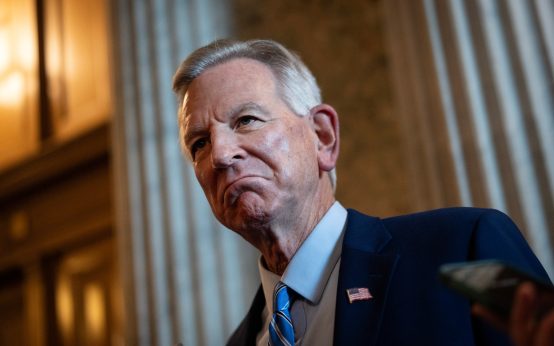 Senator Tuberville Proposes Major Overhaul to U.S. Immigration System
 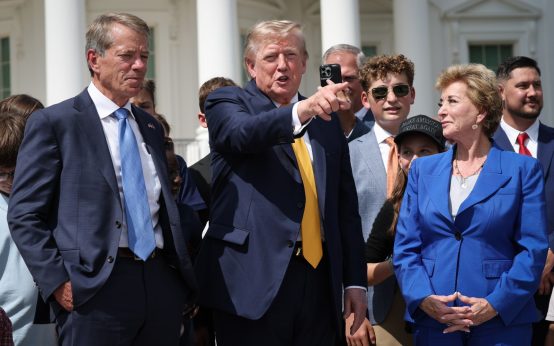 Student Loan Groups Urge Congress for Oversight Hearings
 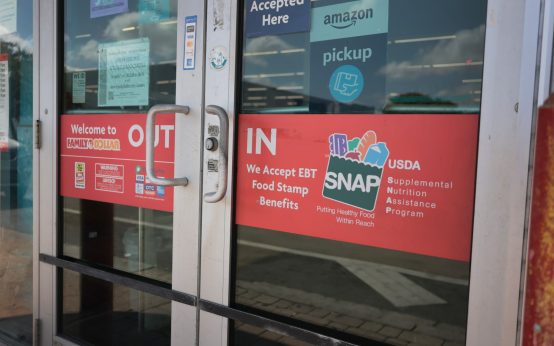 Impending Changes to SNAP and Medicaid: Impact and Reactions
 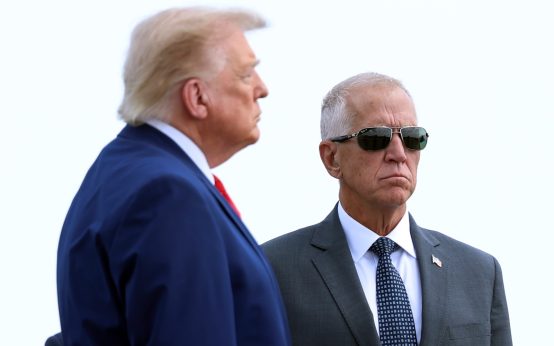 Senator Tillis Challenges Loyalty to Trump
  Comprehensive Guide to Voting in the Illinois General Election