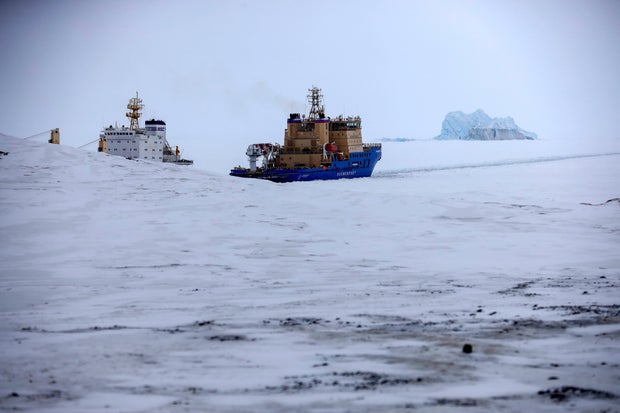
Reykjavík, Iceland — The escalation in global temperatures is hastening the melting of sea ice in the Arctic Ocean, triggering a significant increase in shipping activity along routes that were once unreachable due to ice. As more ships navigate these pathways, the environment faces severe consequences from the emissions of black carbon, commonly known as soot, which exacerbates the ice-melting process.
The concern over increased marine traffic in the Arctic came to the forefront when previous U.S. President Donald Trump expressed interest in acquiring Greenland. Such movements accentuate the importance of marine routes while highlighting the environmental price of this increased activity. This week, international shipping regulators are convening to discuss the necessity for ships in the Arctic to operate on cleaner fuels to minimize environmental damage.
The soot deposits from ship emissions darken glaciers, snow, and ice, reducing their ability to reflect sunlight. Instead, they absorb more heat, making the Arctic the fastest-warming area on the planet. This extensive melting influences global weather patterns, leading to an endless cycle of accelerated warming.
“It ends up in a never-ending cycle of increased warming,” said Sian Prior, lead adviser for the Clean Arctic Alliance, a coalition of nonprofits focused on the Arctic and shipping. “We need to regulate emissions and black carbon, in particular. Both are completely unregulated in the Arctic.”
Recent proposals from countries like France, Germany, the Solomon Islands, and Denmark suggest mandating the use of “polar fuels” by ships traversing the Arctic. These fuels produce less carbon emissions compared to the traditional residual maritime fuels. This proposal, covering all vessels operating north of the 60th parallel, aims to minimize the environmental impact of shipping within this sensitive region.
The proposal was slated for presentation to the International Maritime Organization (IMO) and its Pollution Prevention and Response Committee, with possible discussions in other committees in the coming months. Although a 2024 ban was implemented to restrict the use of heavy fuel oils in the Arctic, its effect has been limited due to certain regulatory loopholes.
**Challenges with Reducing Black Carbon Emissions**
The initiative to curb black carbon emissions, which have a warming effect approximately 1,600 times that of carbon dioxide over a 20-year period, faces substantial challenges. Conflicting interests among the Arctic countries and globally have hindered progress. Internationally, there are also political factors, such as President Trump’s stance on Greenland and climate policies, which often overshadow environmental discussions.
Last year, a proposed IMO regulation to impose carbon fees on shipping aimed at encouraging cleaner energy usage was postponed after intense lobbying. This postponement brings uncertainty to future measures regarding black carbon limitations.
Iceland exemplifies the conflict within Arctic nations. Known for its progressive use of green technologies, Iceland struggles with maritime pollution regulation due to the influence of its significant fishing industry. Although clean energy is prioritized on land, the shift in maritime policy encounters resistance.
The Icelandic Ministry of Environment, Energy and Climate acknowledges the need for stronger measures against shipping emissions but calls for more detailed analysis. Such conflicts highlight the complexity of enforcing stricter emission regulations in a region economically dependent on its marine activities.
Crescendo in Arctic Sea Traffic
The allure of reduced travel times between Asia and Europe encourages more vessels to brave the Arctic waters. According to the Arctic Council, maritime traffic has seen a notable rise, with a 37% increase in ship entries and a 111% expansion in distances traveled from 2013 to 2023.
Following these trends, black carbon emissions have escalated, with 2,696 metric tons recorded in 2019 compared to 3,310 metric tons projected for 2024. Despite a ban on heavy fuel oil, exceptions exist until 2029, allowing some ships to continue its use. Environmental groups argue that strict fuel regulation is crucial given the improbability of curbing sea traffic itself.
Some companies acknowledge these challenges and have committed to avoiding Arctic routes. For instance, Søren Toft, CEO of Mediterranean Shipping Company, expressed in a LinkedIn post the company’s firm stance against using the Northern Sea Route, highlighting the ongoing debate around Arctic shipping implications.
As climate changes continue to reshape the Arctic, the impact on maritime routes and the broader environment underscores the urgent need for balanced and sustainable approaches to shipping in this fragile region.
 Florida Citrus Growers Use Gene-Editing to Combat Citrus Greening
  Satellite Images Reveal Lake Powell’s Dramatic Decline Over Nine Years
  Tropical Depression Six Forms in the Atlantic Amid Quiet Hurricane Season
  Fat Bear Week: Celebrating Resilient Giants and Ecosystem Conservation
  Concerns Surface Over SpaceX Facility in Louisiana
  Understanding Pyrocumulonimbus Clouds Through NASA’s INSPYRE Mission