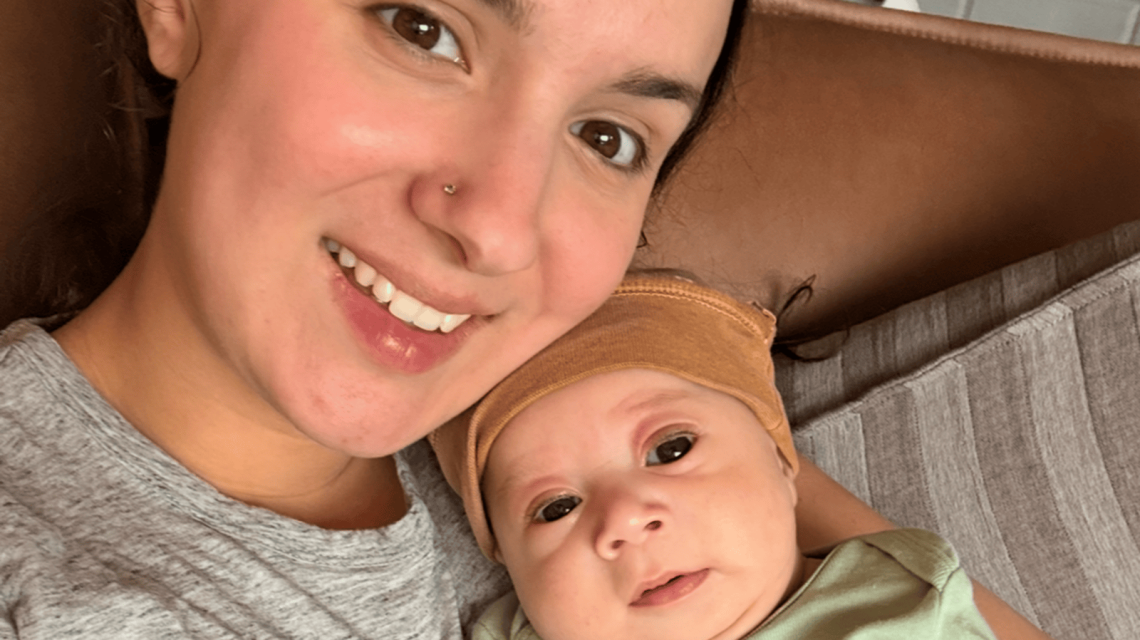
From the beginning, Lauren Musso sensed something was amiss with her son’s development. Musso, a 28-year-old from Schenectady, New York, paid close attention to her newborn Avery’s movements. Her worries began months earlier when Avery’s activity in the womb suddenly decreased.
“Overnight, the strength and frequency of his kicks dropped dramatically and never returned,” Musso explained to Newsweek.
Her concerns were initially dismissed, as the baby was still meeting the minimum kick counts. Musso’s pregnancy was already challenging due to severe hyperemesis gravidarum (HG), a condition that led to extreme nausea and vomiting. This resulted in several hospitalizations and difficulties in maintaining nutrition.
Despite the challenges, she persisted in seeking answers and pressed for an ultrasound. A medical provider eventually agreed to order the ultrasound, even though it was not standard procedure. Later ultrasounds revealed Avery was motionless for extended periods. Still, a fetal MRI scheduled weeks later showed no apparent issues, with specialists suggesting a 99 percent chance all was well.
“Those words haunt me,” Musso stated, feeling something unusually wrong was being overlooked.
Dr. Jeffrey Chapa, national medical director of maternal-fetal medicine at Obtelecare, acknowledged that reduced fetal movement is a common concern. While often due to benign factors like a baby’s sleep cycle, it can sometimes indicate a more serious issue. A thorough evaluation, often involving ultrasound and other imaging, is crucial when decreased movements continue.
After birth, Avery spent a week in the neonatal intensive care unit. Although initially improving, he struggled to gain weight and developed laryngomalacia, a condition affecting the voice box that can cause noisy breathing. Over time, Avery exhibited unusual movements and episodes dismissed as typical of laryngomalacia.
Avery faced multiple hospital readmissions. Eventually, in a clinic, he experienced his first cardiac arrest. His nanny performed CPR. During that day, Musso asked for a comprehensive neurological evaluation after witnessing her son’s limp hand.
An MRI later revealed Avery had multicystic encephalomalacia, a severe form of brain damage. Dr. Chapa expressed that it is challenging to determine if an earlier diagnosis would have altered the outcome. Brain injuries have multiple possible causes and are not always preventable or reversible.
In Avery’s final weeks, seizure activity was only confirmed days before his death. Avery passed away peacefully at three and a half months old, surrounded by family.
“I held him close and whispered to him how much I loved him, telling him that it was okay to go,” Musso recalled.
After Avery’s death, the family faced another blow. An autopsy they had consented to was not performed, and Avery’s body was transferred to a funeral home without their knowledge.
The family holds Avery, affectionately nicknamed “Ave the Brave,” in high regard. Musso hopes healthcare providers take parental concerns seriously and address HG more comprehensively. She advocates for compassionate, personalized care, emphasizing never dismissing warning signs.
“Learn to sit with a grieving parent in the darkness without trying to fix the unfixable, and never be afraid to speak their child’s name,” Musso urged.
Musso shared how Avery continues to influence their lives despite his brief time with them. The medical center involved declined to comment due to patient confidentiality.
 Impact of Fake Smiles on Happiness
 Democratic Doctors and Scientists Enter Congress with New Agendas
 Experimental Heart Drug Fails to Meet Expectations in Crucial Study
 Popular Drinks Linked to Heart Attacks in Young Adults
 A Legacy of Blade Sharpening in Chicago
 Illinois Faces Potential Ban on Hemp-Derived THC Products